
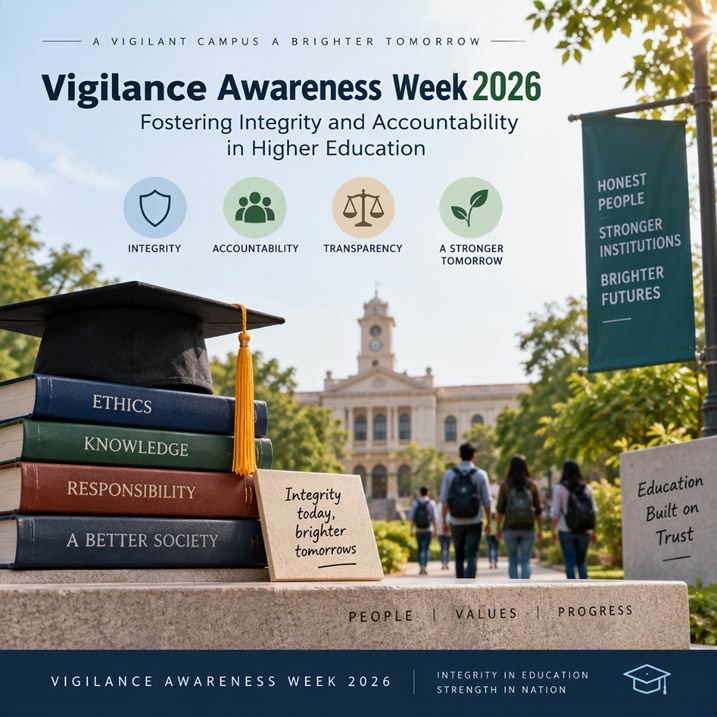
Vigilance Awareness Week 2026: Fostering Integrity and Accountability in Higher Education
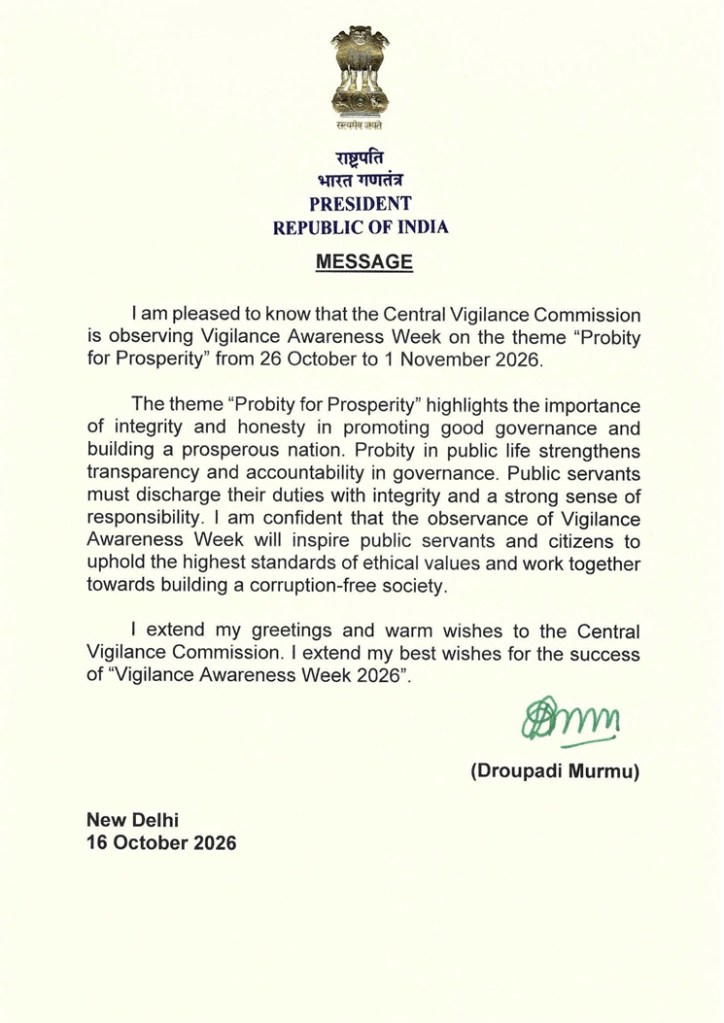
Integrity, transparency, and ethical conduct form the bedrock of a progressive society. To reinforce these core values nationwide, India’s apex integrity institution, the Central Vigilance Commission (CVC), is observing Vigilance Awareness Week from October 26 to November 1, 2026.
Coinciding with Sardar Vallabhbhai Patel’s birth anniversary on October 31, this annual initiative powerfully reminds us of the importance of probity in public life. This year, the national theme, “सत्यनिष्ठा से समृद्धि” (“Probity for Prosperity”), highlights how ethical practices directly drive sustainable growth and collective well-being.
The UGC Directive: Empowering Academic Institutions
Recognizing young minds as torchbearers of ethical leadership, the University Grants Commission (UGC) has directed all universities and Higher Educational Institutions (HEIs) across India to actively participate in the week-long observance.
Educational institutions are tasked with spearheading the following initiatives:
- Administering the Integrity Pledge: Students, faculty, and administrative staff are taking collective oaths to uphold honesty, transparency, and the rule of law. Institutions are also facilitating digital participation through e-pledges available on the official CVC portal.
- Engaging Awareness Activities: Universities are hosting a wide array of interactive events—including debates, essay competitions, workshops, seminars, and street plays—focused on anti-corruption measures and preventive vigilance.
- Submitting the Action-Taken Report (ATR): To ensure meaningful participation, universities must document the activities they organize and submit a detailed report to the UGC by November 30, 2026.
A Broader Movement: The Preventive Vigilance Campaign
While Vigilance Awareness Week is the central focus, it is part of a larger, nationwide initiative. The CVC has instituted a three-month Preventive Vigilance Campaign running from August 17 to November 16, 2026.
During this extended period, government departments, public sector undertakings, and academic institutions are focusing on structural improvements, including:
- Systemic Reforms: Updating outmoded operational guidelines and procedures to remove ambiguities.
- Efficiency Improvements: Accelerating the resolution and disposal of pending public complaints.
- Capacity Building: Conducting specialized training programs to enhance internal governance.
- Digital Governance: Leveraging technology to make administrative processes more accessible and transparent.
Why It Matters for Students and Educators
Corruption and unethical practices hinder innovation, compromise equity, and erode trust in public institutions. By involving universities, the CVC and UGC aim to build an environment where ethical accountability becomes second nature to the next generation of professionals, leaders, and citizens.
Building a culture of integrity requires more than compliance—it demands conscious, daily action. Whether you take an e-pledge, join a campus discussion, or advocate for transparent practices, every step helps build a fairer, more prosperous society.
“Vigilance is more than an annual observance—it is a continuous commitment to accountability, fairness, and good governance.”

