
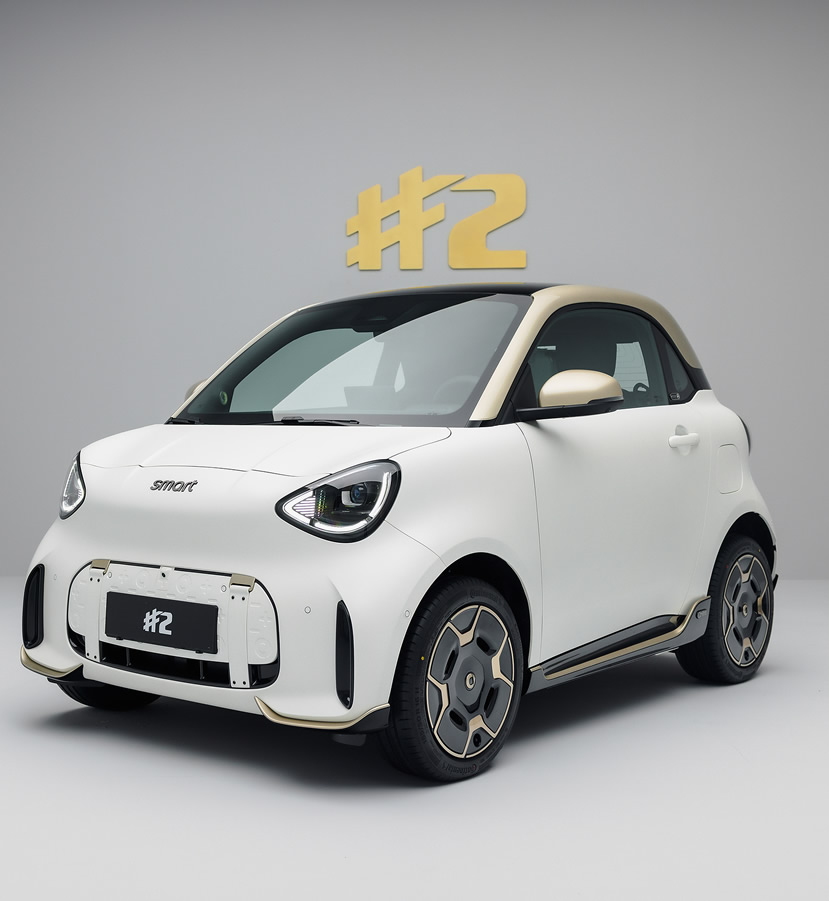
It’s Back. That’s Big: The All-Electric smart #2 Reimagines the Iconic City Car for a New Era
Making its world premiere at the Paris Motor Show, the all-electric smart #2 brings a celebrated two-seater into the future with distinctive design, urban agility and a renewed focus on compact electric mobility.
PARIS | October 12, 2026 — Some automotive icons are defined by their size, others by their power. And then there is smart, a brand that has spent three decades making a compelling case for a different kind of automotive ambition: that a car can be remarkably small and still make a big statement.
At the Paris Motor Show, smart has brought that philosophy back into the spotlight with the world premiere of the all-new, all-electric smart #2, reviving its iconic two-seater for a new generation of urban drivers. The unveiling marks a significant moment for a brand whose original vision challenged conventional ideas about what a city car should look like, how much space it should occupy and how intelligently it should move through increasingly congested streets.
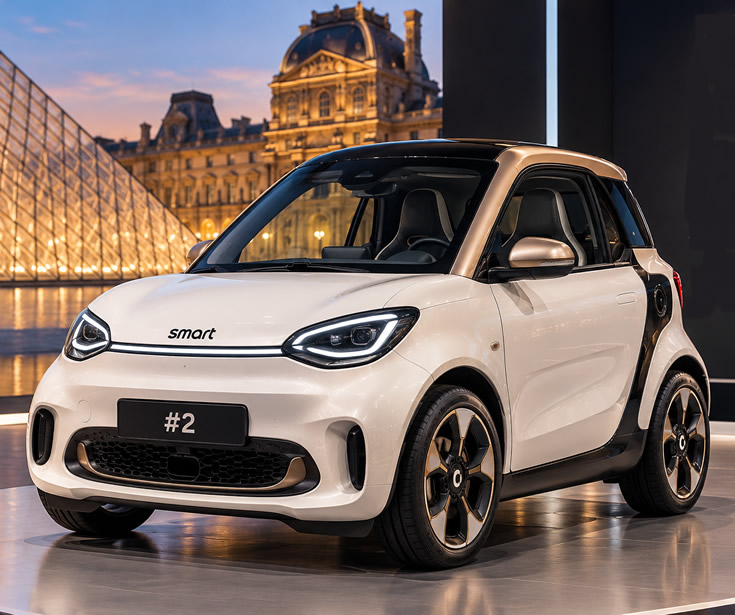
The return is particularly symbolic. Thirty years ago, the original smart was presented as an art object beneath the Louver Pyramid in Paris. Today, the brand returns to the French capital with a fully realized production vehicle, translating that pioneering spirit into an electric proposition for contemporary cities.
The message is unmistakable: It’s back. That’s big.
An Icon Reimagined, Not Reinvented
The smart #2 arrives at a time when the automotive industry is negotiating a fundamental transition. Electrification is transforming powertrains, software is reshaping the driving experience, and urban congestion is forcing manufacturers to reconsider the relationship between vehicle dimensions and everyday mobility.
Against this backdrop, the smart #2 makes a persuasive argument for the continued relevance of the ultra-compact two-seater.
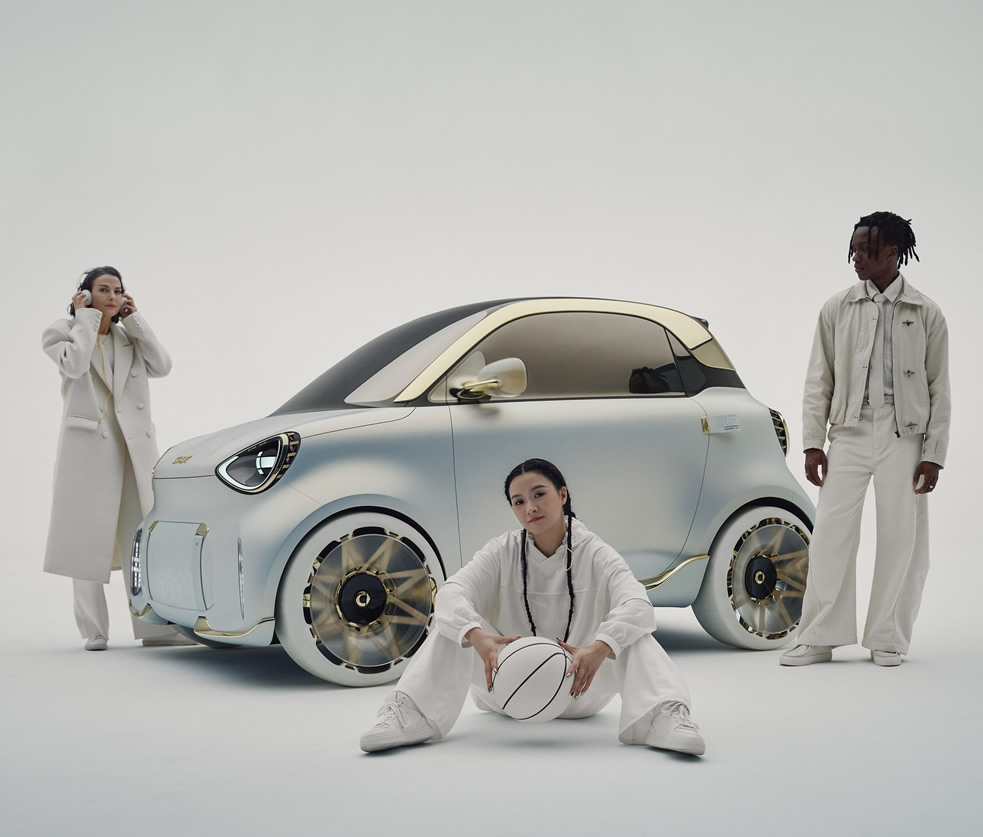
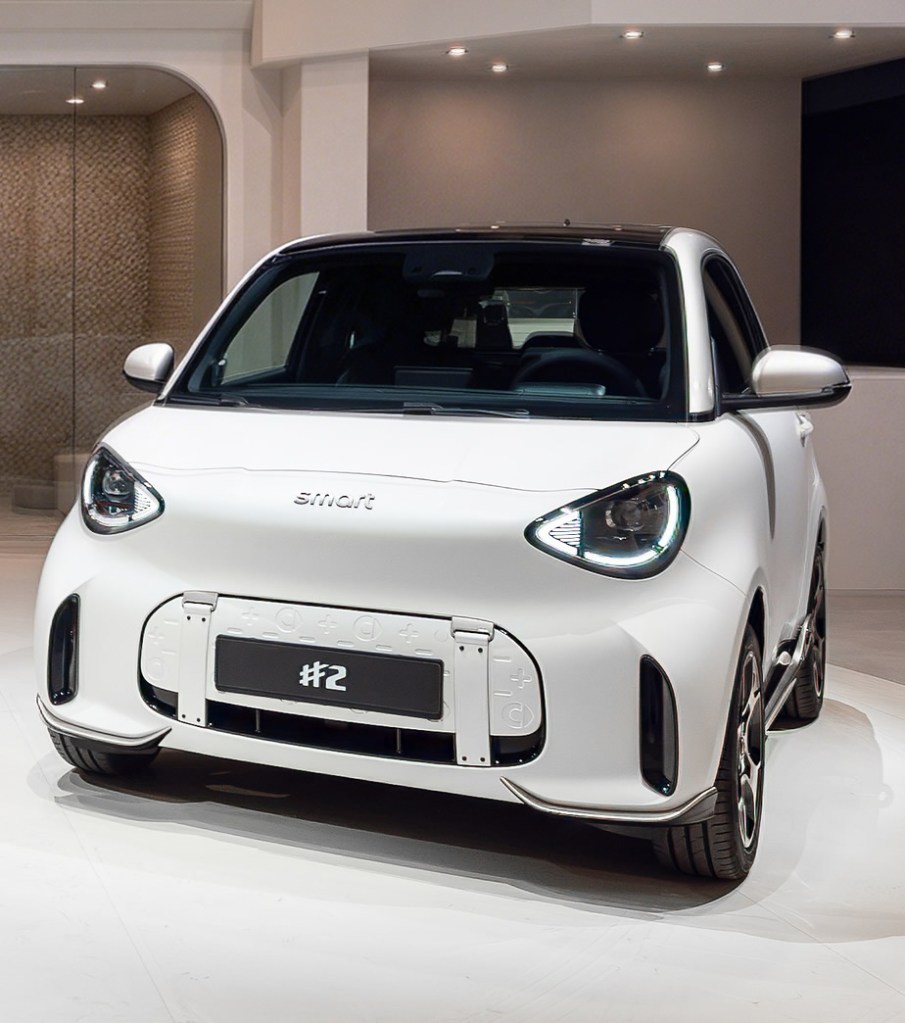
Styled by the Mercedes-Benz Global Design Team, the new model preserves the recognizable proportions that helped establish smart’s identity while introducing a more contemporary visual language. Its design philosophy, described by the brand as Love, Pure, Unexpected, balances familiarity with carefully considered innovation.
Short overhangs, clean proportions and wheels positioned at the corners maintain the original smart silhouette while helping maximize the usable space within its compact body. Logo-inspired lighting and a modern interpretation of the floating roof add distinctive touches without overwhelming the car’s essential character.
The result is a vehicle that stands apart from the increasingly uniform aesthetic of modern electric cars. Rather than relying on sheer size or aggressive styling to establish its presence, the smart #2 embraces individuality through proportion, detail and personality.
For a car designed primarily for urban life, that restraint could be one of its greatest strengths.
Small Outside, Smarter Inside
Compact dimensions inevitably raise questions about practicality. The smart #2 addresses this challenge through an interior designed around efficient packaging and distinctive details.
Bench-style seating and an S-shaped cockpit help make the most of the available cabin space, while carefully selected colors, materials and finishes introduce warmth into an otherwise highly functional environment.
One of the more interesting practical features is the split tailgate. Its upper glass section can open independently, allowing access in confined spaces where a conventional tailgate might be inconvenient. The lower section folds down to serve as a loading platform or a seat that supports up to 120 kilograms.
It reminds us that good urban design is often less about adding more space than about making better use of the space available.
In crowded city centers, where parking spaces are tight and every centimeter matters, such details may be more meaningful to owners than a long list of headline-grabbing features.
When Function Becomes Fashion
If the standard smart #2 marks the return of an urban mobility icon, the newly unveiled smart #2 Couture Edition shows the brand’s intent to give compact mobility a more expressive, lifestyle-oriented identity.
Continuing the theme Function becomes Fashion, the limited edition pairs an Atelier White Matte exterior with a contrasting Platinum Gold roof. Gold detailing, exclusive 16-inch Lyra rims and a numbered interior badge distinguish it from the regular model.
Production will be limited to 999 units in Europe and 999 units in China, giving the special edition a defined place within the smart #2 line-up.
The Couture Edition also reflects a broader shift in automotive marketing. Electric vehicles are increasingly being positioned not simply as alternative modes of transport but as expressions of personal taste, design sensibility and lifestyle.
For smart, whose identity has long been intertwined with urban culture and unconventional design, this approach feels particularly natural. The challenge is to ensure the fashion-forward appeal complements, rather than distracts from, the vehicle’s central proposition: convenient, intelligently packaged electric mobility.
Engineering for the Realities of City Driving
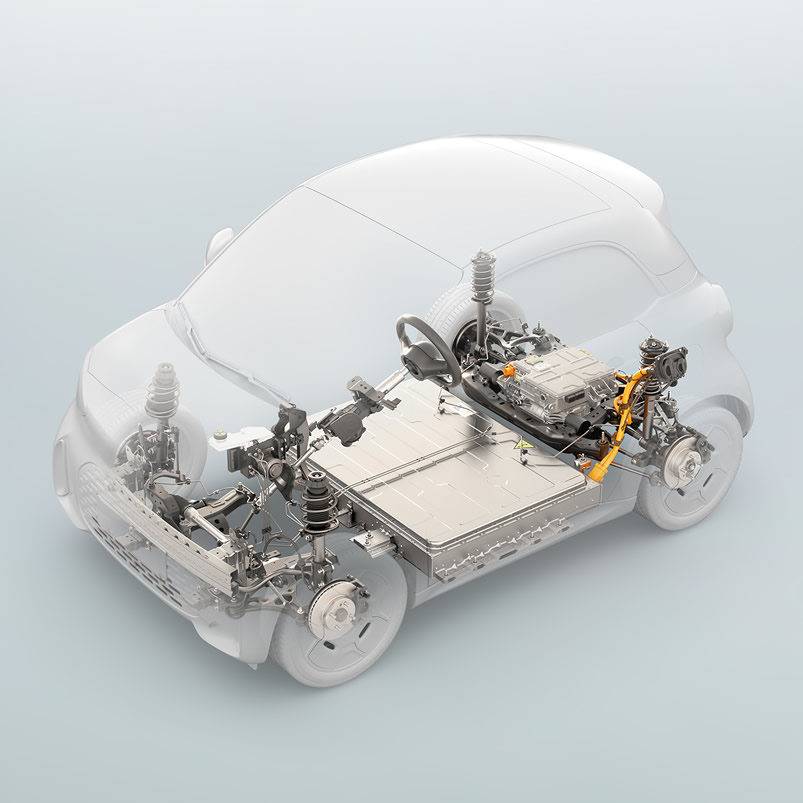
Beneath its compact exterior, the smart #2 is built on a newly developed Electric Compact Architecture (ECA) platform engineered specifically for an ultra-compact, all-electric two-seater.
Measuring just 2,746 millimeters in length, the car combines a floor-mounted high-voltage battery with rear-wheel drive and advanced chassis technology. Its rear-mounted electric motor produces 60 kW of power and 130 Nm of torque, driving the rear wheels.
For European markets, the smart #2 features a 35.8 kWh lithium iron phosphate (LFP) battery, with a targeted combined WLTP driving range of 290 kilometers.
These figures position the vehicle squarely for everyday urban mobility rather than long-distance touring. For drivers whose journeys revolve around commuting, shopping, appointments, and navigating crowded city streets, the compact dimensions and useful daily driving range could prove attractive.
Charging performance is another important part of the proposition. The smart #2 supports DC fast charging at up to 65 kW, enabling a charge from 10% to 80% in a claimed 20 minutes. AC charging at up to 11 kW provides an alternative for routine charging at home or at compatible public charging points.
The most immediately compelling number, however, may be the car’s 6.95-meter curb-to-curb turning circle.
As many electric vehicles grow larger and heavier, exceptional maneuverability is a genuine differentiator. The ability to navigate narrow streets, execute tight turns, and slip into restricted parking spaces speaks directly to urban-driving frustrations.
The smart #2’s five-link rear suspension, which the manufacturer describes as a first in its class, is intended to support composed handling in both city traffic and highway conditions. Whether that translates into a convincingly comfortable and engaging driving experience will ultimately depend on real-world testing.
Safety Cannot Be an Afterthought
For a vehicle of this size, safety is central to its credibility.
The smart #2 incorporates the Tridion Cell Evo, a protective structure designed to create a robust enclosure around the passenger cabin while preserving the car’s compact proportions. Driver-assistance features include smart Pilot Assist and Adaptive Cruise Control with Stop & Go and Highway Assist.
These technologies signal an effort to combine the advantages of a small urban vehicle with the increasingly sophisticated safety and assistance systems expected of contemporary cars.
Nevertheless, the true measure of the smart #2’s safety credentials will depend on the complete specification, the performance of its protective systems, and independent crash-test results when available. The manufacturer’s emphasis on safety is encouraging, but real-world validation remains essential.
The Business of Bringing Back an Icon
The smart #2’s Paris premiere is more than a nostalgic return. It signals a strategic shift for a brand built around compact urban mobility.
Across the automotive industry, manufacturers have invested heavily in electric SUVs, crossovers, and premium vehicles. Those segments offer opportunities for higher prices and substantial battery capacity, but they do not necessarily address every urban transport challenge.
A purpose-built two-seater offers a different proposition: a smaller footprint, a focus on the journeys it handles best, and maneuverability as a defining advantage rather than a compromise.
That strategy is not without challenges. Consumers will want competitive pricing, practical charging access, credible safety performance and sufficient everyday versatility. The smart #2 must also demonstrate that a highly specialized vehicle can find a sustainable commercial audience in markets where household car ownership patterns and infrastructure vary considerably.
The brand’s decision to begin its global market rollout in Europe and China places the vehicle in two important markets for its product strategy. Both regions will begin taking early orders following the world premiere.
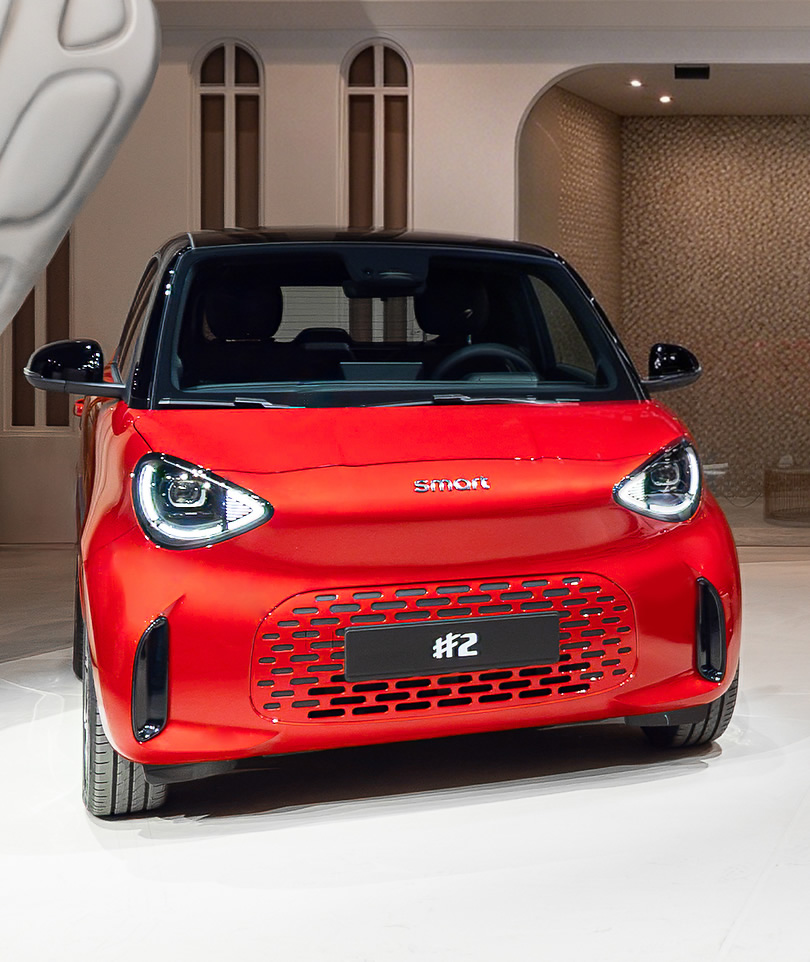
In Europe, the line-up will include Pure, Pure+, and Premium trims, along with the limited Couture Edition. In China, the initial offering will include Premium and Couture Edition variants. Pricing, market-specific equipment, detailed specifications, and availability will be announced locally.
For now, the commercial verdict remains open. The premiere establishes the product’s identity; pricing and the ownership proposition will determine how compelling it becomes.
A Small Car With a Larger Idea
The all-electric smart #2 arrives with a clear understanding of its heritage. It doesn’t try to imitate the scale or ambitions of larger electric vehicles. Instead, it returns to the proposition that made the original smart distinctive: mobility designed around the realities of urban life.
Its familiar styling, compact engineering, modern charging capability, and individualistic design give the model a coherent identity. The Couture Edition adds a fashion-conscious dimension, while the new ECA platform signals more than a cosmetic update to a familiar nameplate.
The real test will come when drivers experience the car on actual streets, evaluate its range and charging performance in daily use, and compare its price with competing mobility options.
Yet the smart #2 has already made one important point at the Paris Motor Show. In an era when automotive progress is often measured in larger batteries, bigger screens, and ever-expanding dimensions, it’s refreshing to see a manufacturer make a virtue of being small.
Thirty years after smart first appeared beneath the Louver Pyramid, its return to Paris brings the story full circle. The silhouette is familiar, the technology has moved into a new era, and the ambition remains distinctly urban.
The smart #2 is back. And this time, its biggest statement may be the power of thinking small.

