
THE World University Rankings 2027: Oxford Still Rules, But the East Is Closing In
The global university order has not been overturned — yet. But the latest Times Higher Education rankings reveal an unmistakable shift in academic power, with China and Singapore challenging a Western hierarchy that once seemed almost immovable.
The world’s university hierarchy has delivered a familiar headline — Oxford remains No. 1 — but the more consequential story in the Times Higher Education (THE) World University Rankings 2027 is what is happening immediately below the summit.
The University of Oxford has retained the top position for an extraordinary 11th consecutive year, scoring 97.9 overall. But its lead over the Massachusetts Institute of Technology is now just 0.1 points. Behind the two leaders, the geography of academic excellence is becoming more interesting, more Asian and, potentially, more competitive.
Published on September 30, 2026, the 2027 rankings assess a record 2,297 research-intensive universities across 118 countries and territories, compared with 2,191 institutions across 115 countries in the previous edition.
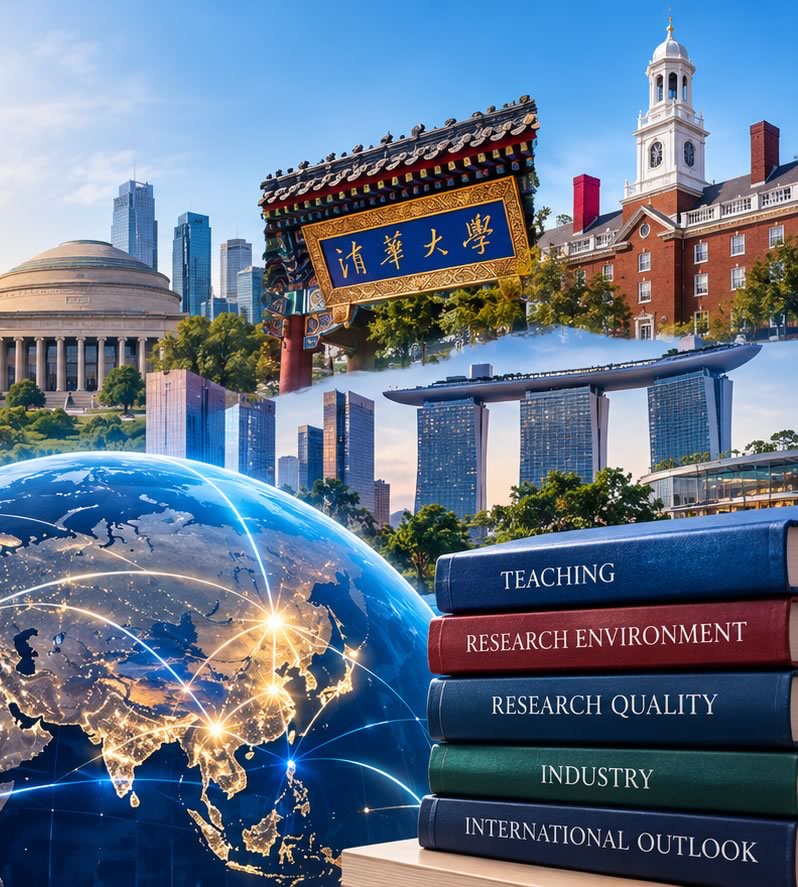
THE’s methodology uses 17 performance indicators spanning teaching, research environment, research quality, industry and international outlook. The resulting table is therefore more than a prestige list. It is a snapshot of where research capacity, academic ecosystems, institutional resources and global influence are accumulating.
And that snapshot is beginning to change.
Oxford’s extraordinary reign — and a narrowing margin
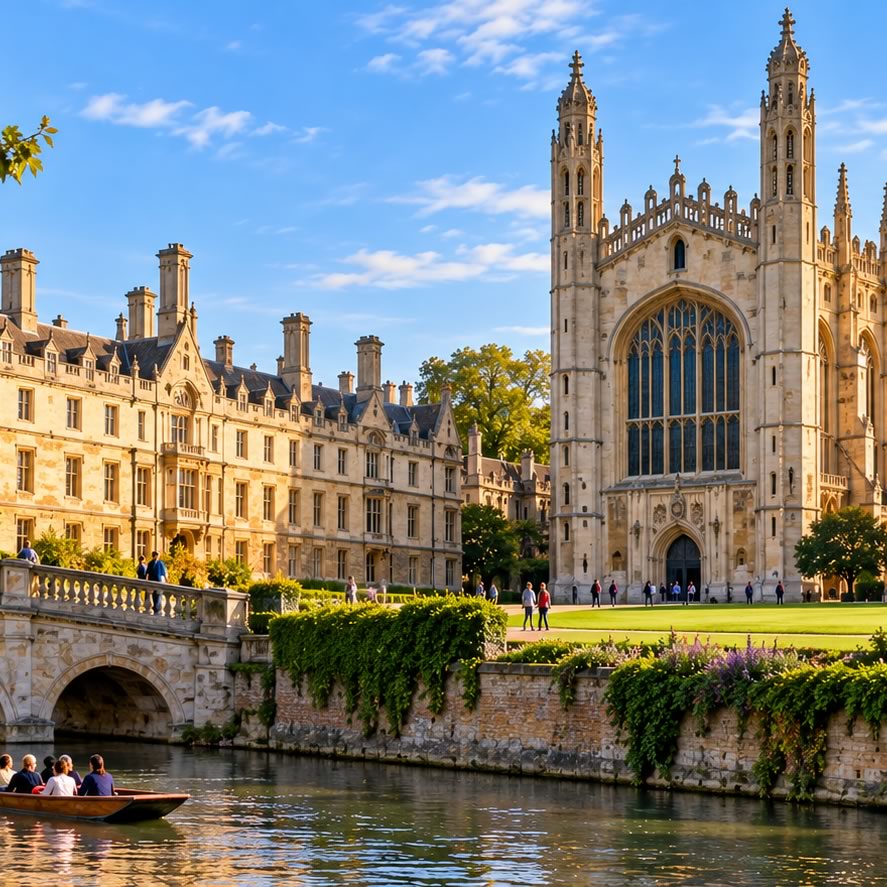
Oxford’s continued dominance is remarkable. Its perfect 100 score for research environment and strong performance across the other dimensions demonstrate the depth of the institution’s research ecosystem.
Yet the narrowing gap with MIT is difficult to ignore.
A 0.1-point difference separates the world’s first- and second-ranked universities. That does not constitute a change in leadership, but it does illustrate how little room now separates the institutions at the very top.
The top 15 also reveal both continuity and movement:
- University of Oxford — UK
- Massachusetts Institute of Technology — US
- Princeton University — US
- Stanford University — US
- University of Cambridge — UK
- Harvard University — US
- California Institute of Technology — US
- Imperial College London — UK
- University of California, Berkeley — US
- Yale University — US
- Tsinghua University — China
- ETH Zurich — Switzerland
- Peking University — China
- University of Pennsylvania — US
- National University of Singapore — Singapore
The most revealing number may be 11.
That is where Tsinghua stands.
For the first time, an Asian university has climbed above every university in continental Europe. Tsinghua’s ascent to 11th, followed by Peking University at 13th and the National University of Singapore at 15th, gives Asia three institutions inside the global top 15.
That would have been a remarkable development only a few years ago.
Now it is becoming part of the new normal.
The East is rising
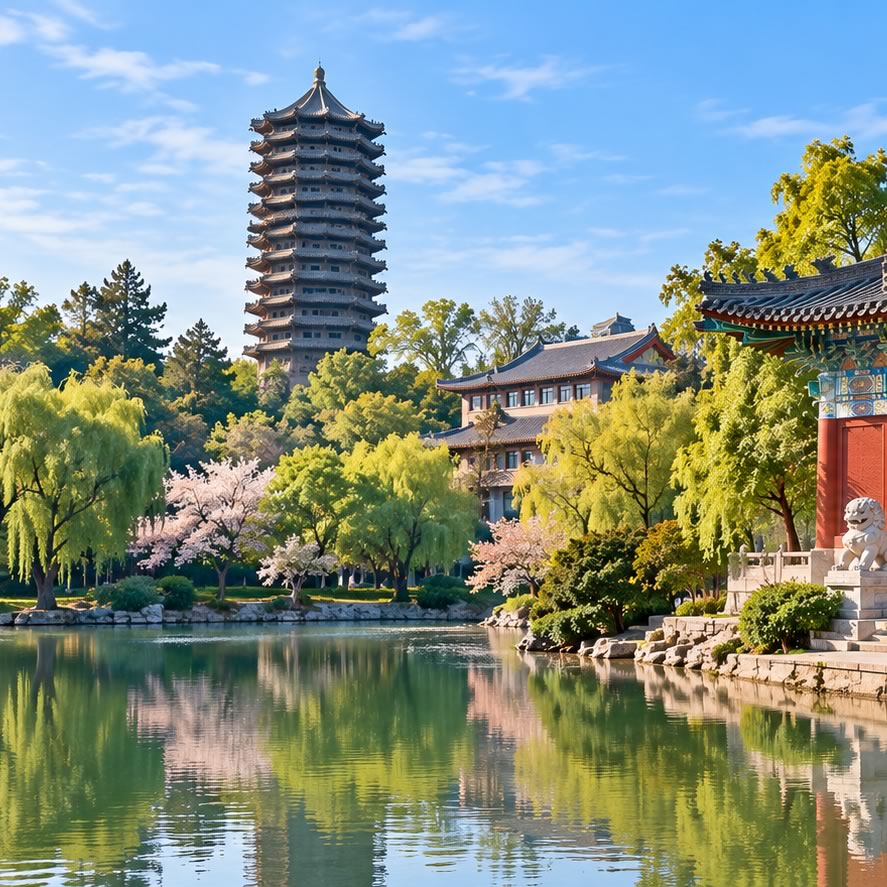
THE’s own characterization — “East rising, West holding at the very top for now” — captures the paradox of the 2027 rankings.
The West has not lost its commanding position. Seven of the world’s top 10 universities remain American, while Britain retains three.
But the foundations underneath that hierarchy are shifting.
China now has 17 universities in the top 200, up from 13 in the previous edition, breaking a three-year plateau. It has 102 universities ranked overall.
Greater China — mainland China together with Hong Kong and Macau — has also overtaken Germany in top-200 representation.
Tsinghua’s advance is particularly significant because it is not simply another improvement in an already strong Asian ranking. It represents a symbolic crossing of an old geographical boundary: an Asian institution moving ahead of Europe’s leading continental university, ETH Zurich.
Peking University’s 13th position reinforces the point.
And Singapore’s National University of Singapore, rising to 15th, gives Southeast Asia a prominent place in the uppermost tier.
This is not yet a wholesale transfer of academic power. But it is a clear broadening of where the world’s strongest universities are found.
America still dominates — but dominance is no longer expanding
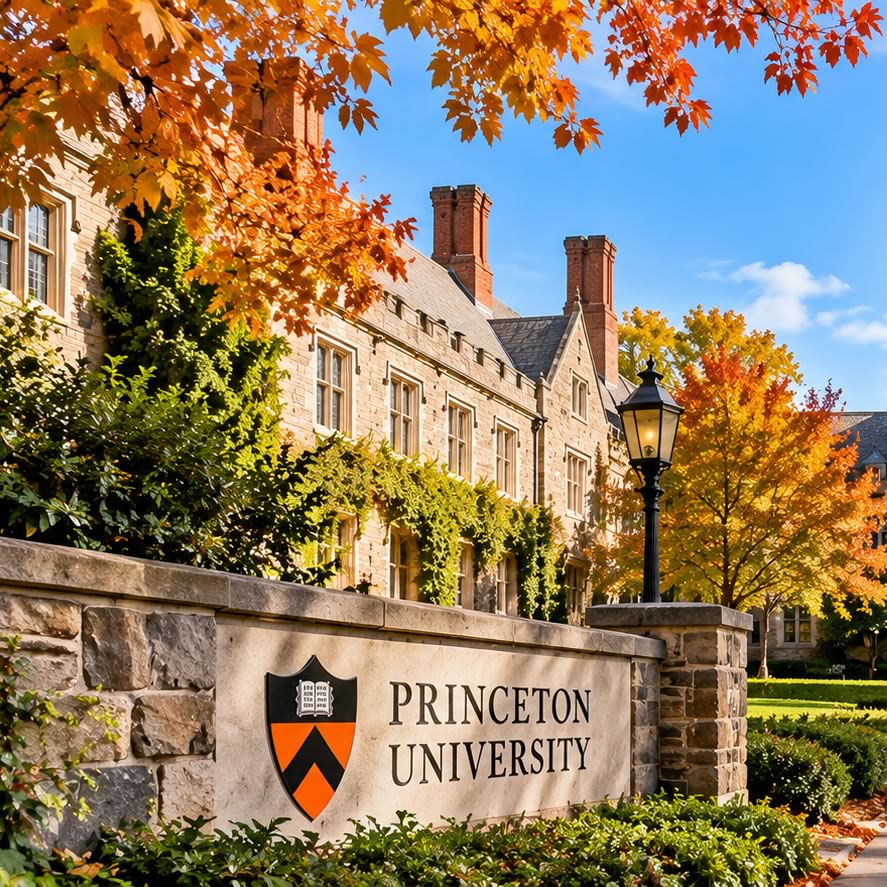
The United States remains the principal force in global higher education.
Seven of the top 10 are American, and the country has 53 universities among the top 200.
But that figure is down from 55.
The distinction matters.
America’s elite universities retain enormous advantages in research capacity, reputation, resources and global attraction. Yet THE’s methodology also reveals areas where some US institutions are facing weaker performance, including research quality, productivity and international-student measures.
Reputation remains an important buffer.
That raises a larger question for the global rankings industry: How long can historical academic reputation compensate for changing performance indicators?
The answer may become increasingly important as universities outside the traditional Western elite continue to build research capacity.
Canada, meanwhile, has nine universities in the top 200, led by the University of Toronto at 22nd. Latin America’s highest-ranked institution is the University of São Paulo, tied at 141st.
Europe’s warning light
For Europe, the 2027 rankings contain both reassurance and caution.
Britain still has three universities in the top 10 and 25 in the top 200. Oxford remains untouchable at the summit, while Cambridge and Imperial maintain formidable positions.
But the UK’s total has slipped by one.
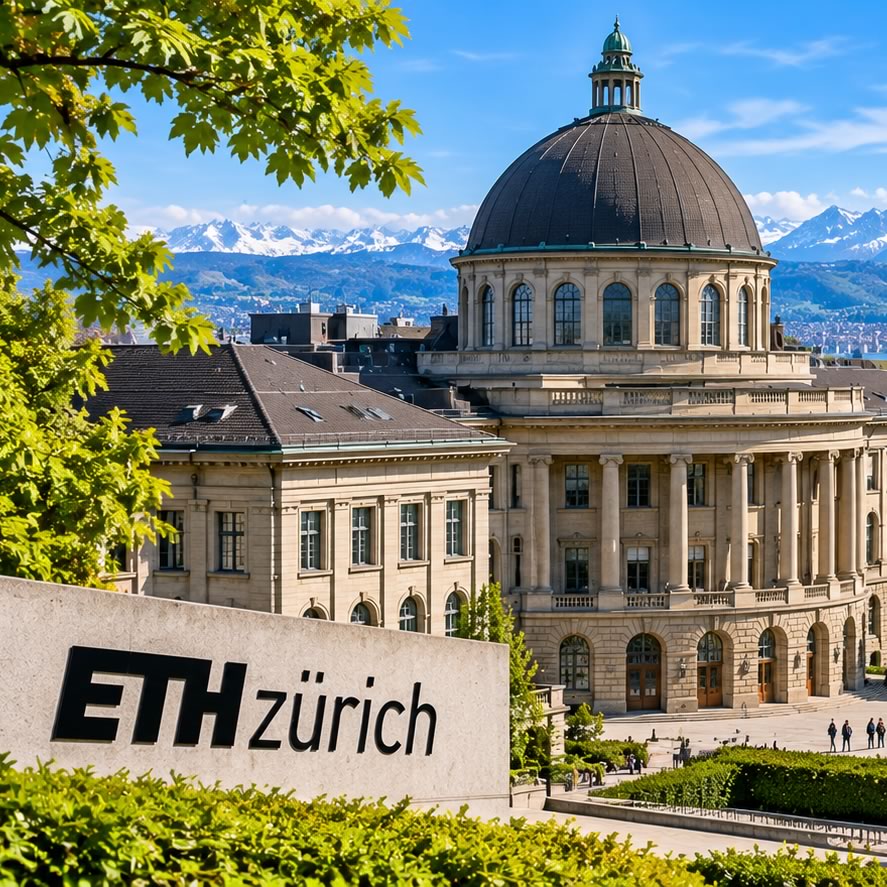
Continental Europe faces a similar contradiction. ETH Zurich remains one of the world’s great universities, but its fall to 12th — behind Tsinghua — is symbolically important.
Germany retains a powerful 19 universities in the top 200, with Technical University of Munich at 25th. The Netherlands has 10.
Yet THE points toward funding pressures and softer performance in some income-related and research measures.
The issue is therefore not that European universities are suddenly weak. Far from it.
The issue is whether yesterday’s institutional advantages are sufficient to guarantee tomorrow’s global standing.
Reputation can preserve a position for a considerable period. But research ecosystems ultimately require investment, talent, infrastructure and international networks.
Asia’s next challenge: international reach

Asia’s rise should not be mistaken for the completion of the transformation.
The rankings show important weaknesses alongside the gains.
Asian universities are performing particularly strongly in areas such as industry income, teaching and research environment. But international outlook and some collaboration indicators remain comparatively weaker, particularly for Chinese institutions.
Geopolitics matters here.
Research universities do not operate in isolation. Their influence increasingly depends on international researchers, cross-border collaboration, global talent flows, and academic networks.
For China, this creates a complicated strategic challenge: its universities can continue improving their domestic research infrastructure while simultaneously navigating a more fragmented international research environment.
The question is whether Asia can convert institutional strength into comparable global connectivity.
The ranking that matters beyond the ranking
There is another development buried in the numbers: scale.
THE now evaluates nearly 2,300 universities across 118 countries and territories. That expansion makes the rankings more representative of the global higher-education system, while the introduction of more granular ranking bands allows institutions outside the traditional elite to be differentiated more precisely.
This matters because the future of higher education will not be determined solely by the 15 universities at the top.
The real contest is taking place across hundreds of institutions building research capacity, attracting talent, commercializing knowledge and developing new approaches to teaching.
Artificial intelligence will add another layer to that competition.
AI is already forcing universities to reconsider assessment, curriculum design, academic integrity and the meaning of knowledge-based education. Institutions capable of integrating AI into teaching and research without sacrificing academic standards may gain advantages that today’s rankings do not fully capture.
A hierarchy approaching a tipping point
The THE World University Rankings 2027 ultimately tell a story of continuity at the summit and disruption beneath it.
Oxford remains No. 1. American universities continue to occupy much of the upper table. Britain’s leading institutions remain global powerhouses.
But the old geographical map of academic excellence is becoming harder to sustain.
Tsinghua at 11th. Peking at 13th. NUS at 15th. China expanding its top-200 presence from 13 to 17 universities.
Those are not isolated statistics.
They are signals.
For decades, the world’s most prestigious universities were overwhelmingly concentrated in the United States and Western Europe. The 2027 rankings suggest that concentration no longer adequately describes the global higher-education landscape.
The West still holds the crown. Asia is building the challenger institutions.
The decisive question is no longer whether the global university order is changing.
It is how far that change will go — and how quickly.
For now, Oxford remains on top.
But the distance between the old order and the emerging one is becoming shorter.

