
Raksha Bandhan at India’s Highest Offices: A Celebration of Bonds, Childhood and Responsibility
New Delhi, August 28, 2026 — Raksha Bandhan, one of India’s most cherished festivals celebrating the bonds of love, care and protection, was marked in a particularly warm and memorable manner this year as President Droupadi Murmu, Prime Minister Narendra Modi and Vice President C.P. Radhakrishnan welcomed schoolchildren for special celebrations in the national capital.
From the grandeur of Rashtrapati Bhavan to the warmth of 7, Lok Kalyan Marg and Uprashtrapati Bhavan, the festival brought children into some of the country’s most important constitutional spaces. The celebrations reflected the enduring spirit of Raksha Bandhan while also giving it a broader contemporary meaning—one that embraced affection, trust, protection, education and even responsibility toward the environment.
A Special Raksha Bandhan at Rashtrapati Bhavan
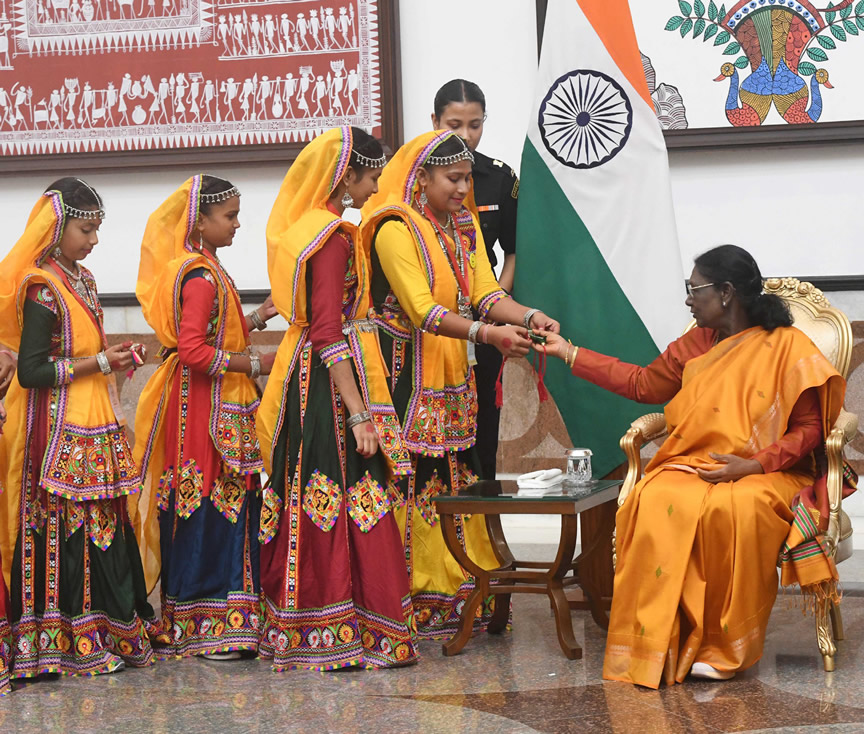
At the Rashtrapati Bhavan Cultural Center, President Droupadi Murmu hosted students and teachers from government schools representing different parts of India. The gathering included 89 students and 32 teachers—122 participants in total—from 17 states and one Union Territory, along with representatives of the Kendriya Vidyalaya Sangathan and Navodaya Vidyalaya Samiti. Significantly, 13 children with special needs were also among the participants.
Addressing the students, President Murmu reflected on the deeper meaning of Raksha Bandhan as a festival founded on love, care and protection. She also expanded that message beyond relationships among family members and friends, drawing attention to humanity’s responsibility toward the natural world.
Expressing concern about environmental imbalance, the President encouraged students to consider tying rakhis on plants and trees as a symbolic pledge to protect and nurture them. Such a gesture, she suggested, could help transform the traditional message of Raksha Bandhan into a broader lifelong commitment—particularly for the country’s younger generation—to safeguard the environment and the future.
The students’ visit was also part of a wider educational experience in New Delhi. They had visited the Pradhan Mantri Sangrahalaya the previous day and later received guided tours of Rashtrapati Bhavan and Amrit Udyan.
The occasion also featured thoughtful expressions of creativity and regional culture. Students from Tripura presented the President with handmade gifts, including a bamboo replica of the Mata Tripura Sundari Temple and a sketch of President Murmu.
Together, these moments made the celebration more than a ceremonial observance. They gave participating students an opportunity to engage with India’s institutions, history, culture, and constitutional leadership while sharing a festival traditionally associated with personal affection and protection.
Smiles, High-Fives and Rakhis at 7, Lok Kalyan Marg
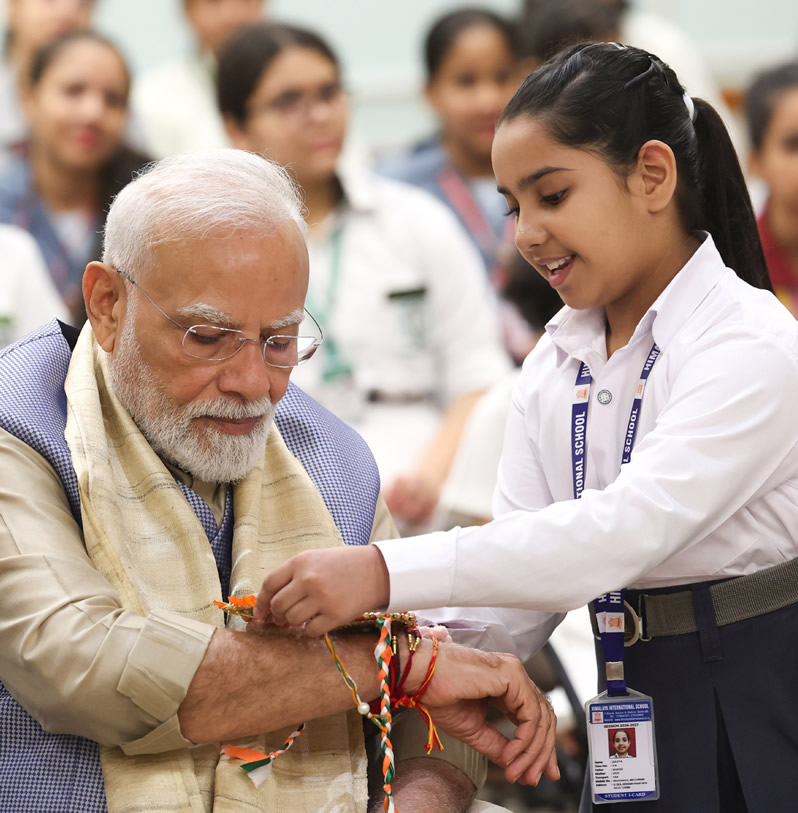
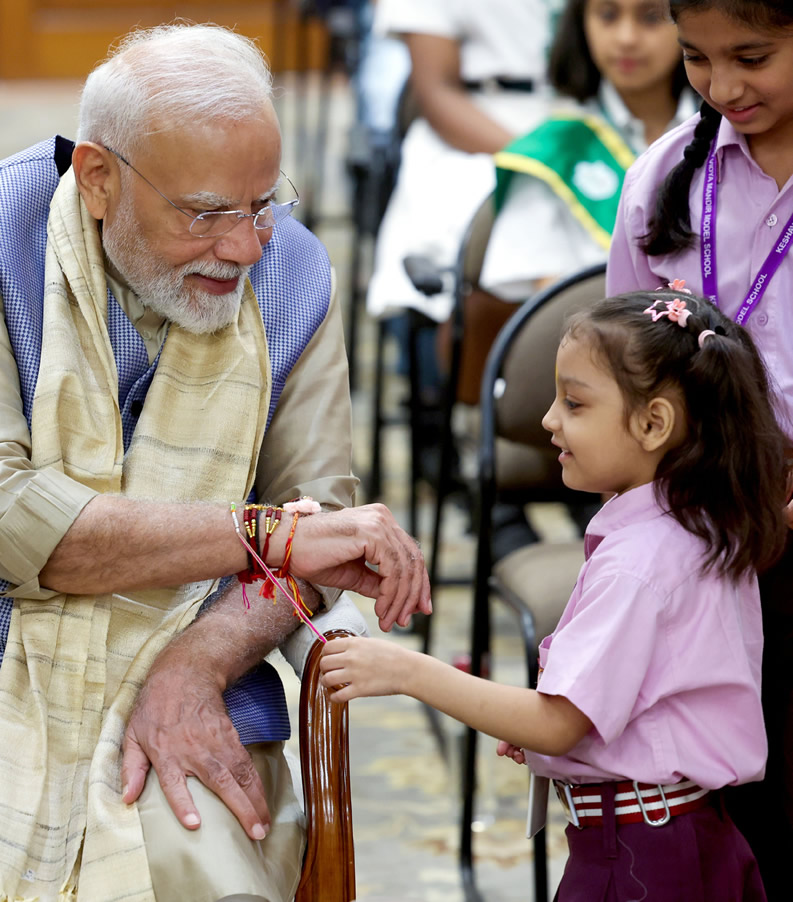
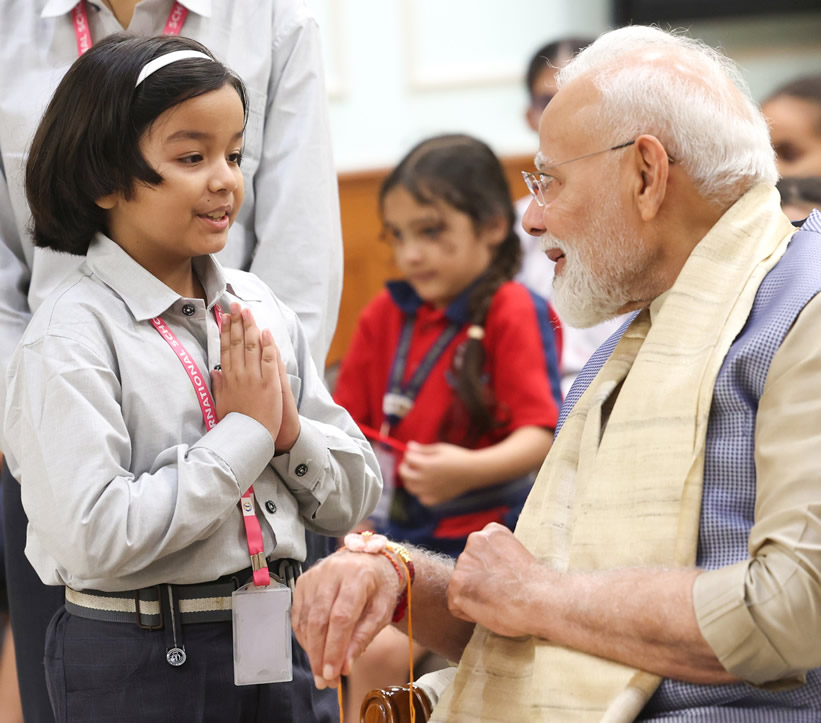
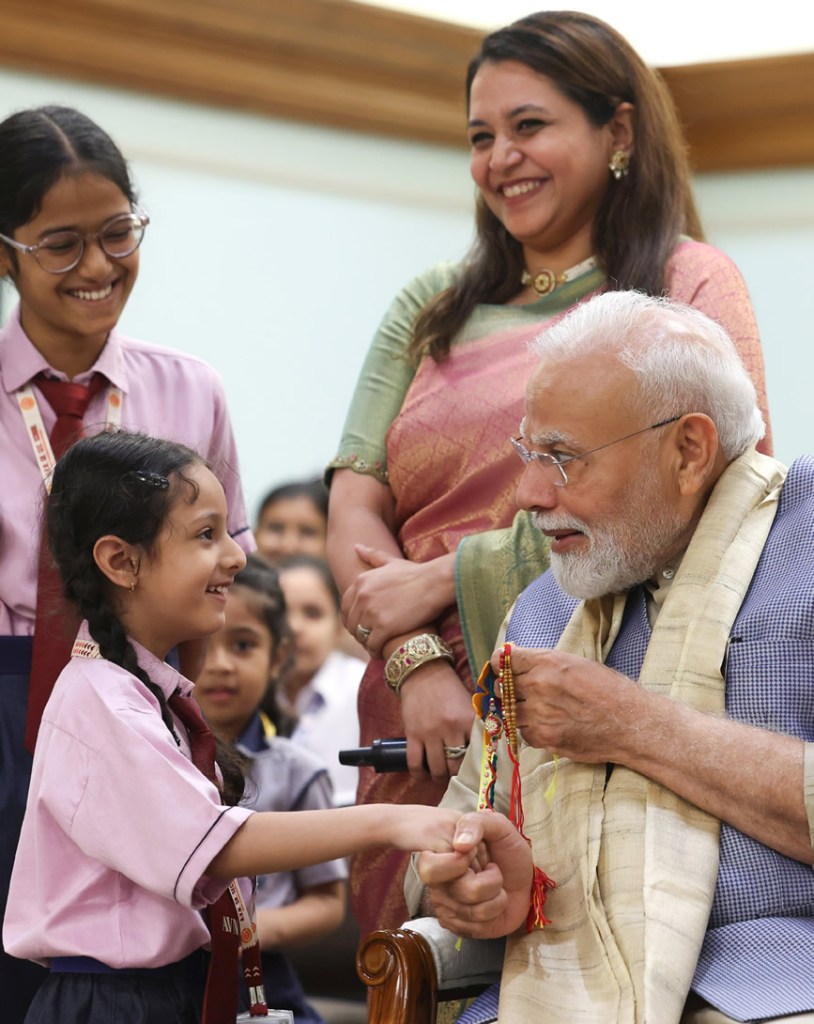
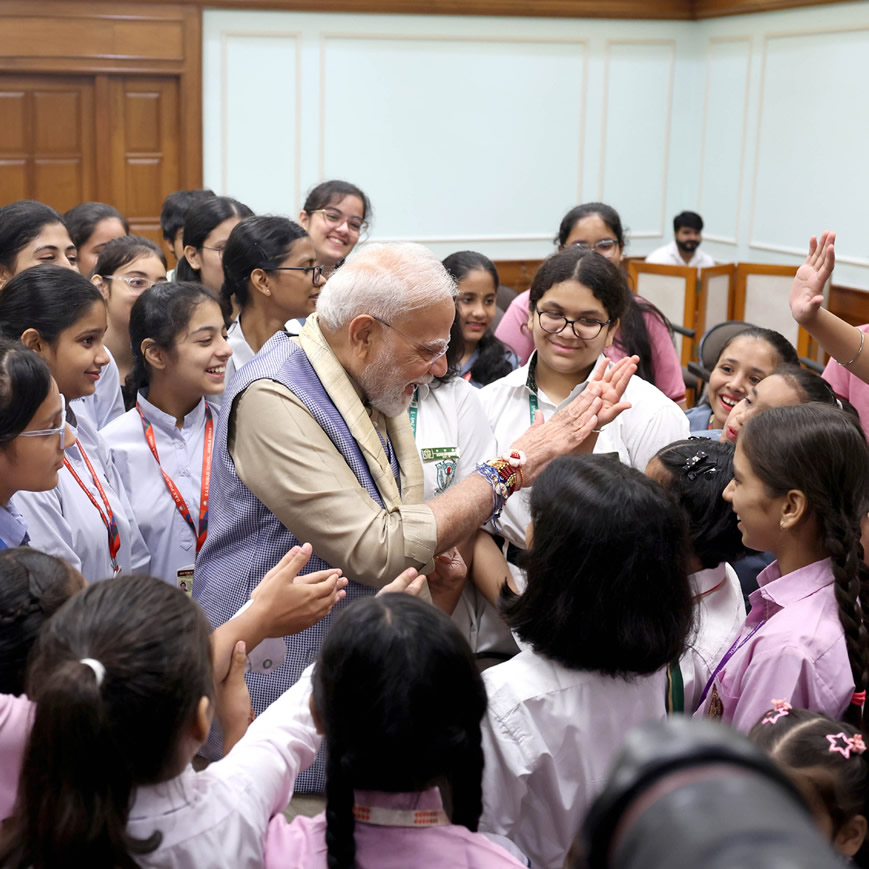
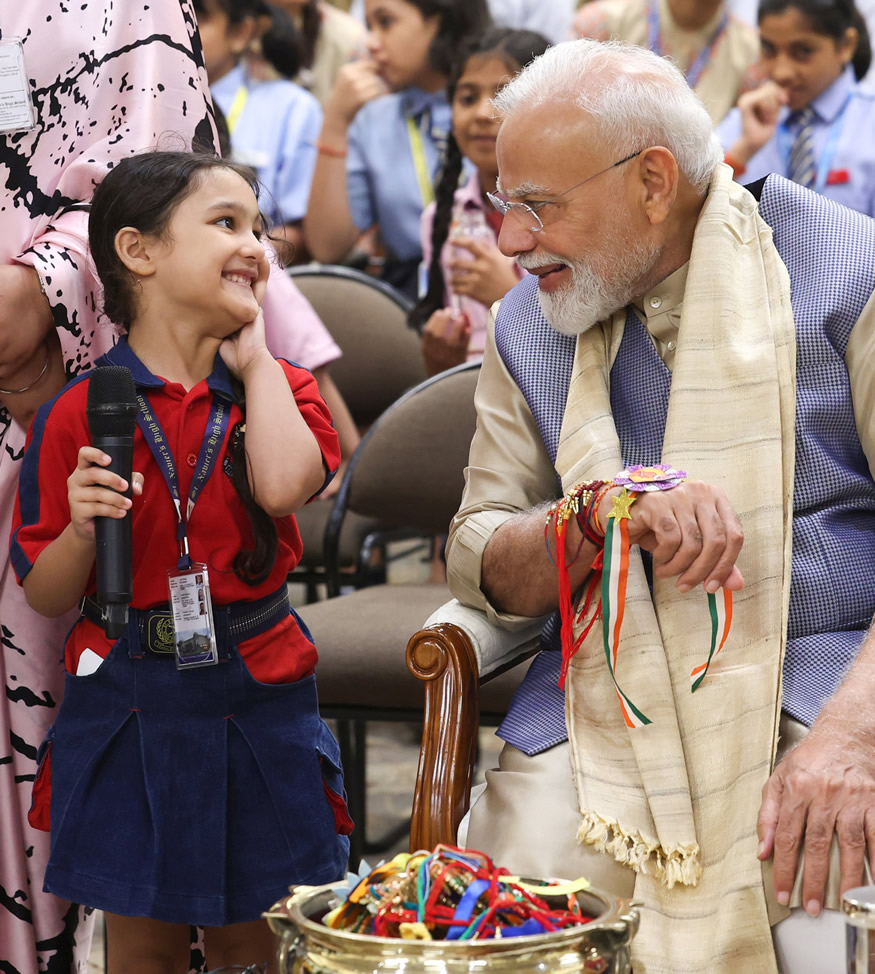
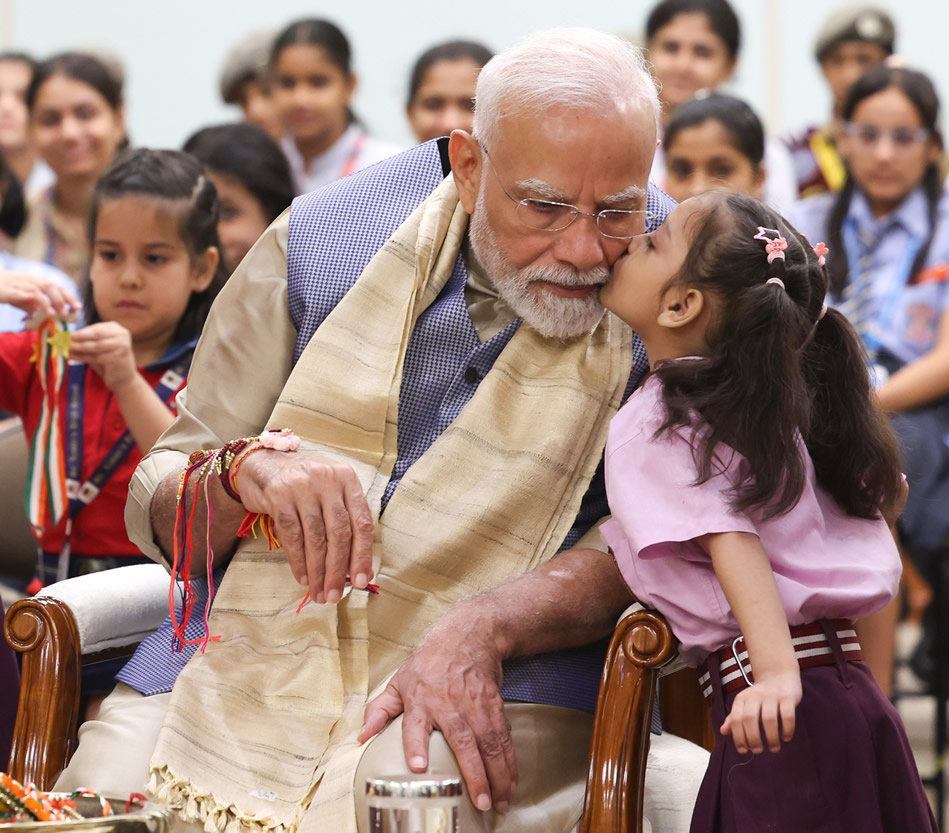
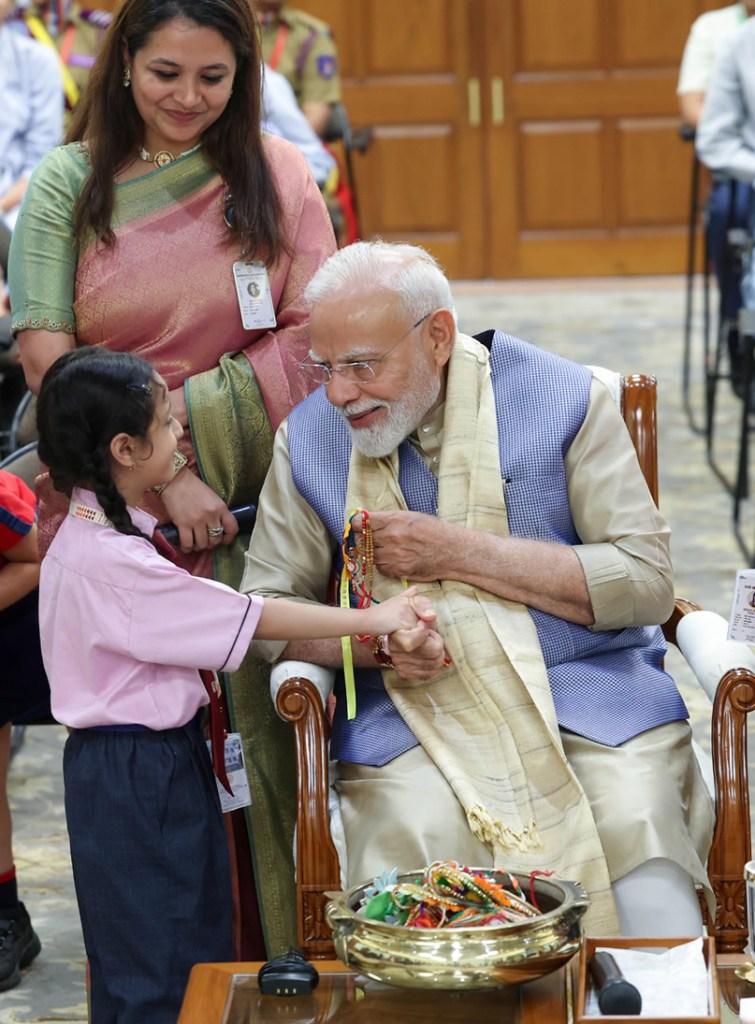
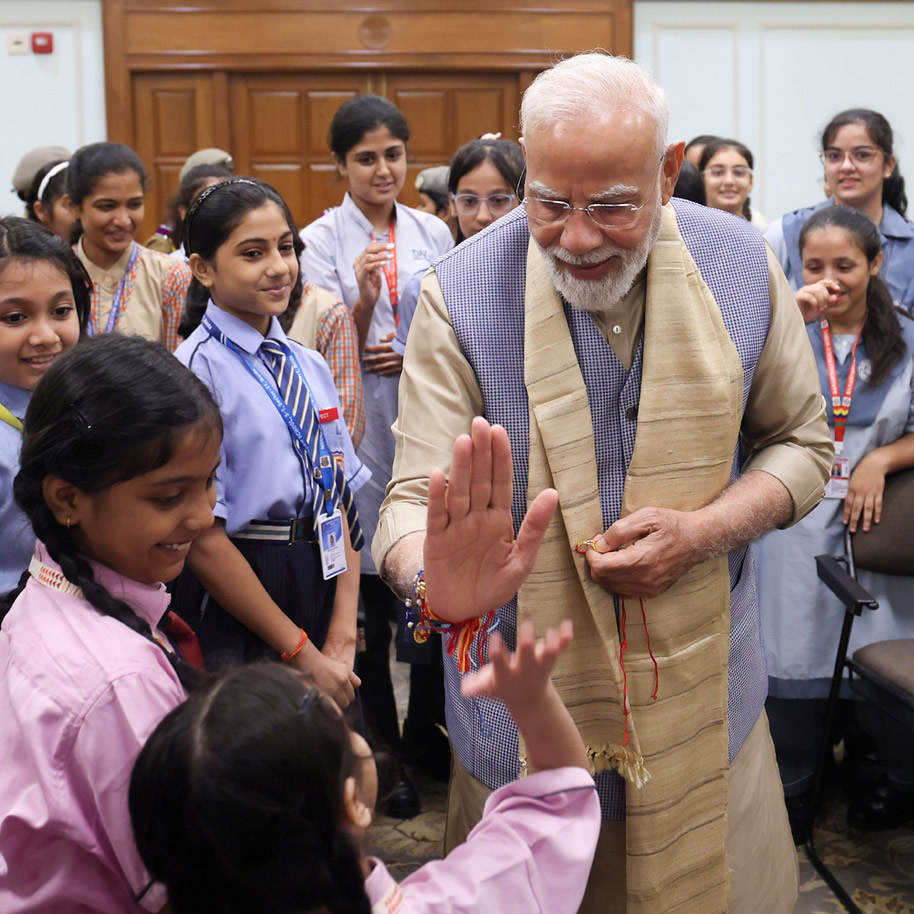
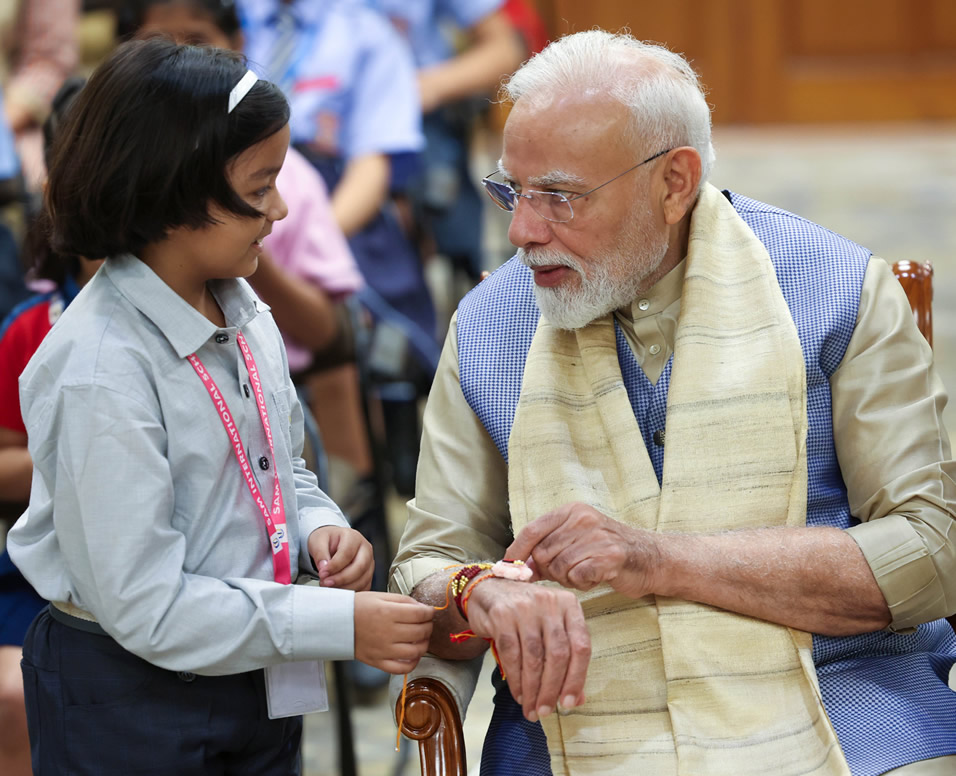
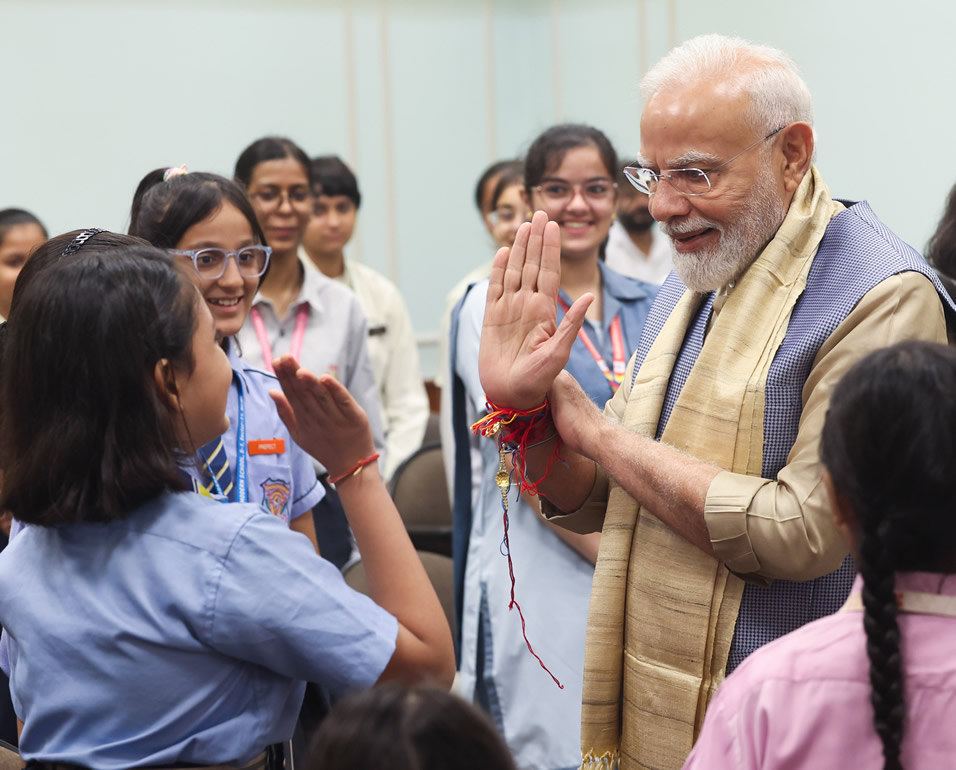
At 7, Lok Kalyan Marg, Prime Minister Narendra Modi celebrated Raksha Bandhan with school students, primarily schoolgirls, some of whom attended in NCC attire.
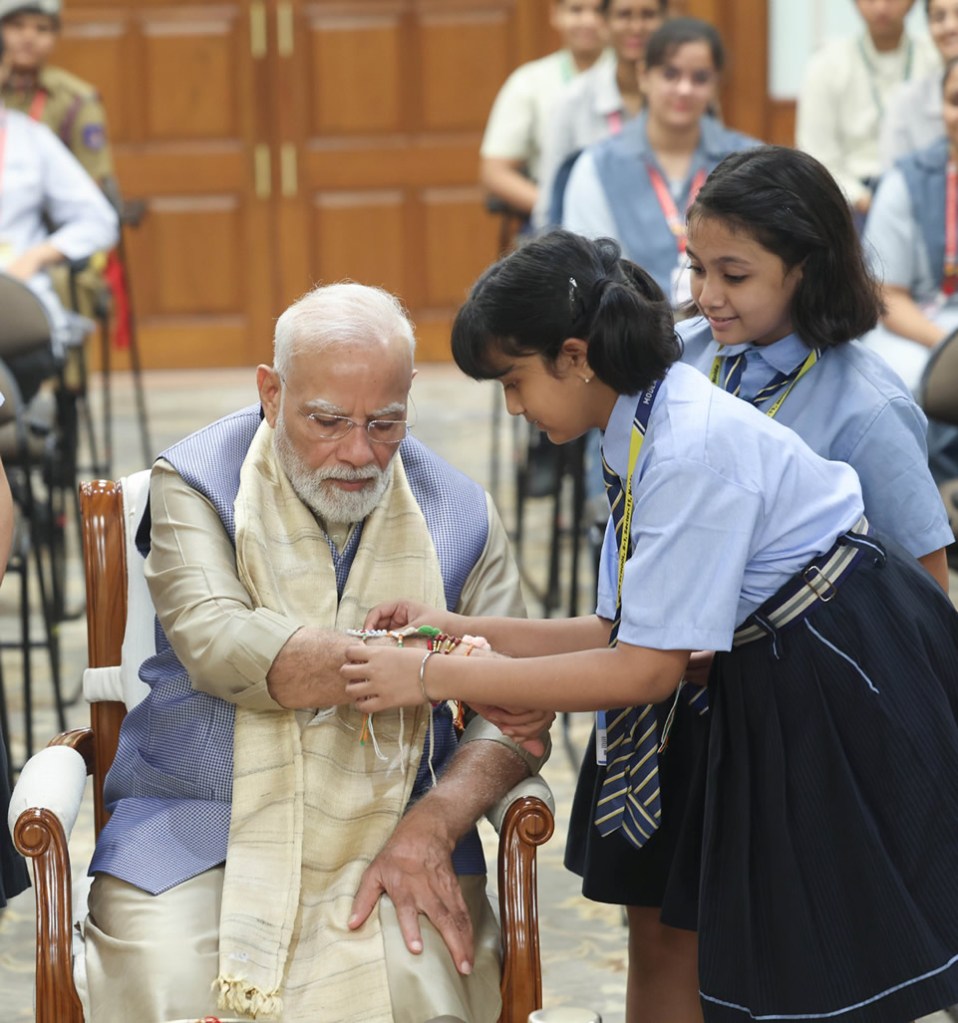
The atmosphere captured in photographs and video clips was notably informal and cheerful. Children tied rakhis on the Prime Minister’s wrist as conversations, handshakes and high-fives added to the sense of celebration.
Sharing glimpses of the occasion on Instagram, the Prime Minister captioned a post:
“Hi5, smiles and more during today’s Raksha Bandhan celebrations at 7, LKM.”
One particularly endearing exchange came when a child asked Modi about his childhood dream. His reply was simple and directed affectionately toward the children before him:
“Aap logo ko milna” — to meet you all.
The Prime Minister also extended Raksha Bandhan greetings to the nation, expressing the hope that the festival would bring happiness, prosperity and success and further deepen the bonds of affection and harmony among people.
The images from the celebration illustrated why interactions between national leaders and children often resonate so strongly: formal institutions and official residences momentarily became settings for laughter, curiosity and uncomplicated human connection.
Vice President Radhakrishnan Joins the Celebration
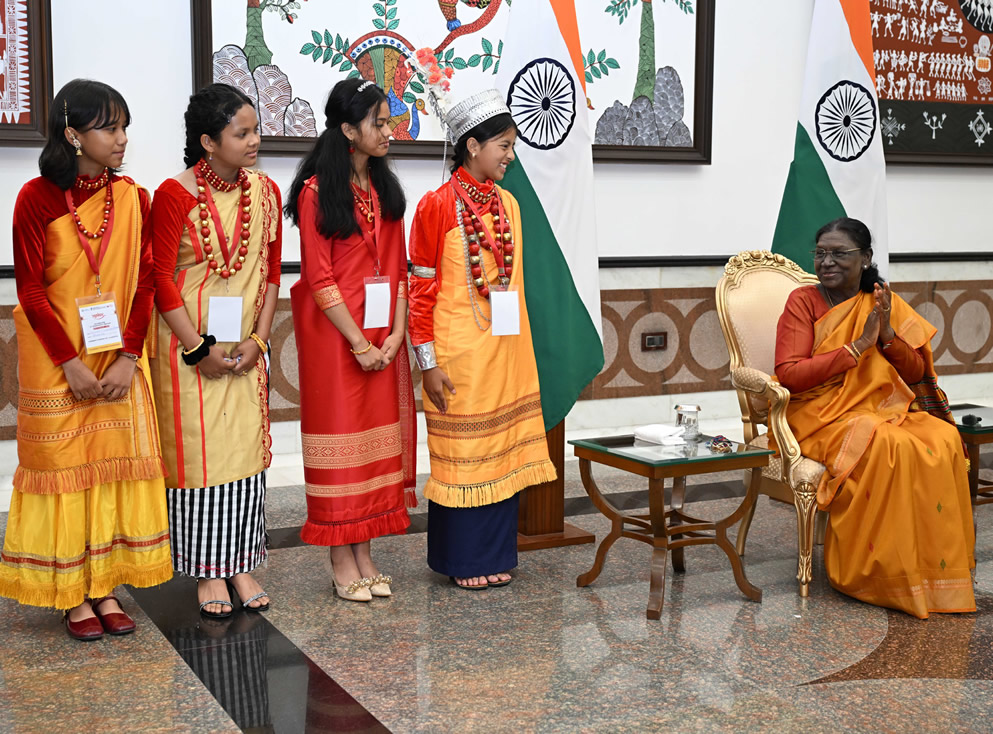
Raksha Bandhan was also celebrated at Uprashtrapati Bhavan, where Vice President C.P. Radhakrishnan welcomed schoolchildren for a similar occasion.
The children tied rakhis on the Vice President’s wrist in a celebration described in official posts as being filled with warmth and joy. The occasion highlighted the values traditionally associated with the festival—love, trust and protection.
Like the events at Rashtrapati Bhavan and the Prime Minister’s residence, the Vice President’s celebration brought children into direct contact with one of the country’s highest constitutional offices, giving the festival a distinctive public and national dimension.
One Festival, Three Celebrations, A Shared Message
Although each celebration had its own setting and character, a common thread ran through all three.
At the Prime Minister’s residence, the emphasis was on spontaneous interaction, smiles and the affectionate connection between children and a national leader. At Uprashtrapati Bhavan, the celebration reflected Raksha Bandhan’s traditional symbolism of love, trust and protection. At Rashtrapati Bhavan, President Murmu added another important dimension by linking the festival’s idea of protection with environmental responsibility.
Her appeal to children to extend the symbolism of the rakhi to plants and trees was particularly significant. In doing so, the message of Raksha Bandhan moved beyond protecting an individual relationship toward protecting the natural environment—a responsibility that will increasingly belong to future generations.
The participation of children from numerous states and backgrounds also reflected India’s diversity. Young students representing different regions, cultures and educational institutions came together in New Delhi around a shared festival and shared values.
A Festival That Connects Generations
Raksha Bandhan has always been rooted in the idea of a bond that carries both affection and responsibility. The celebrations of August 28, 2026, showed how those values can find expression far beyond the family home.
As President Droupadi Murmu, Prime Minister Narendra Modi and Vice President C.P. Radhakrishnan celebrated with schoolchildren, the festival created moments of direct connection between India’s young citizens and the country’s highest offices.
Widely circulated official photographs and videos from the President’s office, the PMO, and the Vice President’s office captured rakhis being tied, smiles being exchanged, and children participating enthusiastically in the celebrations. Yet behind those images was a broader message.
Raksha Bandhan remains a celebration of relationships—but relationships are also sustained by care, trust, and responsibility. Whether expressed through a child’s rakhi, a leader’s interaction with students, or a pledge to protect a tree, the spirit of the festival continues to evolve while retaining its essential meaning.
On August 28, 2026, three of India’s highest offices celebrated Raksha Bandhan with children. In doing so, they offered a simple but powerful reminder: the bonds we celebrate today also carry responsibilities for the world we protect tomorrow.
 CitiTimes