

Legacy Meets the Future: Argentina and Spain Set for a World Cup Final That Could Define a Football Generation

Some FIFA World Cup finals decide a champion. Others define an era.
The 2026 FIFA World Cup final between Argentina and Spain at MetLife Stadium in East Rutherford, New Jersey, on Sunday promises to be one of those rare occasions where history, symbolism, and footballing excellence converge. It is more than a contest for the sport’s greatest prize—it is a meeting of two football philosophies, two golden generations, and perhaps two different chapters in the game’s evolving story. The final will kick off at 3 p.m. ET and marks the first all-Spanish-speaking World Cup final since Uruguay defeated Argentina in the inaugural tournament in 1930.
Argentina: Champions Who Refuse to Surrender


Argentina have not simply defended their crown—they have survived it.
Lionel Scaloni’s side has navigated arguably the most dramatic route to the final. Seven victories from seven matches tell only part of the story. Behind that flawless record lies a team repeatedly forced to respond under immense pressure.
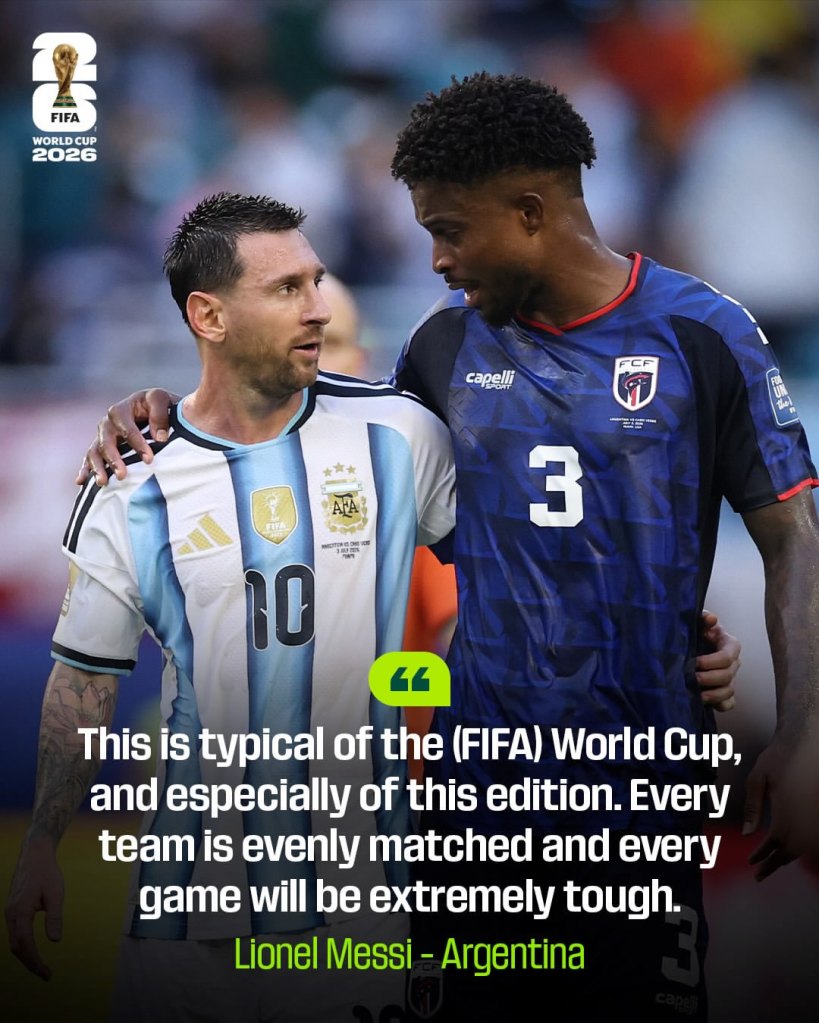
After a perfect group stage, Argentina endured four emotionally draining knockout matches. Cape Verde pushed them into extra time. Egypt tested every defensive weakness. Switzerland demanded another 120-minute performance. Then came the unforgettable semi-final against England, where Argentina appeared destined for elimination before Enzo Fernández’s late equalizer and Lautaro Martínez’s stoppage-time winner turned despair into celebration—both crafted by the timeless brilliance of Lionel Messi.
The statistics illustrate Argentina’s personality.
With 19 goals, they are the tournament’s highest scorers. Yet they have also conceded seven times, more than any finalist in recent memory. They are neither flawless nor cautious. Instead, they thrive amid uncertainty.
That resilience has become their defining characteristic.
Unlike many champions who dominate through control, Argentina has repeatedly demonstrated an ability to embrace chaos and emerge stronger. Every comeback has reinforced a growing belief that this team simply refuses to accept defeat until the final whistle.
Spain: Football Through Precision and Control


If Argentina has reached the final through emotion, Spain has arrived through calculation.
Luis de la Fuente’s European champions have quietly assembled one of the tournament’s most complete campaigns.
Spain has conceded only once throughout the competition while eliminating Austria, Portugal, Belgium, and France with remarkable composure. Their 2-0 victory over France in the semi-final perfectly reflected their tournament identity: disciplined defending, intelligent possession, and ruthless efficiency in front of goal.
The midfield remains Spain’s greatest weapon.
Rodri provides balance, Pedri orchestrates rhythm, and a technically gifted supporting cast ensures Spain rarely loses control of matches. Rather than overwhelming opponents with frantic attacks, Spain gradually suffocates them through relentless possession and positional superiority.
Their defense has arguably been the tournament’s greatest success story. While Argentina often invites pressure before striking decisively, Spain seeks to prevent danger from developing in the first place. The contrast could not be more striking.
The result is a fascinating tactical battle between the World Cup’s most prolific attack and its most disciplined defense.
Messi and Yamal: More Than a Matchup


Every World Cup final produces an iconic image.
In 2026, that image may well be Lionel Messi standing opposite Lamine Yamal.
For Messi, now 39, the stakes extend beyond another medal. Victory would secure Argentina’s fourth World Cup title and make them the first nation since Brazil in 1962 to successfully defend the trophy. More importantly, it would provide a remarkable conclusion to the greatest international career football has ever witnessed.
His influence has transcended statistics throughout this tournament.
While younger teammates have scored decisive goals, Messi has continued to shape the biggest moments through intelligence, creativity and leadership. His assists in the dramatic semi-final comeback against England served as another reminder that footballing greatness is often measured by timing rather than pace.
Across the halfway line stands football’s brightest emerging superstar.
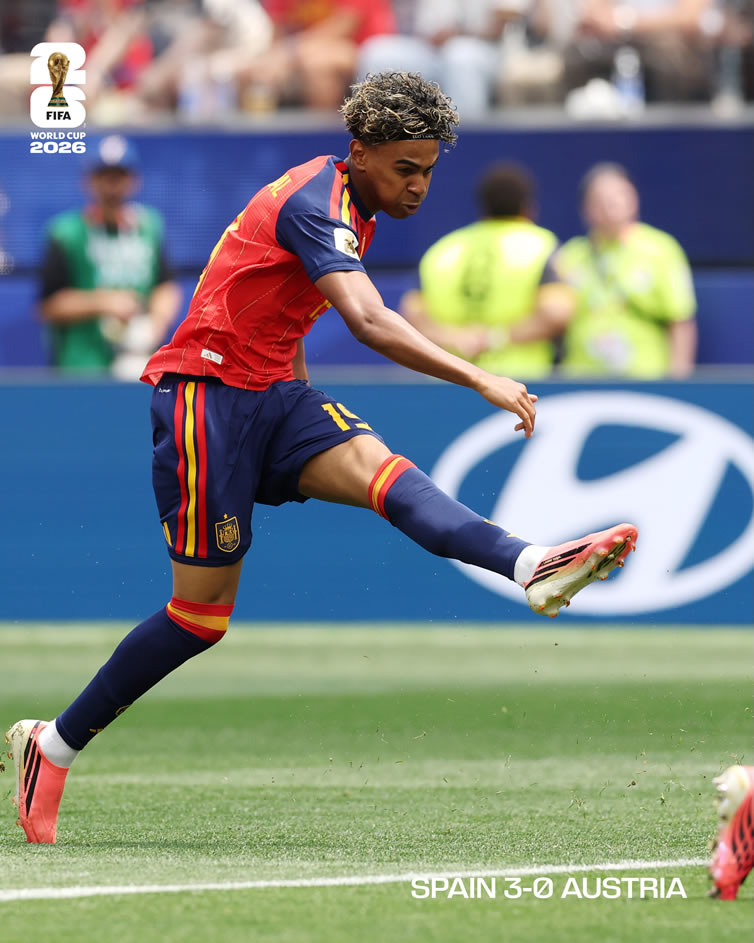
Lamine Yamal represents the future—not only for Spain but perhaps for world football itself. Fearless, technically gifted, and astonishingly mature for his age, Yamal has become the symbol of Spain’s new generation.
The narrative practically writes itself.
One legend seeking the perfect farewell.
One prodigy attempting to announce the beginning of his own era.
Even before kickoff, football has already found one of its most compelling symbolic moments.
A Clash of Footballing Philosophies

Tactically, this final presents one of the tournament’s most intriguing contrasts.
Argentina is unlikely to dominate possession. Instead, Scaloni’s team will seek quick transitions, dangerous set pieces and moments of individual inspiration. Their willingness to absorb pressure before launching devastating counter-attacks has repeatedly unsettled opponents.
Spain, meanwhile, will attempt to dictate the game’s rhythm from the opening whistle.
Expect lengthy passing sequences, aggressive pressing after losing possession, and constant attempts to stretch Argentina’s defensive structure through width and midfield overloads.
The decisive battle may ultimately take place in midfield.
If Rodri and Pedri successfully control possession, Spain can gradually wear Argentina down.
If Enzo Fernández and his teammates disrupt Spain’s rhythm and create opportunities for Messi to operate between the lines, Argentina becomes extraordinarily dangerous.
In finals, tactical perfection rarely survives ninety minutes. Adaptability often matters more than preparation.
More Than a Trophy
Regardless of the result, this final represents a broader moment in international football.
For Argentina, victory would confirm that the success that began with the 2021 Copa América was not a temporary peak but the foundation of one of the nation’s greatest footballing dynasties.
For Spain, another World Cup title would complete a remarkable renaissance following years spent rebuilding after their historic 2008–2012 golden generation.
The setting only enhances the occasion.
The New York–New Jersey metropolitan area, home to vibrant Argentine and Spanish communities, is expected to generate an atmosphere unlike any previous World Cup final hosted in the United States. The tournament’s expanded format has already showcased football’s growing global reach, and Sunday’s final offers a fitting conclusion.
Final Thoughts
Championship matches are often remembered not for tactics or statistics, but for moments.
A decisive goal.
An unforgettable save.
A single flash of brilliance that becomes part of football folklore.
Everything about Argentina versus Spain suggests another final destined to enter that conversation.
Spain arrives as perhaps the tournament’s most balanced and consistent side. Argentina arrives carrying momentum, resilience, and the enduring brilliance of Lionel Messi.
The analytical case may lean slightly toward Spain because of its defensive solidity and midfield control. Yet World Cup finals have a habit of rewarding qualities that statistics struggle to measure—belief, resilience, experience and the ability to produce something extraordinary when everything is on the line.
Whether the trophy ultimately belongs to Messi’s Argentina or Yamal’s Spain, the 2026 FIFA World Cup appears ready to conclude with a final worthy of the tournament itself—a meeting where legacy faces the future, and football once again reminds the world why its greatest stage remains unmatched.

