
QS World University Rankings 2027: The Global Higher Education Map Is Shifting East
For years, the global university hierarchy has been defined by the enduring dominance of institutions in the United States and the United Kingdom. The newly released QS World University Rankings 2027 show that while those traditional powerhouses remain firmly entrenched at the top, a significant transformation is underway. Universities across Asia and the Middle East are steadily challenging established leaders, signaling a more distributed and competitive global higher education landscape.
At the summit, continuity prevails. The Massachusetts Institute of Technology retains its position as the world’s number one institution for an extraordinary fifteenth consecutive year, underscoring its unrivaled reputation for research, innovation, and academic excellence. Imperial College London holds onto second place for a third straight year, now sharing the position with Stanford University, which has staged an impressive recovery after ranking sixth just a year earlier. The familiar elite group is rounded out by the University of Oxford, Harvard University, and the University of Cambridge.
Yet beneath this stability lies a deeper story: the accelerating rise of Asia.
Asia’s Momentum Becomes Impossible to Ignore

The rankings reveal that Asia is no longer merely catching up—it is increasingly setting the pace. Mainland China, Hong Kong SAR, and Singapore have all posted notable gains, reflecting years of sustained investment in research infrastructure, internationalization, and talent development.
Mainland China emerges as one of the biggest success stories of the 2027 rankings. With 13 new universities entering the rankings and 26 institutions achieving record-high positions, the country’s higher education system continues its remarkable ascent. Peking University and Tsinghua University now sit comfortably within the global top 15, highlighting China’s growing influence in global research and academic reputation.
Hong Kong SAR stands out even more dramatically. Seven of its ten ranked universities improved their positions, making it Asia’s most improved higher education system for the second consecutive year. The achievement is particularly striking because, for the first time, two Hong Kong institutions have entered the global top 20: The University of Hong Kong at 11th and The Chinese University of Hong Kong at 18th.
Singapore, meanwhile, remains firmly among the world’s elite. Both the National University of Singapore and Nanyang Technological University continue to rank among the top global institutions, reinforcing the city-state’s status as one of the world’s premier education hubs.
The United States Remains the Benchmark
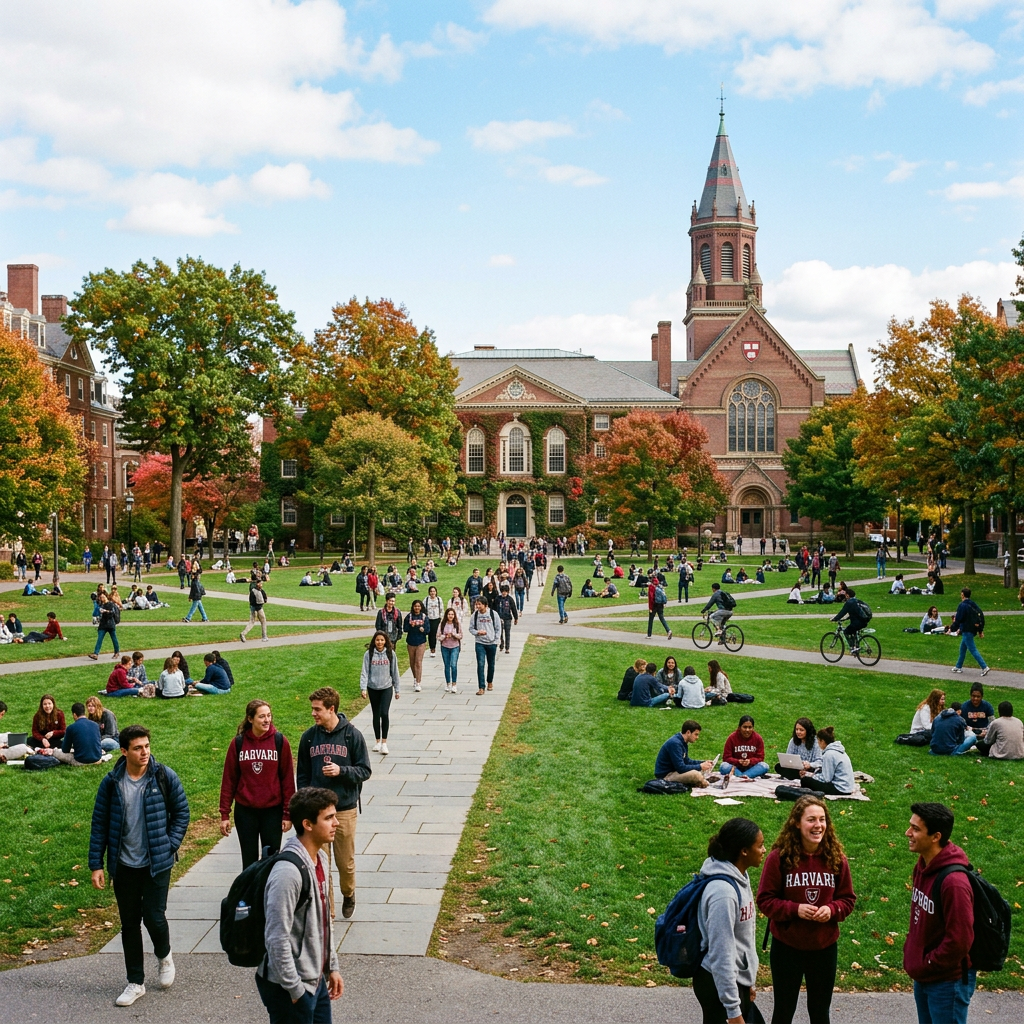
Despite growing competition, reports of the decline of American higher education remain greatly exaggerated.
The United States continues to dominate in scale, research output, and institutional reputation. It remains the most represented higher education system in the rankings, with 184 universities featured. Harvard leads globally in four critical indicators—Academic Reputation, Citations per Faculty, Employer Reputation, and Employment Outcomes—while institutions such as MIT, Stanford, and California Institute of Technology continue to set international benchmarks.
The return of Yale University and Johns Hopkins University to the global top 20 further reinforces the depth of American higher education.
However, the rankings also suggest that the United States can no longer rely solely on historical prestige. The gap between established Western institutions and rising Asian competitors is narrowing as investment, research capacity, and international collaborations expand elsewhere.
The UK Holds Firm but Faces New Pressures
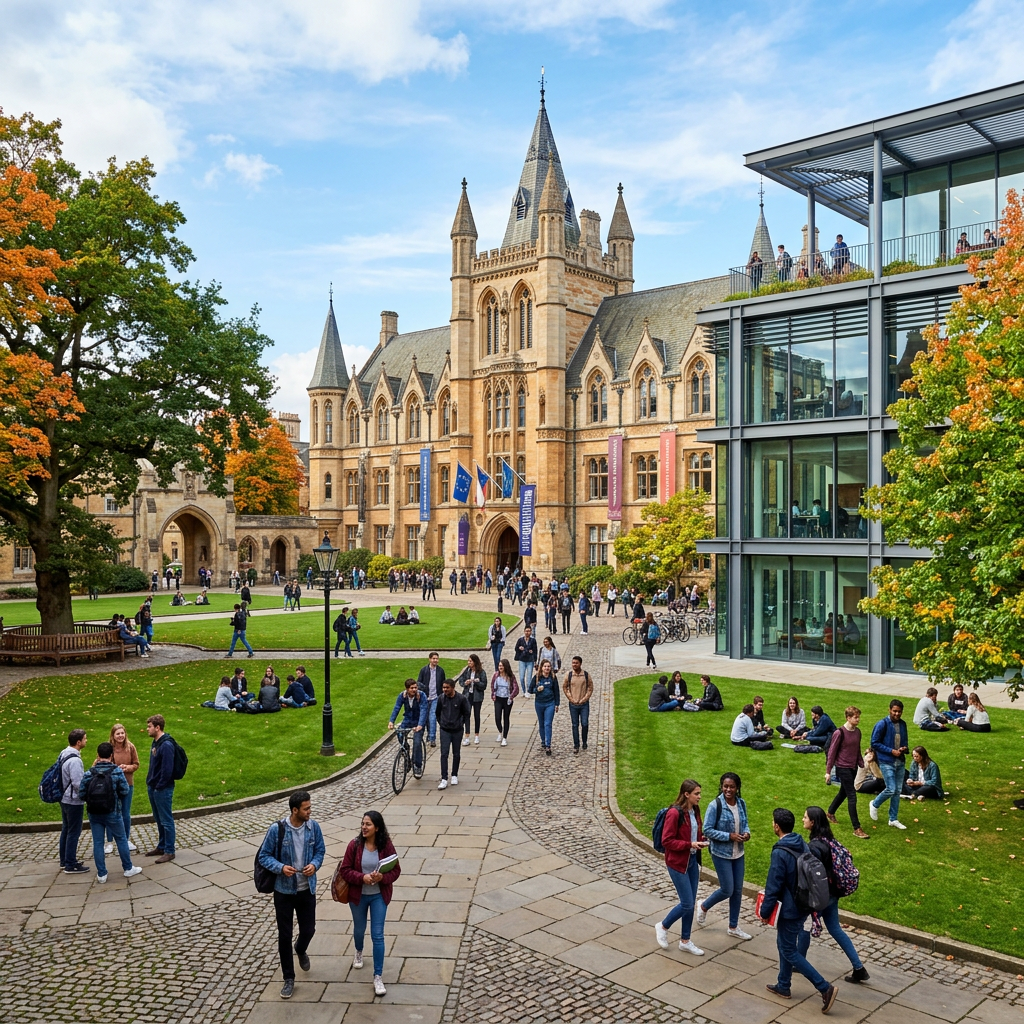
The United Kingdom remains one of the strongest higher education systems in the world, placing four universities in the global top 10. Several institutions—including the University of Bath and University of Exeter—achieved their highest-ever rankings.
Yet the broader European picture is more complex. While countries such as Germany, France, Spain, and Italy are expanding their representation and improving performance, other systems appear to be advancing more slowly. The rankings suggest that long-term public investment, research funding, and innovation-focused policies are increasingly determining which countries maintain competitiveness.
Among European Union institutions, Technical University of Munich emerges as the bloc’s highest-ranked university, followed by Université PSL.
The Middle East’s Quiet Rise
One of the most compelling trends in the 2027 rankings is the emergence of the Gulf region as a serious contender in higher education.
Universities across Saudi Arabia, Qatar, and the United Arab Emirates achieved record performances. King Fahd University of Petroleum and Minerals reached a historic high of 63rd globally, while King Saud University, Qatar University, and Khalifa University also posted their best-ever results.
These gains reflect a broader strategy across the Gulf: leveraging significant investments in research, innovation, and international partnerships to diversify economies beyond natural resources.
Diverging Fortunes Elsewhere

The rankings paint a mixed picture across other regions.
Australia continues to strengthen its global profile, with the University of New South Wales emerging as the country’s top-ranked institution for the first time. Ireland also recorded notable progress, highlighted by University College Dublin entering the global top 100.
Canada, by contrast, faces growing competitive pressure. Although McGill University remains the country’s leading institution, many Canadian universities have slipped as competitors elsewhere improve more rapidly across key metrics.
Latin America’s challenges persist. More than half of the region’s universities declined in the rankings, with Universidad de Buenos Aires remaining the only institution from the region within the global top 100.
In Africa, South Africa continues to dominate the continental landscape. Although the University of Cape Town slipped in the rankings, it remains Africa’s highest-ranked university, while other South African institutions continue to gain global visibility.
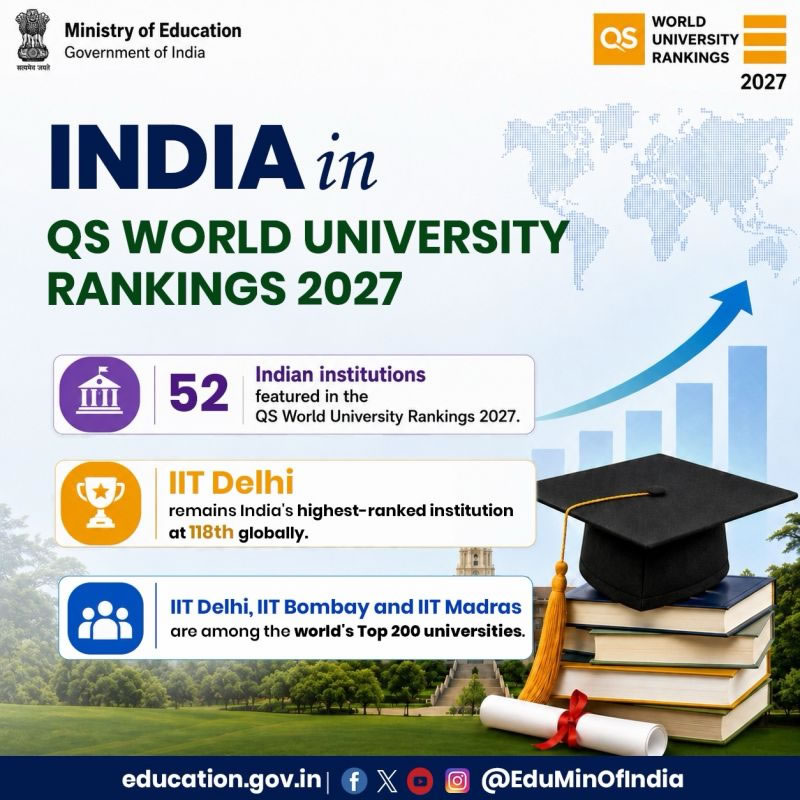
IIT Delhi has established itself as the top-ranked university in India, ranking 118th globally. This remarkable achievement marks the best-ever standing attained by any Indian institution in the history of the QS global rankings.
In the 2027 edition, a total of 52 Indian institutions are featured, making India the fifth-most-represented country worldwide. However, only three Indian universities have managed to break into the prestigious global top 200 list.
Delhi University, Shoolini University in Solan, and Chandigarh University in Mohali have excelled and risen significantly.
Beyond Rankings: A New Era of Competition
The QS World University Rankings 2027 tell a story that extends far beyond numerical positions. They reflect a changing geography of knowledge production, research excellence, and academic influence.
As QS Senior Vice President Ben Sowter notes, higher education remains a critical driver of innovation, economic growth, and international collaboration. But the rankings also reveal that excellence is becoming less concentrated. Institutions across Asia and the Middle East are translating strategic investments into measurable outcomes, challenging the long-standing dominance of Western universities.
For students, researchers, and policymakers, the message is clear: the future of global higher education will not be defined by a handful of traditional destinations. Instead, it will be shaped by an increasingly diverse network of world-class institutions competing across continents for talent, ideas, and influence.
The era of Western dominance is not over—but the era of global competition has unmistakably arrived.
 CitiTimes