
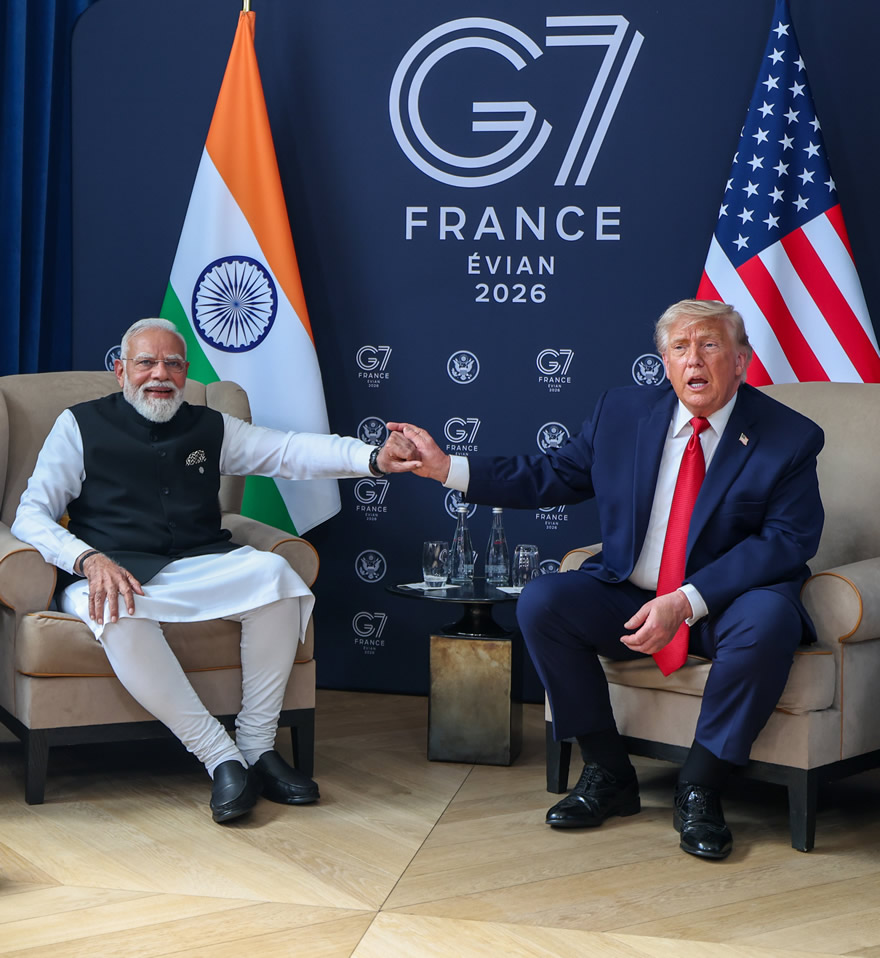
Modi and Trump Reaffirm Strategic Ties at G7 Summit, Push for Trade and Technology Cooperation

Evian, France | June 18, 2026
On the sidelines of the G7 Summit in Evian, France, Prime Minister Narendra Modi and U.S. President Donald J. Trump held a high-level bilateral meeting that underscored the growing depth of the India–United States relationship and its expanding significance in an increasingly complex global landscape.
The meeting, held on June 17, came at a time when geopolitical tensions, economic realignments, and technological competition are reshaping international partnerships. Against this backdrop, both leaders reviewed progress across a broad spectrum of strategic initiatives and reaffirmed their commitment to strengthening the India–U.S. Comprehensive Global Strategic Partnership.
Focus on Peace and Stability in West Asia
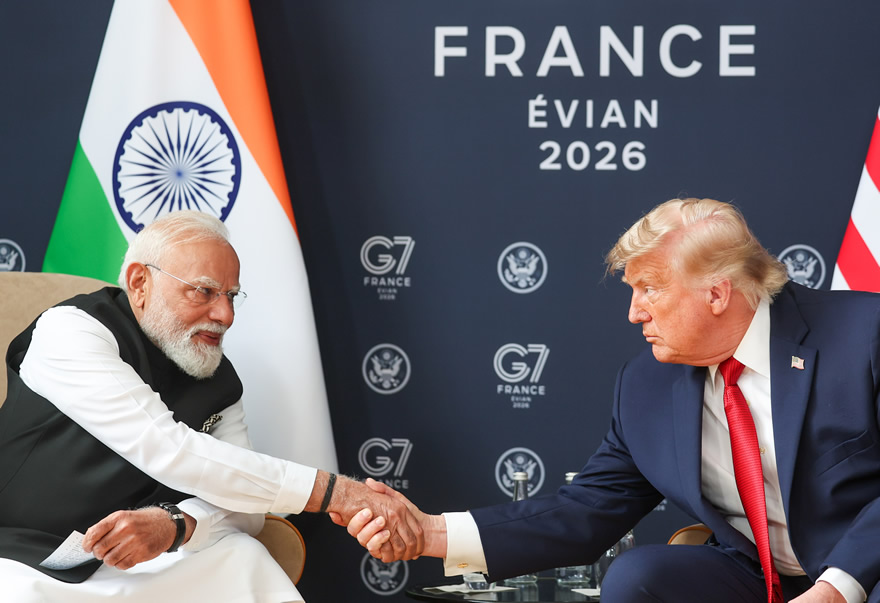
A major point of discussion was the evolving situation in West Asia. Prime Minister Modi commended President Trump for diplomatic efforts that contributed to an understanding aimed at ending the ongoing conflict in the region and restoring stability.
Highlighting India’s longstanding interest in secure global trade routes, Modi emphasized the importance of safeguarding freedom of navigation and ensuring uninterrupted commercial movement through the Strait of Hormuz—one of the world’s most critical energy and shipping corridors. He also stressed the need to guarantee the safety of seafarers navigating the region.
The exchange reflected the growing convergence between New Delhi and Washington on issues related to regional security, maritime stability, and the protection of global supply chains.
Advancing the India–U.S. COMPACT Agenda
The leaders also reviewed the substantial progress made under the India–U.S. COMPACT initiative—short for Catalyzing Opportunities for Military Partnership, Accelerated Commerce and Technology—launched following their meeting in Washington, D.C., in February 2025.
According to the discussions, cooperation has expanded significantly across several key sectors, including:
- Defence and security collaboration
- Strategic and emerging technologies
- Energy partnerships
- Bilateral trade and investment
The COMPACT framework has increasingly become the cornerstone of the modern India–U.S. relationship, linking national security priorities with economic and technological cooperation.
Momentum Builds for Bilateral Trade Agreement
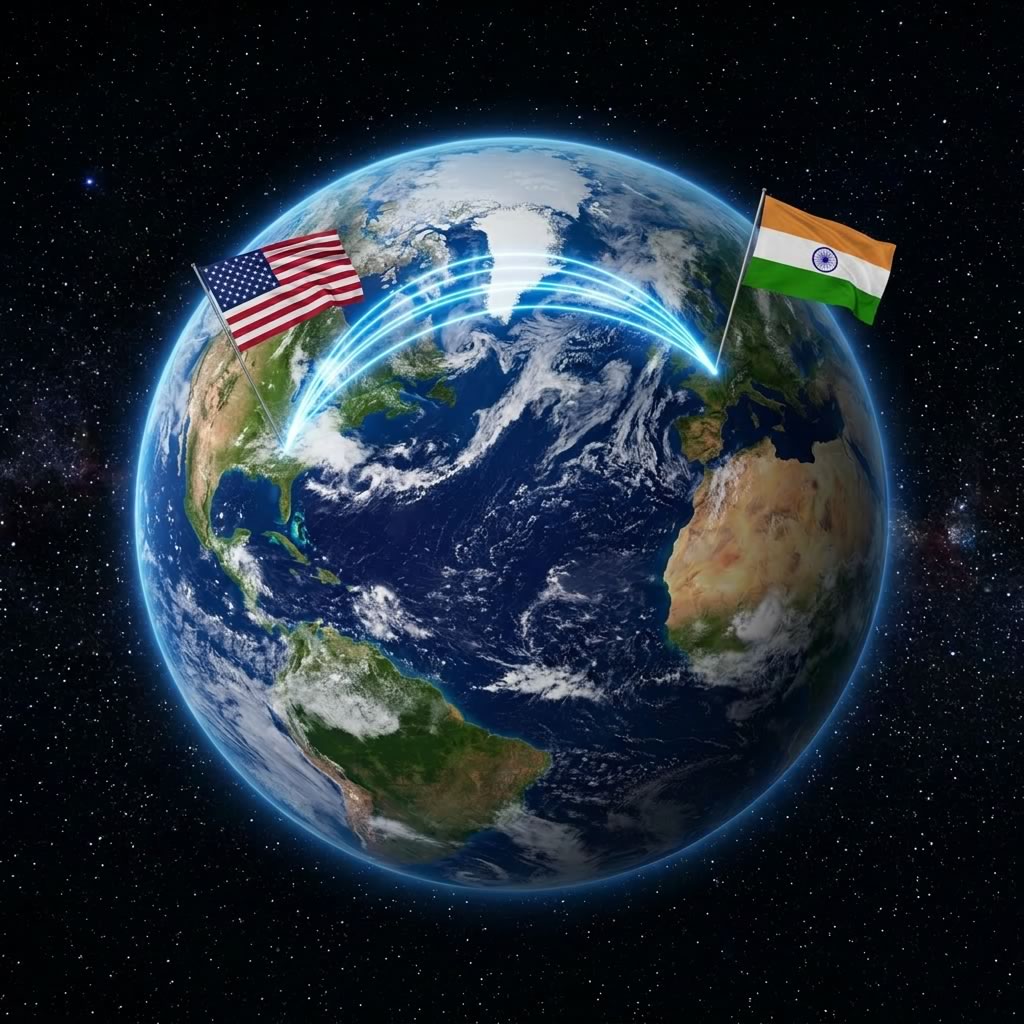
Trade emerged as another central theme of the meeting. Both leaders expressed satisfaction with the progress achieved in negotiations toward an interim Bilateral Trade Agreement. This development could further deepen commercial engagement between the world’s largest and fifth-largest economies.
Recognizing the economic opportunities that a strengthened trade framework could unlock, Modi and Trump directed officials on both sides to accelerate efforts toward concluding a balanced, mutually beneficial, and commercially meaningful agreement.
In a sign of the urgency attached to the negotiations, U.S. Trade Representative Jamieson Greer is scheduled to visit India next week to continue discussions.
If finalized, the agreement could provide fresh momentum to bilateral trade relations, reduce barriers to market access, and create new opportunities for businesses and investors in both countries.
A Partnership with Global Significance
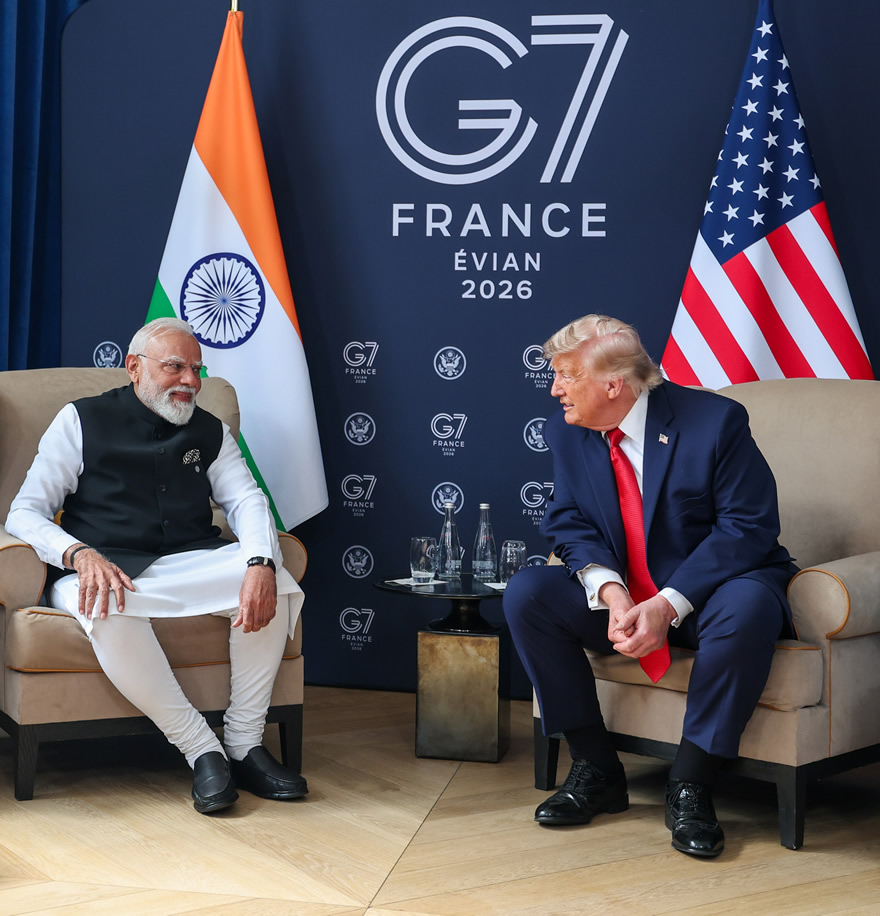
The Modi–Trump meeting reinforced a reality that has become increasingly evident over the past decade: the India–U.S. relationship has evolved beyond a traditional bilateral partnership into a strategic pillar of the broader international order.
Whether in defense cooperation, technology development, energy security, supply chain resilience, or regional stability, both nations continue to find new areas of common interest.
As global uncertainties persist, the conversations in Evian highlighted a shared determination to deepen collaboration and translate strategic alignment into tangible outcomes for citizens, businesses, and institutions on both sides.
The meeting concluded with both leaders reaffirming their commitment to advancing cooperation across all domains and further strengthening the India–U.S. Comprehensive Global Strategic Partnership in the years ahead.
 CitiTimes