
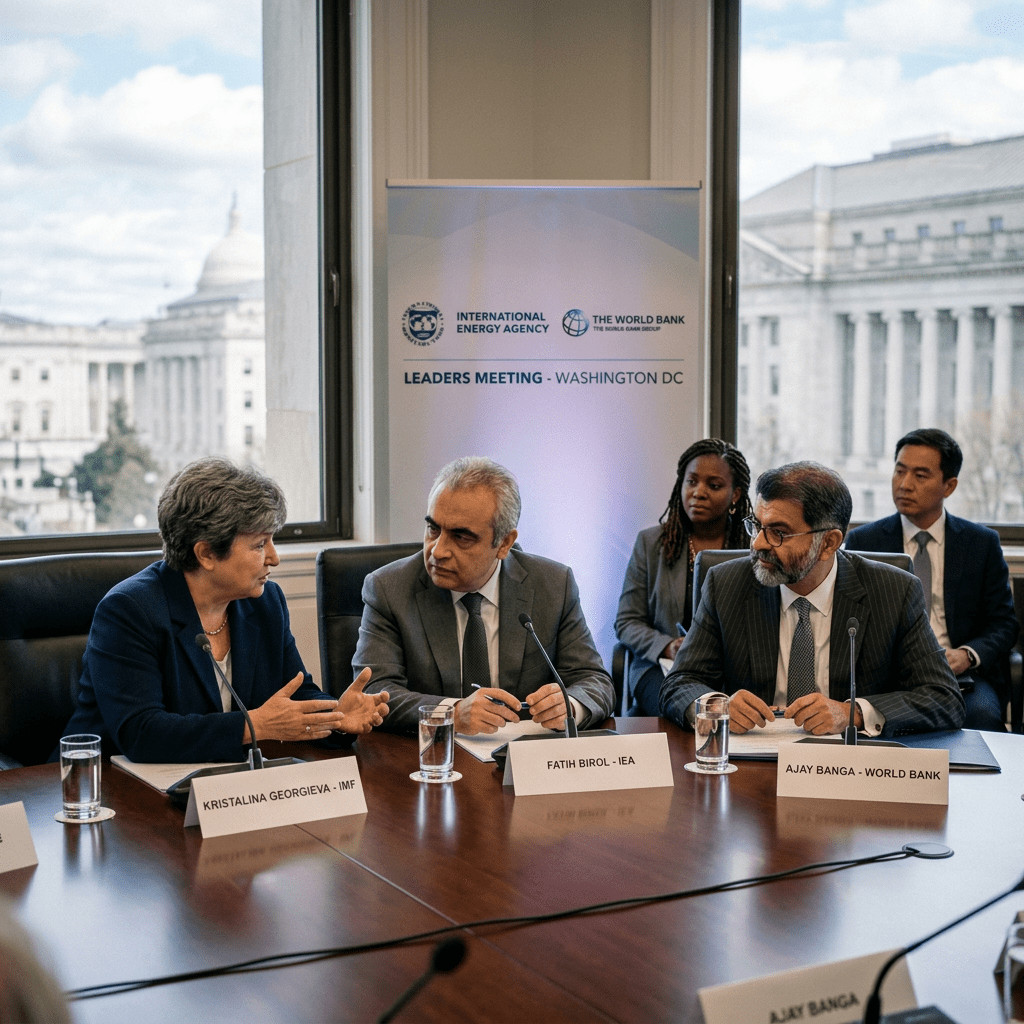
Shockwaves Without Borders: The IMF–IEA–World Bank Warning the World Can’t Ignore
April 2026 may well be remembered not just for a war, but for the global system stress test it has triggered.
Washington DC: The Heads of the International Monetary Fund, the International Energy Agency, and the World Bank Group met today and issued a joint statement on the energy and economic impacts of the war in the Middle East.
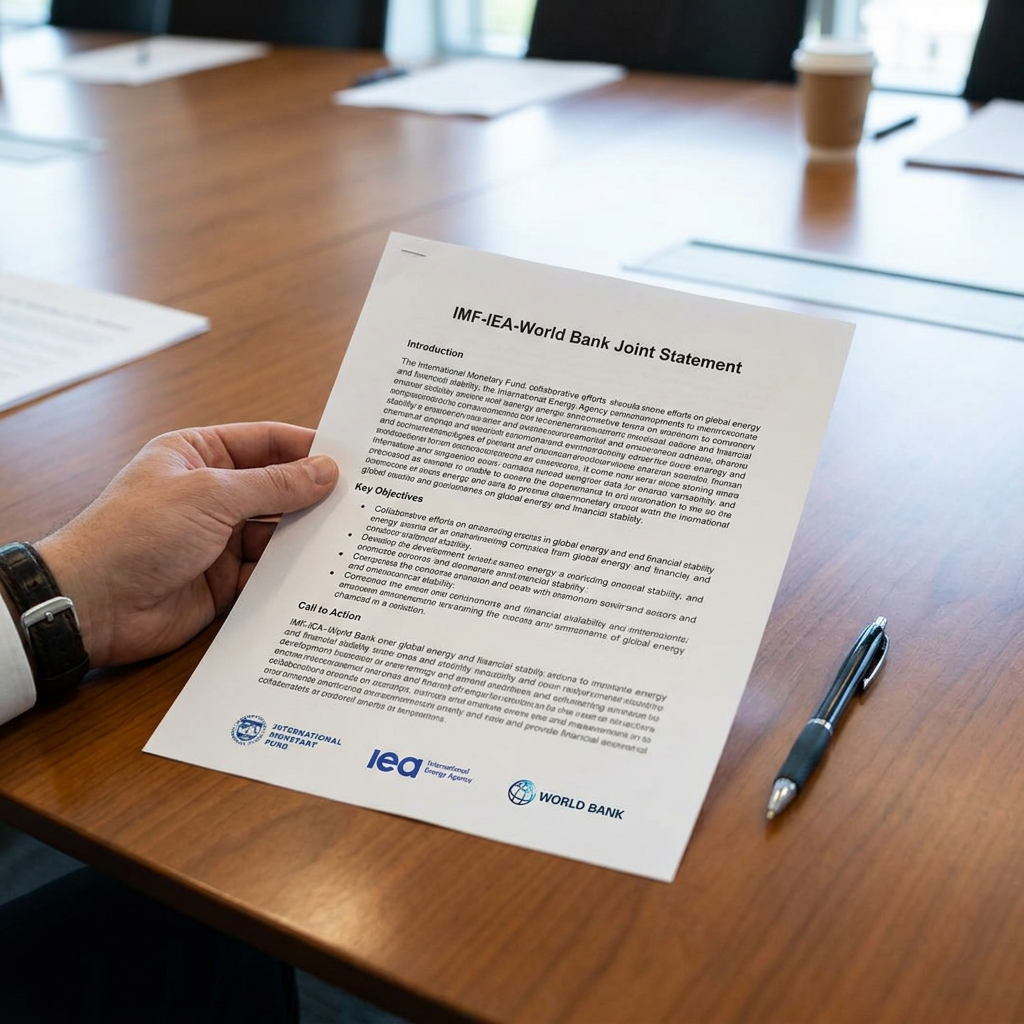
When the heads of the International Monetary Fund, International Energy Agency, and World Bank Group speak in one voice, it is rarely routine. Their latest joint statement is not merely an update—it is a warning flare.
At its core lies a stark message: the economic consequences of the war in the Middle East are not just widespread—they are deeply unequal, structurally disruptive, and likely to linger.
A Crisis That Travels Faster Than Oil
The immediate trigger is obvious. Disruptions to shipping through the Strait of Hormuz—through which a significant share of the world’s energy flows—have jolted global supply chains.
But the real story lies in how quickly the shock has spread.
Energy prices spike. Fertilizer costs follow. Food systems strain. Jobs begin to wobble. Tourism falters. Supply chains tighten. Inflationary pressures creep back into economies that had only just begun to stabilize.
This is not a linear crisis. It is a cascading one.
And as the statement underscores, the burden is not shared equally. Energy-importing nations—especially low-income countries—are absorbing the heaviest blows. For them, this is not about market volatility; it is about fiscal survival and social stability.
The Illusion of “Recovery”
Even if shipping lanes reopen tomorrow, the idea of a swift return to normalcy is, at best, optimistic—and at worst, misleading.
Infrastructure damage, supply bottlenecks, and fractured trade flows ensure that “normal” is now a moving target. Oil and gas supplies cannot simply snap back. Fertilizer shortages will ripple into future harvest cycles. Food insecurity risks becoming entrenched rather than episodic.
The institutions are careful in tone, but unmistakable in implication:
This is not a temporary shock—it is a structural disruption.
Coordination as the Only Real Buffer
What makes this moment different is not just the scale of the crisis, but the speed of institutional alignment.
The IMF, IEA, and World Bank are not operating in silos. They are pooling data, aligning forecasts, and coordinating country-level responses. This matters.
- The IMF brings financial firepower and macroeconomic stabilization tools.
- The World Bank mobilizes development financing and structural support.
- The IEA provides real-time energy market intelligence and policy coordination.
Together, they are attempting something rare: a synchronized global response to a multi-sector crisis.
But coordination, while necessary, is not sufficient.
The Deeper Fault Lines
Beneath the immediate crisis lie uncomfortable truths:
- Energy dependence remains a geopolitical vulnerability.
- Food systems are dangerously exposed to input shocks, such as fertilizer price fluctuations.
- Global inequality amplifies every external disruption.
The war did not create these fragilities—it exposed them.
And exposure in global economics is often a precursor to prolonged instability.
A Recovery That Must Be Reimagined
The closing promise of the joint statement—to “lay the foundations for a resilient recovery”—is both aspirational and revealing.
Because resilience, in this context, cannot mean returning to the pre-war status quo. That system has already proven too brittle.
A meaningful recovery would require:
- Diversified energy systems
- More localized and resilient food production
- Stronger financial buffers for vulnerable economies
- And, crucially, a rethink of global interdependence itself
The Editorial Verdict
This joint statement is not just about managing a crisis. It is about acknowledging a turning point.
The global economy is being reshaped—not by choice, but by compulsion.
And if there is one line that lingers beyond the technocratic language, it is this:
The world is entering a phase where shocks are no longer exceptions—they are the operating environment.
The question is no longer whether the system can recover.
It is whether it can adapt fast enough to survive what comes next.
— CitiTimes Editorial Creator holds distinguished IMF Academic Credentials.
 CitiTimes