

Degrees of Deception: Why UGC’s Warning on Fake Universities Demands Public Attention
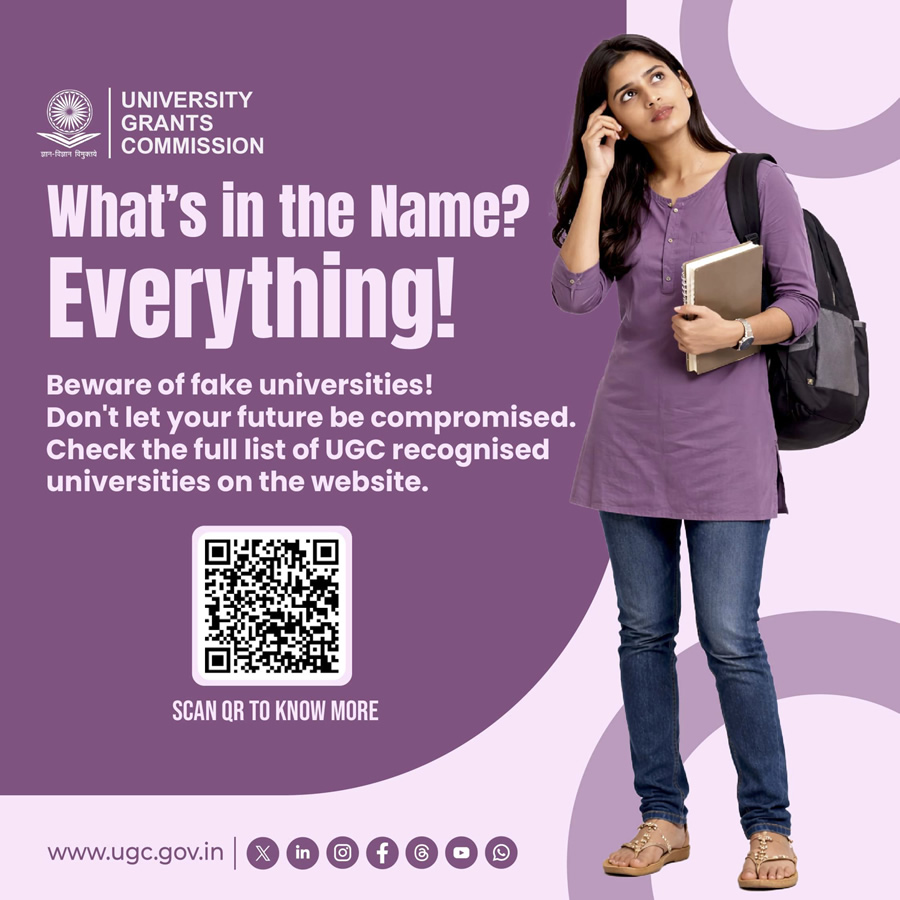
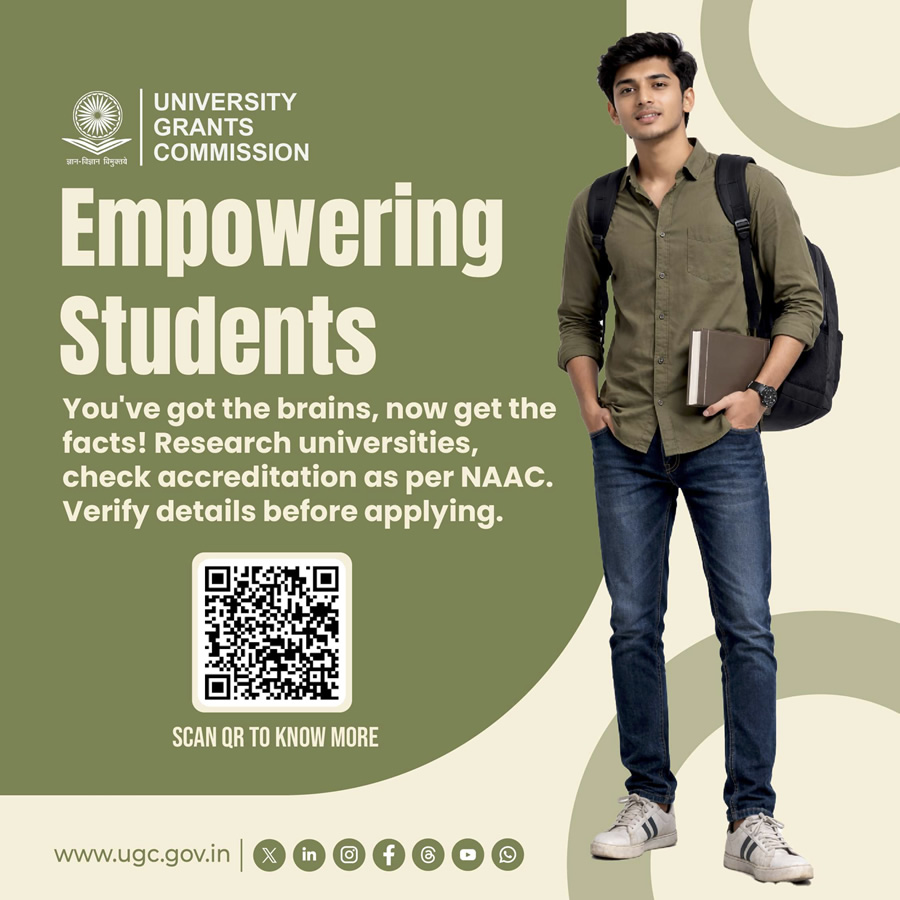
By issuing its April 9, 2026, public notice, India’s higher education regulator has done more than restate the law—it has sounded an alarm.
In a country where education is still widely seen as the most reliable ladder to social mobility, the idea that a degree could be worthless is not just unsettling—it is devastating. The recent public notice from the University Grants Commission (UGC) serves as a stark reminder that the credibility of India’s academic ecosystem is under persistent threat—not from a lack of opportunity, but from the proliferation of fraudulent institutions exploiting it.
At its core, the message is simple: not all degrees are created equal—and some are not degrees at all.
The Legal Line That Cannot Be Crossed
The UGC’s directive reiterates a foundational principle under the UGC Act, 1956: only institutions established by a Central, State, or Provincial Act—or those explicitly empowered—can confer valid degrees.
This is not bureaucratic fine print. It is the legal backbone that ensures academic credibility across India.
Yet, the UGC acknowledges a troubling reality: a growing number of institutions continue to operate outside this framework, offering degrees that are neither recognized nor acceptable for employment or further education.
In effect, these institutions are selling illusions—certificates that look legitimate but carry no academic or professional weight.
The Human Cost of Academic Fraud
Behind every fraudulent degree is a student who trusted the system—and lost.
For many families, especially those investing life savings into education, the consequences are profound:
- Wasted years of study
- Financial loss
- Career derailment
- Emotional distress and stigma
The tragedy is compounded by the fact that many of these institutions mimic the branding, nomenclature, and even digital presence of legitimate universities, making it increasingly difficult for students to distinguish truth from deception.
A Digital Age Problem—And Solution
The UGC’s advisory urges stakeholders to verify institutions through its official website. This is both practical and telling.
In an era where information is abundant but verification is often neglected, due diligence has become a critical skill. The responsibility is no longer confined to regulators alone—it now extends to students, parents, and even employers.
But this raises a larger question: Why does the burden of verification fall on those most vulnerable to exploitation?
Enforcement vs. Awareness: The Missing Link
While the UGC’s notice emphasizes vigilance, it also implicitly highlights a gap in enforcement.
If fake universities continue to operate—and, in some cases, thrive—it suggests that punitive mechanisms are either too slow, too weak, or applied inconsistently.
Public notices, while necessary, are reactive tools. What India needs is a more proactive, technology-driven enforcement architecture:
- Real-time public databases of recognized institutions
- Mandatory digital verification systems for degrees
- Stronger penalties for fraudulent operators
- Coordinated action with state authorities and law enforcement
Education, Trust, and the Cost of Negligence
Higher education is not merely a sector—it is a social contract. Students invest time, money, and trust with the expectation that the system will deliver legitimacy in return.
When fake institutions infiltrate this ecosystem, they do more than defraud individuals—they erode confidence in the entire framework.
The UGC’s notice is, therefore, not just a warning. It is a call to restore that trust.
The Bottom Line
India does not suffer from a shortage of universities—it suffers from a shortage of accountability in distinguishing the real from the counterfeit.
Until enforcement matches intent, and awareness translates into action, the risk will persist.
Because in the end, the most dangerous degree is not the one that is difficult to earn—
It is the one that was never valid to begin with.
“Admission Taken. Future Denied.”
“Looks Like a University. Isn’t One.”
“The danger isn’t just fake universities—it’s how convincingly real they appear.”
 CitiTimes