
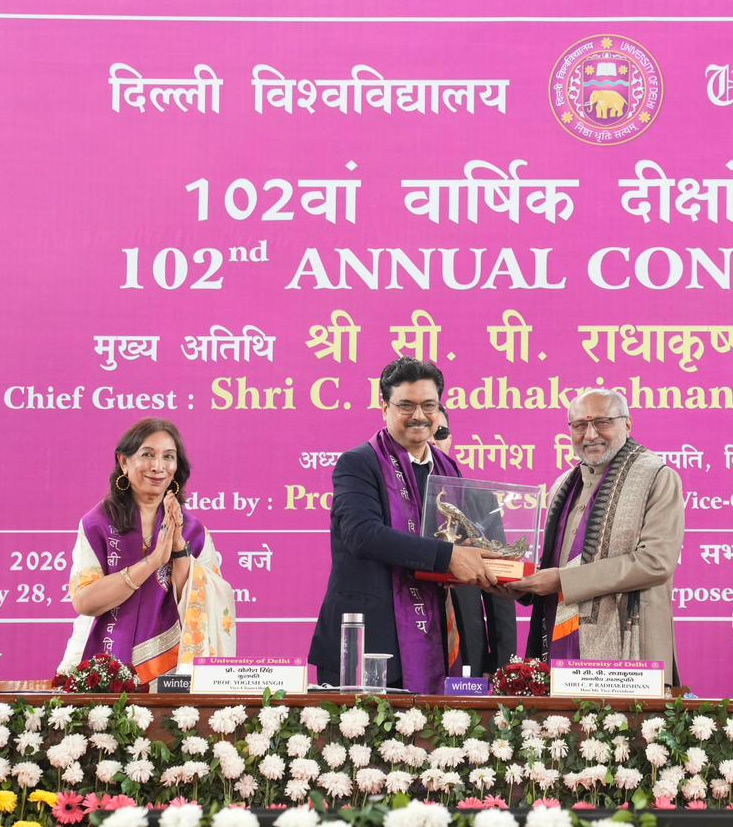
More Than a Degree: Inside Delhi University’s 102nd Convocation Where 1.2 Lakh Futures Took Flight
By CitiTimes Editorial Desk | New Delhi
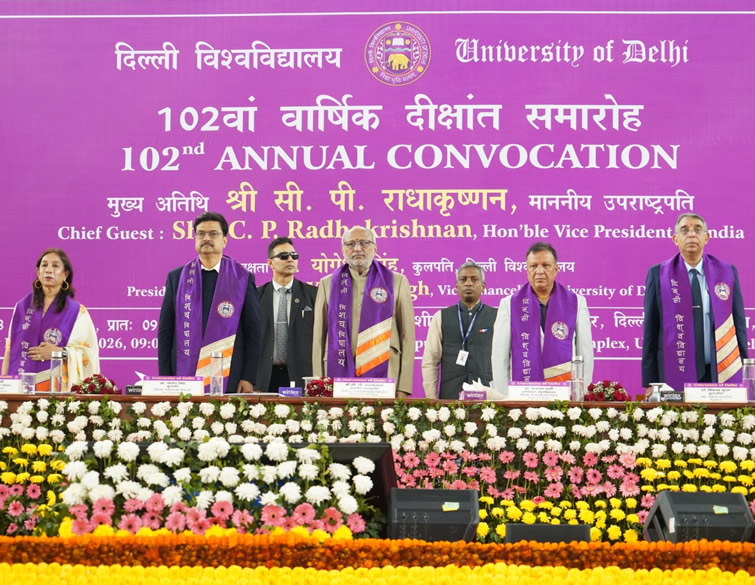
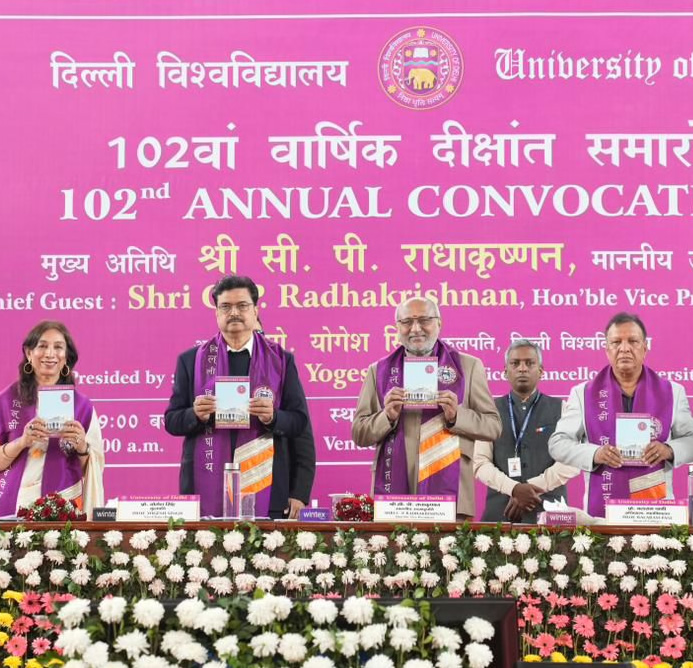
On a crisp February morning in Delhi, ceremonial robes, proud families, and camera flashes came together to mark one of India’s largest academic celebrations. At the University of Delhi’s 102nd Convocation, more than 1.2 lakh students crossed a symbolic threshold — from classrooms into a rapidly changing world waiting beyond the campus gates.
Presiding over the moment was the Vice-President of India and Chancellor of the University, Shri C. P. Radhakrishnan, whose address transformed what might have been a routine ceremony into a reflection on responsibility, nation-building, and the meaning of education in the 21st century.
Because this convocation was not just about degrees. It was about direction.
A University That Grew With a Nation
Delhi University’s story mirrors India’s own evolution. When it began over a century ago, the institution was modest — three colleges, a handful of departments, and just 750 students learning from a small collection of donated books.
Today, it stands as an academic city unto itself: 90 colleges, dozens of research centres, sprawling libraries, and a student population exceeding six lakh. The Vice-President noted that the number of graduates honoured this year alone rivals the population of many nations — a reminder of the immense scale at which Indian higher education now operates.
Yet beneath the statistics lies something less measurable: legacy.
For generations, Delhi University has shaped thinkers, policymakers, artists, scientists, and public intellectuals who have influenced India’s democratic and cultural life. With the conferring of degrees, the newest graduates formally joined that lineage.
The Moment Between Ending and Beginning
Convocations are often described as milestones, but the Vice-President framed this one as a transition — a pause between who students have been and who they are about to become.
Years of lectures, deadlines, friendships, anxieties, and self-discovery culminated in a single ceremonial gesture: the awarding of a degree. But, he reminded students, the real test begins afterward.
The world awaiting them is markedly different from the one they entered as freshmen. Artificial intelligence is reshaping professions, climate change is redefining development models, and democracies across the globe face new pressures.
In such a world, he said, education must translate into purpose.
“A degree is not just a certificate but a commitment,” he told the gathering — a commitment to society, ethical leadership, and collective progress.
Youth and the Idea of India at 100
The address repeatedly returned to a larger national horizon: India in 2047, when the country will celebrate a century of Independence.
The vision of Viksit Bharat — a developed India — places young graduates at its centre. According to the Vice-President, self-reliance is no longer merely economic; it is intellectual and technological. Universities must become engines of innovation, and students must become creators rather than consumers of knowledge.
Whether entering public service, entrepreneurship, science, the arts, or academia, the graduating class was urged to see itself as an architect of the nation’s future rather than a passive participant in it.
The message was clear: the India of 2047 will look very much like the ambitions of today’s graduates.
Women at the Forefront
Perhaps the most striking statistic of the day reflected a quiet but profound transformation.
More than half of the graduating students were women, and over 70 percent of gold medallists were female achievers. The number of women receiving degrees surpassed men — a milestone the Vice-President described as evidence of the extraordinary rise of women’s education in India.
In the sea of convocation gowns, this shift represented not just academic success but social change unfolding in real time.
Lessons Beyond the Lecture Hall
As the ceremony drew toward its close, the tone turned personal and reflective. Graduates were urged to remain lifelong learners — curious, grateful, and mindful of the responsibilities that accompany opportunity.
The Vice-President encouraged students to reject substance abuse, engage responsibly with social media, and cultivate discipline in both personal and professional lives.
The advice felt less like formal instruction and more like a parting conversation between generations.
A Beginning Disguised as an Ending
Convocations often mark closure. Yet as students left the ceremony — degrees in hand, families celebrating, futures uncertain but hopeful — the prevailing feeling was one of commencement rather than conclusion.
For Delhi University, the event reaffirmed its enduring role as a national institution shaping minds at scale. For the graduates, it was something more intimate: the moment when education transformed into expectation.
The gowns will be folded away. The photographs are archived. The applause will fade.
But for over 1.2 lakh young Indians, February 28, 2026, will remain the day possibility felt real — and responsibility began.
 CitiTimes