
India AI Impact Summit 2026: A Defining Moment for the AI Age
The global AI conversation has officially arrived in India — and in spectacular fashion.
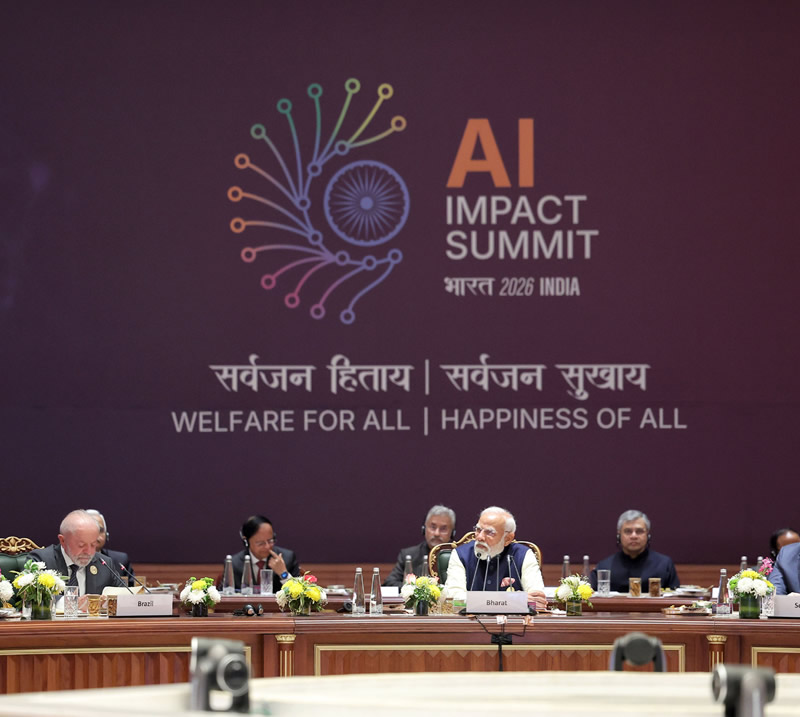
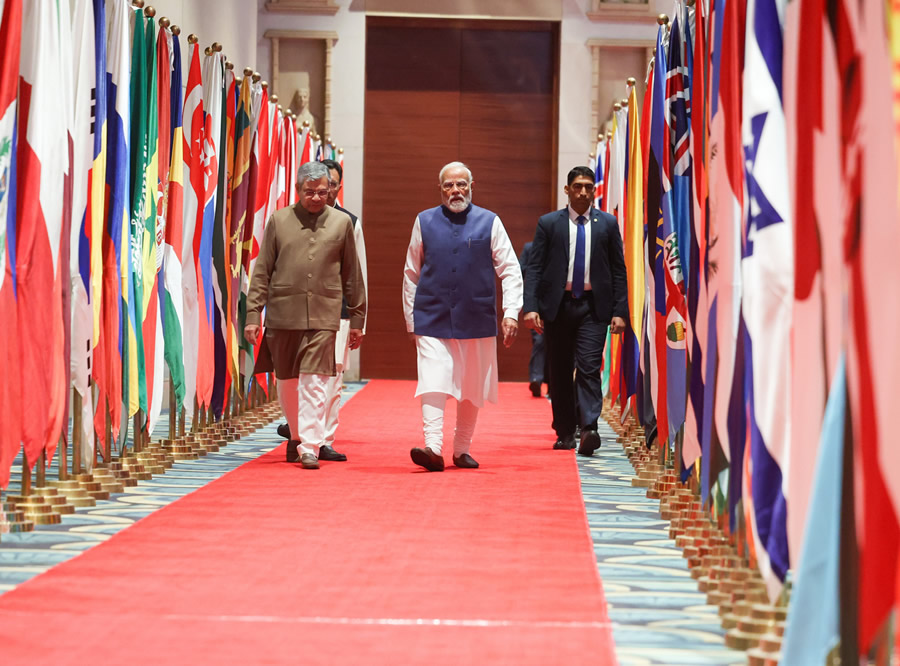
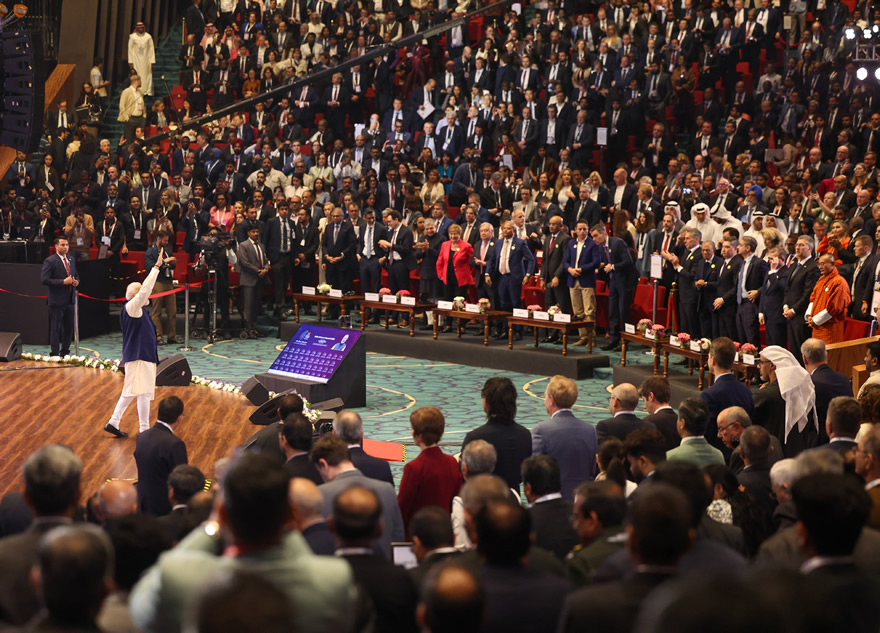
On February 19, 2026, Prime Minister Narendra Modi inaugurated the India AI Impact Summit 2026 at Bharat Mandapam, declaring Artificial Intelligence a civilizational turning point—one that could redefine humanity’s trajectory.
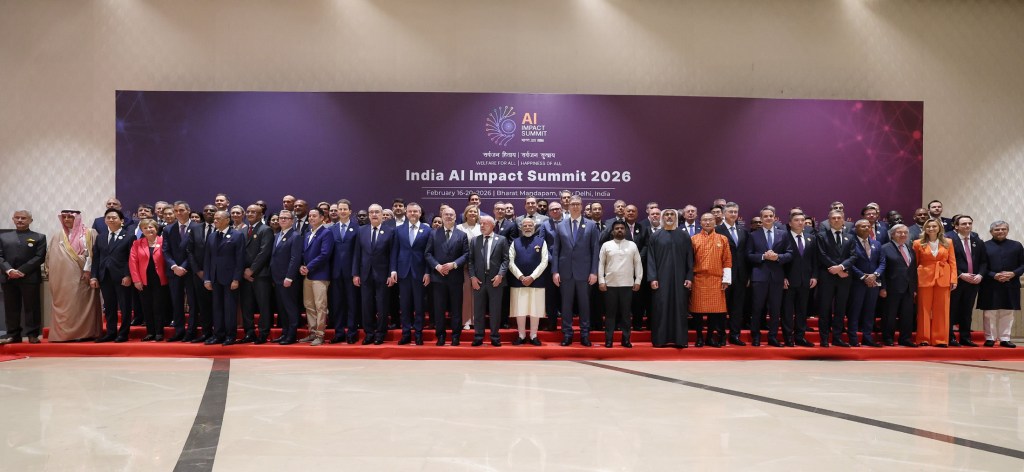
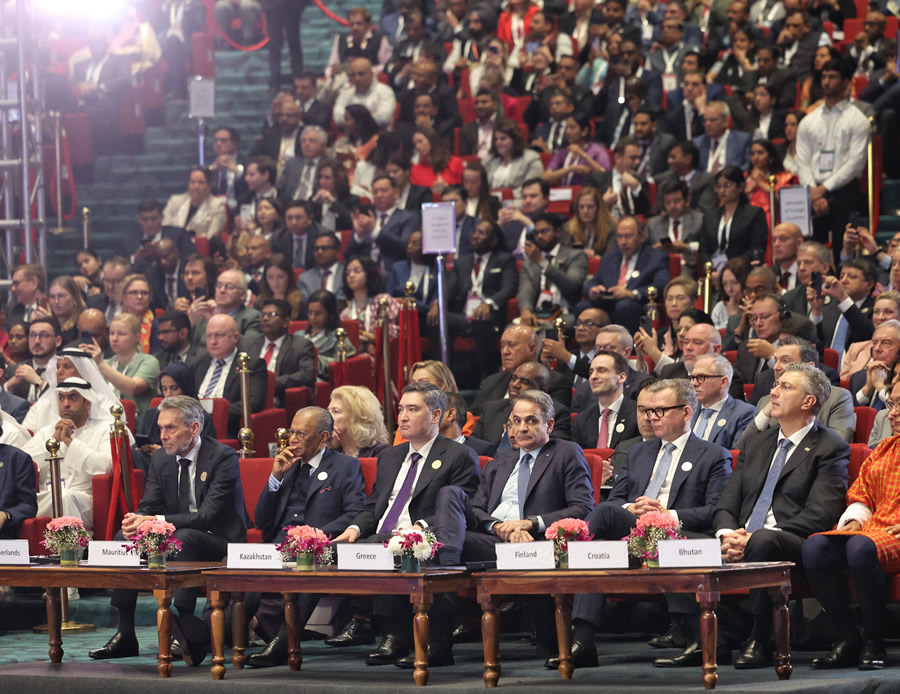
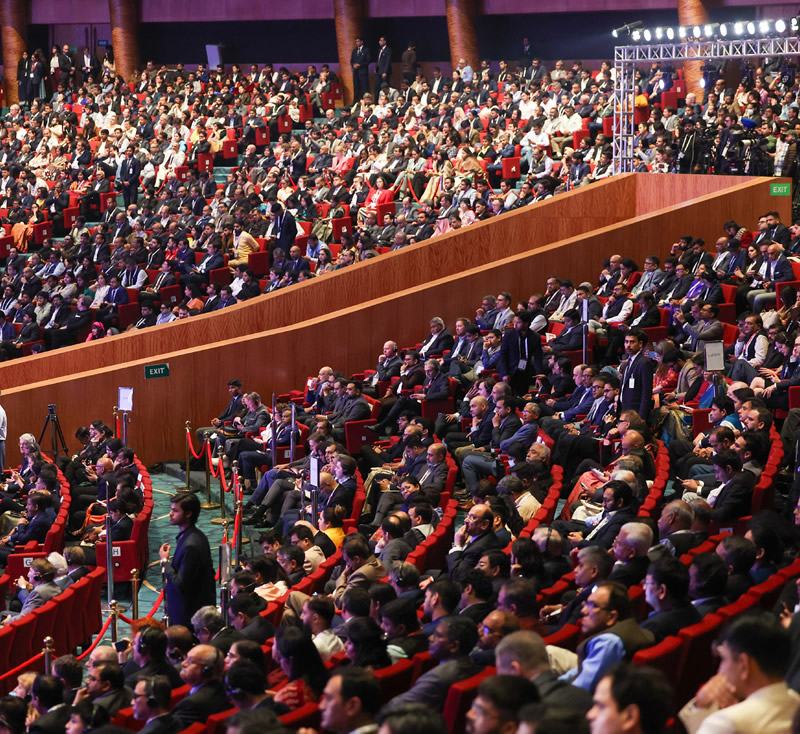
With representation from over 100 countries and more than 20 Heads of State and Government, the summit has positioned India not merely as a participant in the AI revolution — but as one of its architects.
A Civilizational Shift, Not Just a Technological Leap
In a sweeping address, the Prime Minister compared AI to the most transformative milestones in human history — from the discovery of fire to the invention of writing and wireless communication.
Artificial Intelligence, he emphasized, is not just another technology. It is a force that multiplies human capability at unprecedented speed and scale.
But the real question, he argued, is not what AI can do — it is what humanity chooses to do with it.
Drawing parallels with nuclear energy — a technology capable of both destruction and progress — he stressed that AI, too, must be guided responsibly.
India’s Vision: “Sarvajan Hitaya, Sarvajan Sukhaya”
The summit’s theme — सर्वजन हिताय, सर्वजन सुखाय (Welfare for All, Happiness for All) — reflects India’s commitment to a human-centric AI future.
Prime Minister Modi made it clear: humans must not become mere data points or raw material for algorithms. AI must empower — not replace — humanity.
He called for:
- Democratizing AI access
- Ensuring inclusion of the Global South
- Making AI open, transparent, and accountable
- Building trust into technology from day one
India’s message was unmistakable: AI should be a Global Common Good, not a guarded strategic asset.
The M.A.N.A.V. Vision for AI
At the summit, the Prime Minister unveiled India’s M.A.N.A.V. framework for ethical AI governance:
- M – Moral and Ethical Systems
- A – Accountable Governance
- N – National Sovereignty (data ownership)
- A – Accessible and Inclusive AI
- V – Valid and Legitimate Systems
This framework aims to anchor AI development in responsibility, transparency, and human oversight — ensuring command remains in human hands, even as AI scales new frontiers.
Tackling Deepfakes, Trust & Transparency
One of the most urgent concerns addressed was misinformation.
With AI-generated content becoming increasingly sophisticated, the Prime Minister proposed:
- Authenticity labels for digital content
- Clear watermarking standards
- Global benchmarks for AI transparency
Comparing it to nutrition labels on food packaging, he suggested that digital media must clearly signal whether content is human-generated or AI-created.
Trust, he said, must be embedded in technology—not retrofitted after crises emerge.
AI and the Future of Work
Rather than framing AI as a job disruptor, the summit spotlighted AI as a co-creator.
The Prime Minister noted that when the internet began, no one could predict the millions of jobs it would generate. AI, he argued, will similarly unlock roles we cannot yet imagine.
He emphasized:
- Skilling and reskilling as a mass movement
- Lifelong learning
- Higher-value creative roles
- Human-AI collaboration
The message: The future of work is not pre-written — it will be shaped by collective global choices.
Made in India, Built for the World
The exhibition floor reflected India’s growing confidence in AI.
Young innovators showcased solutions in:
- Agriculture
- Security
- Assistive technologies for divyangjan
- Multilingual AI tools
Three Indian companies launched AI models and apps during the summit — signaling that India is not just talking about AI leadership, it is building it.
With investments in semiconductors, quantum computing, secure data centers, and a thriving startup ecosystem, India is positioning itself as a hub for scalable, affordable AI solutions.
The Prime Minister’s call to the world was bold:
“Design and Develop in India. Deliver to the World. Deliver to Humanity.”
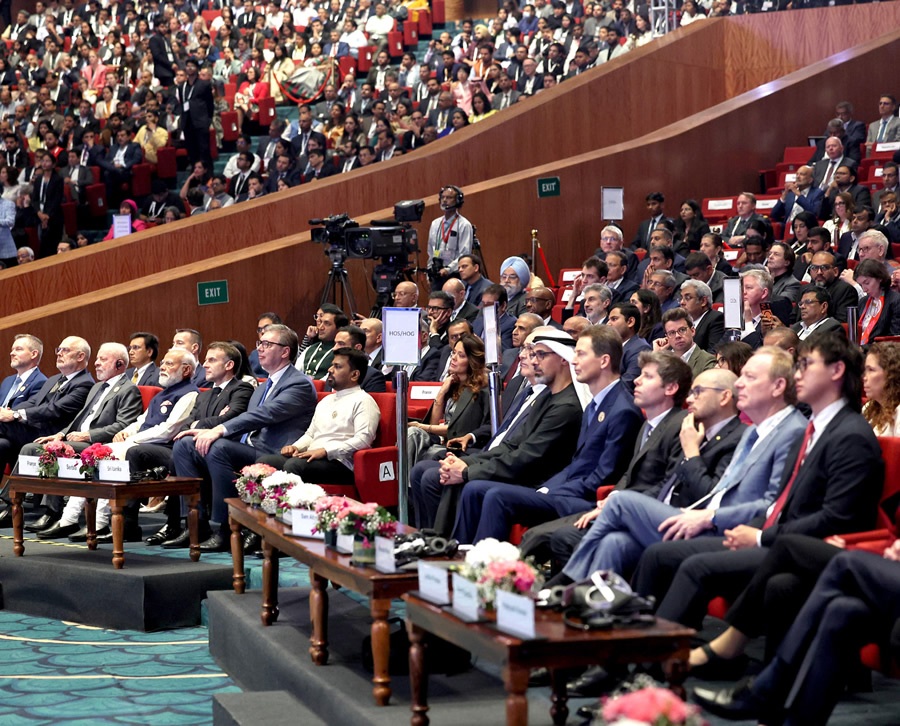
A Global Gathering of AI Powerhouses
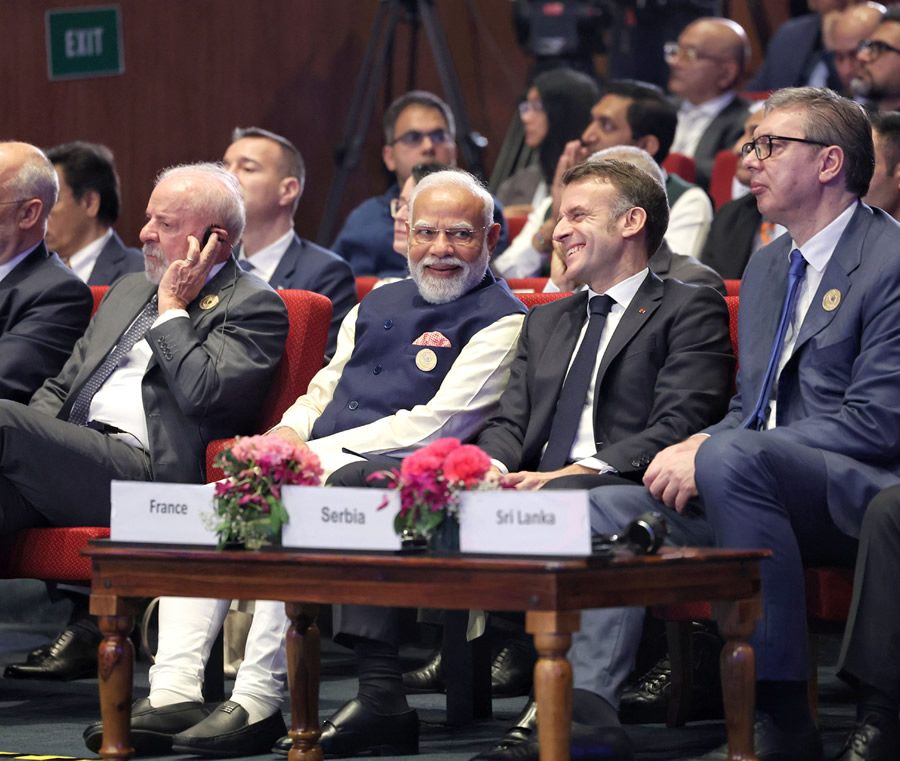
Among the distinguished attendees were Emmanuel Macron, the President of France, and the Secretary-General of the United Nations, alongside global CEOs, founders, researchers, ministers, and technology leaders.
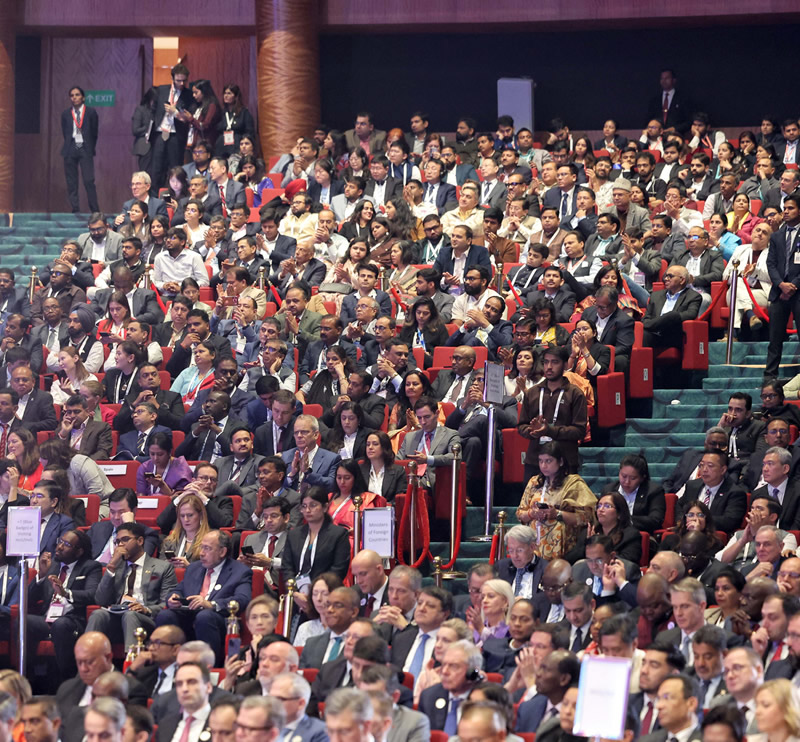
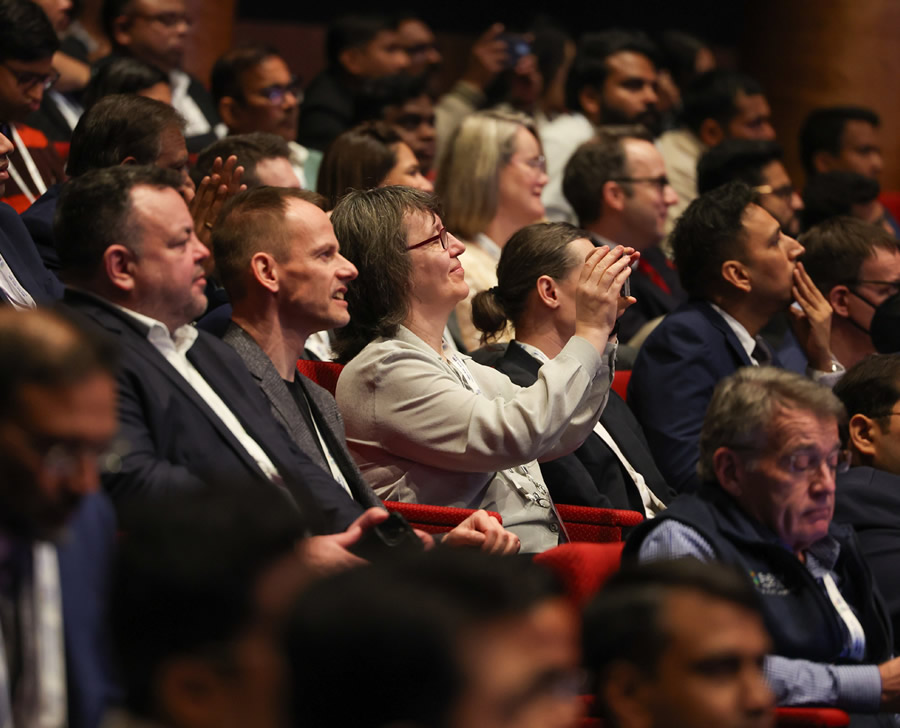
More than 500 AI leaders, 150 academicians, 400 CTOs and VPs, and over 100 government representatives have converged in New Delhi.
Seven working groups — aligned under the pillars of People, Planet, and Progress — will focus on delivering measurable outcomes in areas ranging from economic growth and inclusion to resilience and trusted AI systems.
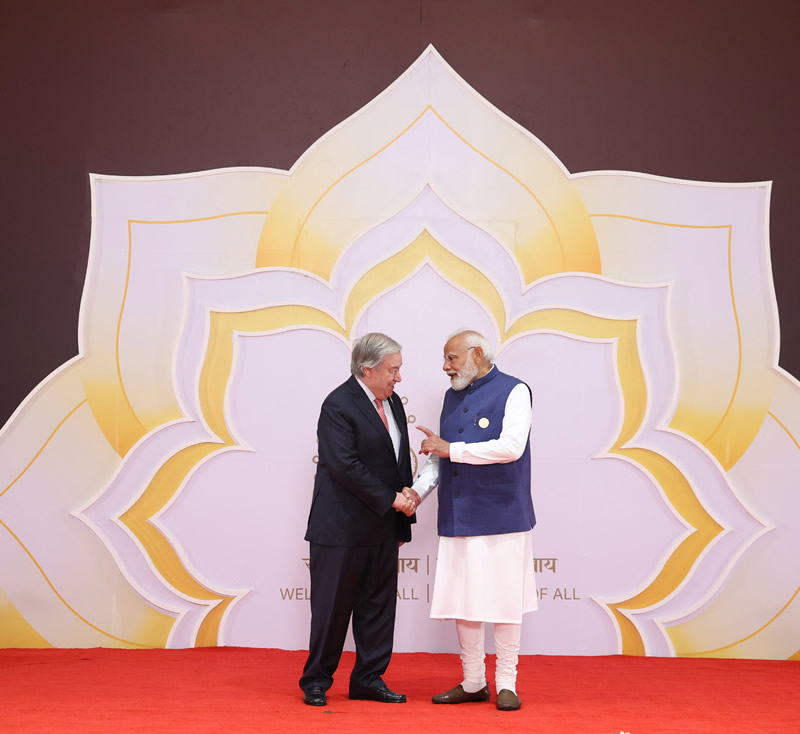
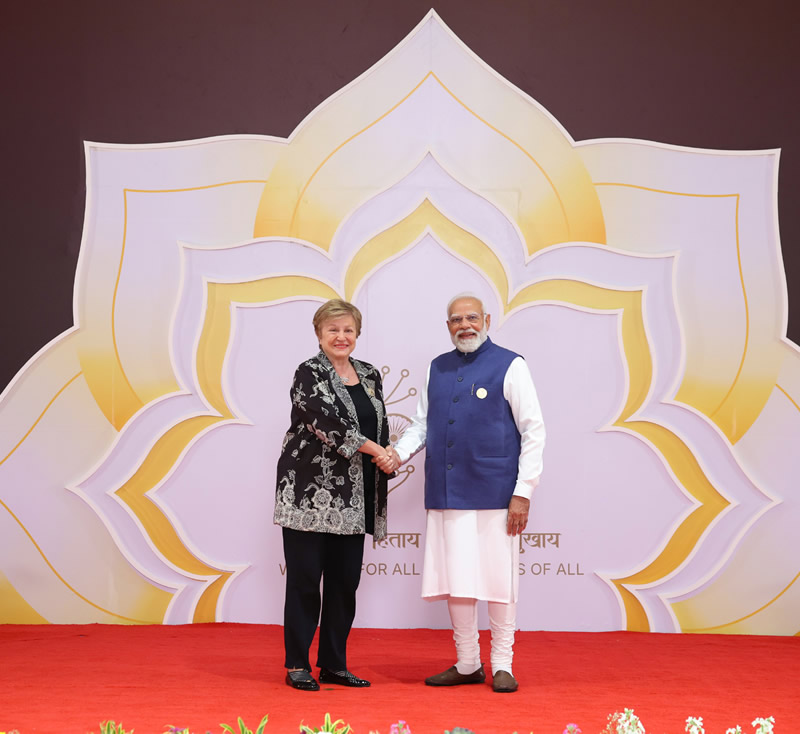
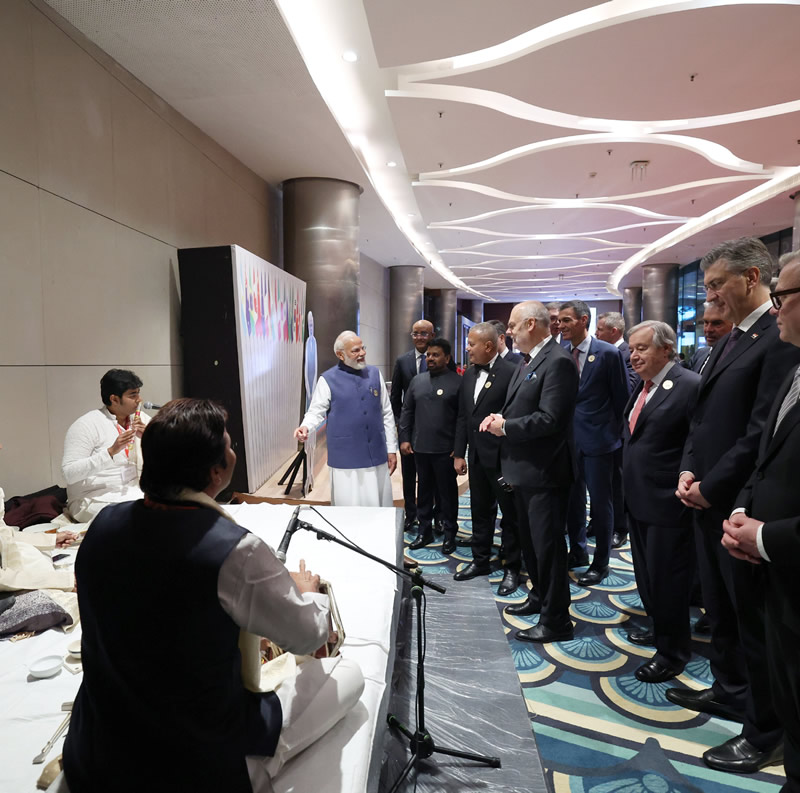
World Leaders at the India-AI Impact Summit 2026
India is hosting the India–AI Impact Summit 2026 in New Delhi from 16 to 20 February 2026. The Summit is anchored in three Sutras: People, Planet, and Progress, which define India’s approach to cooperation on AI. The Summit brings together global leaders, policymakers, innovators, and experts from across the world to deliberate on the way forward for AI.
At the invitation of Prime Minister Narendra Modi, leaders from the following countries are attending the AI Impact Summit:
1. Bhutan – H.E. Mr. Tshering Tobgay, Prime Minister
2. Bolivia – H.E. Mr. Edmand Lara Montano, Vice President
3. Brazil – H.E. Mr. Luiz Inácio Lula da Silva, President
4. Croatia – H.E. Mr. Andrej Plenković, Prime Minister
5. Estonia – H.E. Mr. Alar Karis, President
6. Finland – H.E. Mr. Petteri Orpo, Prime Minister
7. France – H.E. Mr. Emmanuel Macron, President
8. Greece – H.E. Mr. Kyriakos Mitsotakis, Prime Minister
9. Guyana – H.E. Dr. Bharrat Jagdeo, Vice President
10. Kazakhstan – H.E. Mr. Olzhas Bektenov, Prime Minister
11. Liechtenstein – H.S.H. Hereditary Prince Alois, Hereditary Prince of the Principality of Liechtenstein
12. Mauritius – H.E. Dr. Navinchandra Ramgoolam GCSK, FRCP, Prime Minister
13. Serbia – H.E. Mr. Aleksandar Vučić, President
14. Slovakia – H.E. Mr. Peter Pellegrini, President
15. Spain – H.E. Mr. Pedro Sánchez Pérez-Castejón, President
16. Sri Lanka – H.E. Mr. Anura Kumara Disanayaka, President
17. Seychelles – H.E. Mr. Sebastien Pillay, Vice President
18. Switzerland – H.E. Mr. Guy Parmelin, President
19. The Netherlands – H.E. Mr. Dick Schoof, Prime Minister
20. UAE – H.H. Sheikh Khaled bin Mohamed bin Zayed Al Nahyan, Crown Prince of Abu Dhabi
In addition, Ministerial delegations from over 45 countries are participating in the Summit. The UN Secretary General and Senior Officials from several International Organizations have also joined the deliberations.

Fortune, Not Fear
Perhaps the most striking line of the day came when the Prime Minister said there are two kinds of people — those who see fear in AI, and those who see fortune.
India, he declared, sees fortune and future.
With its vast youth population, thriving tech ecosystem, democratic values, and policy clarity, India is betting big that AI can be inclusive, ethical, and transformative.
And if the energy at Bharat Mandapam today is any indication, the AI age may very well have found one of its strongest champions in India.
The conversation has begun — and the world is watching.
“Some see fear in AI. India sees fortune — and the future.”
CitiTimes Editorial Creator is an IBM-certified AI professional.
 CitiTimes