

India’s AI Playbook: Diffusion, Economics, and Trust at the Core
Davos, Switzerland, January 21, 2026.
At the World Economic Forum (WEF) Annual Meeting in Davos, India laid out a clear, pragmatic vision for Artificial Intelligence—one that prioritises economic value, wide-scale adoption, and responsible governance over a narrow race for ever-larger models.
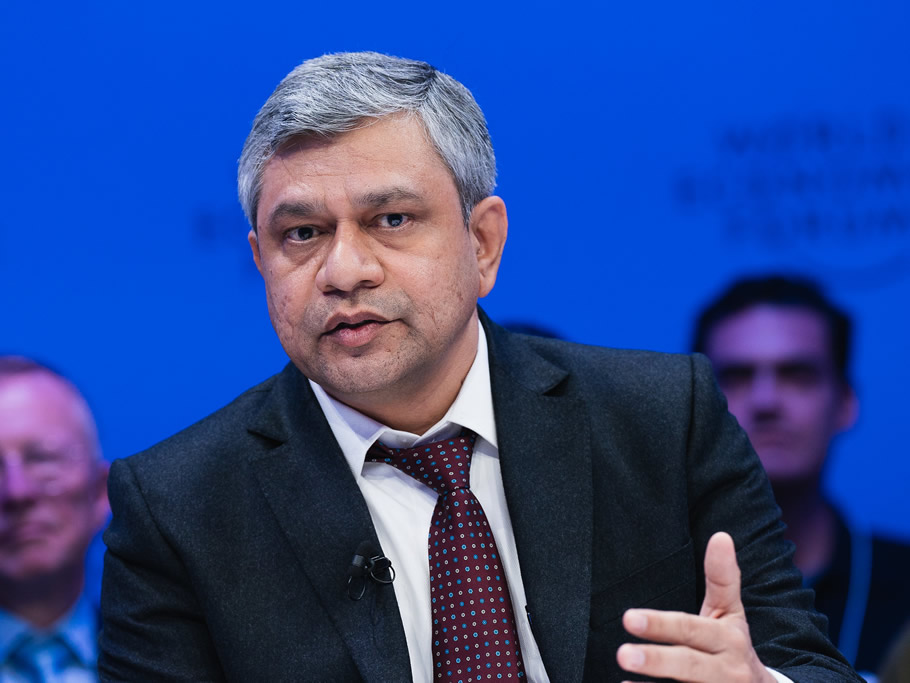
Speaking at the panel discussion “AI Power Play, No Referees”, Union Minister for Electronics and Information Technology Ashwini Vaishnaw explained why India now firmly sees itself as part of the first bouquet of AI nations.
AI Power Lies in Deployment, Not Just Scale
Addressing questions on geopolitics and global AI alignments, the Minister underscored that AI leadership cannot be measured only by ownership of massive foundation models. Instead, true AI power flows from economics and deployment. According to him, nearly 95 per cent of real-world AI use cases can be effectively met by models in the 20–50 billion parameter range—models that are already available and being actively deployed in India.
He explained that AI architecture spans five layers: applications, models, chips, infrastructure, and energy. India, he said, is working across all five, with a particular advantage at the application layer. With its strong IT and services ecosystem, India is positioned to become one of the world’s largest suppliers of AI-enabled services, delivering productivity gains and measurable return on investment (ROI) for enterprises.
Rethinking AI and Geopolitics
Challenging the idea that geopolitical influence stems from controlling the largest AI models, Shri Vaishnaw noted that such models are expensive, vulnerable to shutdowns, and can even impose economic strain on their creators. The next phase of technological transformation—what he described as the fifth industrial revolution—will be driven by deploying the lowest-cost solutions to achieve the highest ROI.
He pointed out that effective AI deployment increasingly relies on CPUs, smaller models, and emerging custom silicon, reducing dependence on any single geography and weakening the notion of AI dominance through scale alone.
AI Diffusion as a National Strategy
Drawing parallels with India’s success in building digital public infrastructure, the Minister highlighted the diffusion of AI across the economy as the cornerstone of India’s approach. One of the most significant constraints to AI adoption globally—the availability and cost of compute—has been addressed through a public–private partnership model.
India has empanelled around 38,000 GPUs as a common national AI compute facility. Enabled and subsidised by the government, this shared infrastructure offers affordable access to students, researchers, startups, and innovators at nearly one-third of prevailing global costs.
Four Pillars of India’s AI Vision
The Minister outlined four key pillars guiding India’s AI strategy:
- A common national AI computing facility built through a public–private partnership
- A free bouquet of AI models capable of meeting most practical and enterprise needs
- Large-scale skilling, with programmes underway to train 10 million people in AI
- Transformation of India’s IT industry, enabling it to pivot towards AI-driven productivity for domestic and global enterprises
Together, these pillars aim to ensure that AI benefits are broadly shared rather than concentrated among a few players.
Governing AI Through a Techno-Legal Lens
On regulation, Shri Vaishnaw advocated a techno-legal approach to AI governance. Laws alone, he argued, are insufficient to manage risks such as algorithmic bias and deepfakes. Robust technical solutions must reinforce regulatory frameworks.
He emphasised that, for instance, deepfake detection systems must achieve levels of accuracy that withstand judicial scrutiny. India is actively developing tools to detect deepfakes, mitigate bias, and ensure that AI models are properly “unlearned” and sanitised before enterprise deployment.

A Global Conversation on AI’s Future
The Davos panel was moderated by Ian Bremmer, President and Founder of Eurasia Group. It featured a distinguished line-up of global leaders, including Brad Smith of Microsoft, Kristalina Georgieva of the International Monetary Fund, and Khalid Al-Falih.
The Takeaway
India’s AI narrative at the World Economic Forum in Davos was unambiguous: leadership in AI is not about chasing size for its own sake. It is about making AI affordable, deployable, and trustworthy—embedding it across the economy to deliver tangible value. By focusing on diffusion, ROI, and responsible governance, India is positioning itself not just as a consumer of AI innovation, but as a global architect of how AI can work for society at scale.
CitiTimes Editorial Creator is an IBM-certified AI Professional.
 CitiTimes