
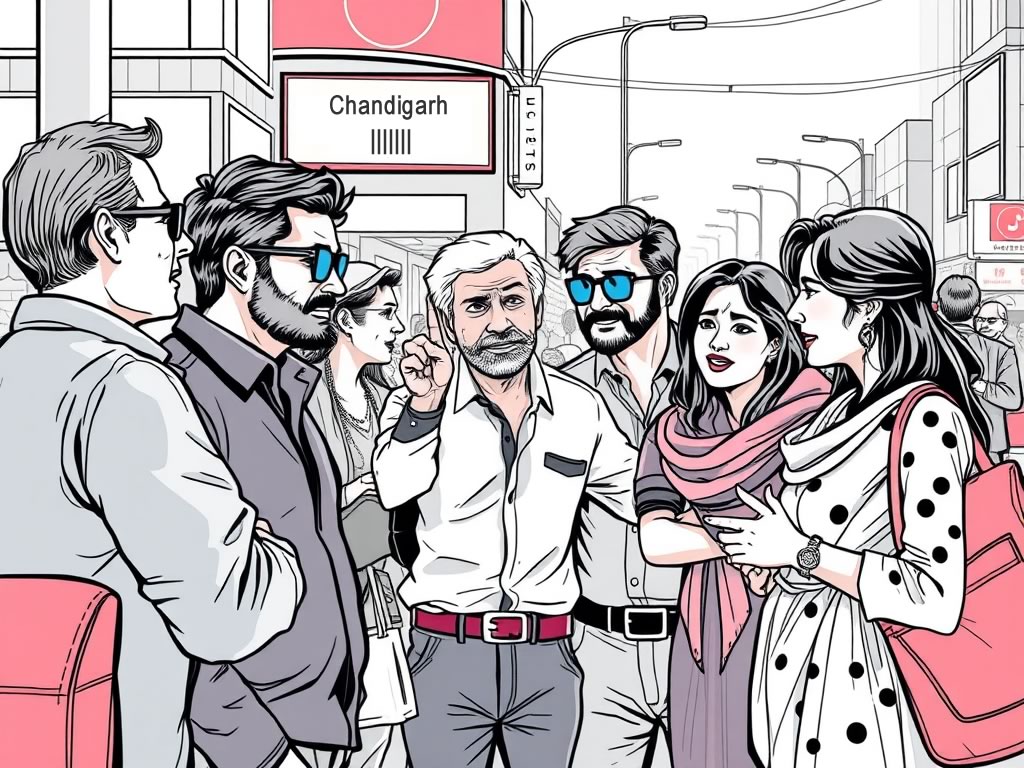
The Great Chandigarh Chant: Repetition as Religion
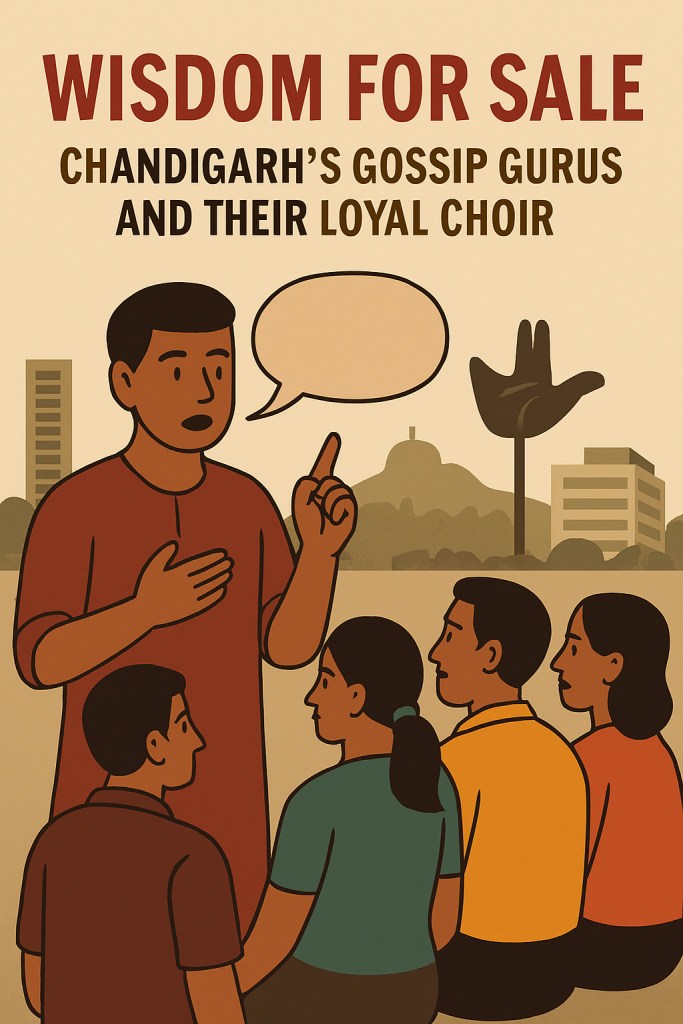
Wisdom for Sale: Chandigarh’s Gossip Gurus and Their Loyal Choir
By CitiTimes Editorial Desk
Chandigarh, India’s poster child for planning, prides itself on order—straight roads, trimmed hedges, and a civic heartbeat that ticks like a Swiss watch. Yet beneath that tidy geometry buzzes a very human industry: the business of selling wisdom. Not wisdom earned through reflection or risk, but wisdom performed—recited, recycled, and retailed daily by a familiar cast of local commentators who have crowned themselves philosophers of public life. The city’s self-anointed philosophers of public life have turned gossip into gospel—and they deliver it daily, free of doubt and full of drama.
In this city, gossip doesn’t merely circulate; it ages. It flows like fine wine, poured generously by men (and a few women) who claim enlightenment the way street vendors claim authenticity—loudly, confidently, and without paperwork. They peddle wisdom the way hawkers peddle “authentic” goods: loud, confident, and with absolutely no proof of origin. Their pronouncements carry the gravity of scripture, even when they are little more than yesterday’s opinions reheated for today’s audience.
Listen closely, and a pattern emerges. The same choruses return again and again. Repeated often enough, they cease to be arguments and become chants. What passes for conversation begins to sound like a village chorus—except this one has been institutionalized, digitized, and air-conditioned.
The Temple of Talkers: Chandigarh’s Modern-Day Sages and Their Devout Followers
The power of these gossip gurus lies not in originality but in reassurance. Their followers are not seekers of truth; they are collectors of confirmation. Heads nod in synchrony, not because minds are changing, but because disagreement demands effort—and perhaps courage.
Over the years, this echo chamber has achieved remarkable stability. People age, careers shift, governments change—but the opinions remain laminated, like posters from another decade. In a world that insists on adaptation, the gossip circle offers refuge: a place where one never revises a belief, only repeats it louder.
What’s most striking is how proudly this intellectual stagnation is worn. Doubt is treated as weakness, curiosity as disloyalty. The highest virtue is not independent thought, but perfect alignment with the approved narrative.
The City’s Favorite Muse: Panjab University, Frozen in Nostalgia
Every cult needs an idol, and Chandigarh’s gossip cult bows before its favorite deity—Panjab University. Revered, maligned, mythologized—it stands as shorthand for everything the city pretends to ponder.
The irony is exquisite. Once a temple of tradition, the university has quietly undergone its own revolution: women now dominate classrooms and boardrooms alike. Nearly three-quarters of graduates are women, and its leadership mirrors that shift. It’s a women’s university in spirit, though you wouldn’t know it from the way the sages talk about it.
Yet that reality rarely punctures the gossip. Instead, the institution remains frozen in myth—portrayed through stale anecdotes and selective memories. Facts that complicate the narrative are politely ignored; accepting transformation would mean changing the script.
Chandigarh’s Loudest Thinkers Don’t Fear Being Wrong—They Fear Updating Their Opinions
What Chandigarh’s gossip culture ultimately reveals is not intellectual depth but intellectual performance. Wisdom here is not practiced—it is staged. The goal is not to understand the city, its institutions, or its people, but to sound as though one already does.
This is why genuine dissent feels so disruptive. A genuinely new idea threatens the entire economy of recycled insight. It risks exposing the show for what it is—a comfortable loop of borrowed phrases and inherited certainty.
The Great Chandigarh Chant: How Gossip Found Its Gurus
Cities grow not through agreement, but through friction. Chandigarh’s future—like that of any living place—depends on citizens willing to question their own certainties, to listen beyond the chant, and to accept that wisdom cannot be endlessly resold without losing its value.
The real disaster is not that gossip gurus exist—every city has them—but how willingly they are believed, how eagerly their choir sings along, and how rarely anyone pauses to ask whether the tune still suits the times.
“What passes for conversation here often sounds like a village chant with Wi-Fi.”
“Chandigarh’s greatest chant is not about truth but the comfort of hearing one’s own echo.”
 CitiTimes