
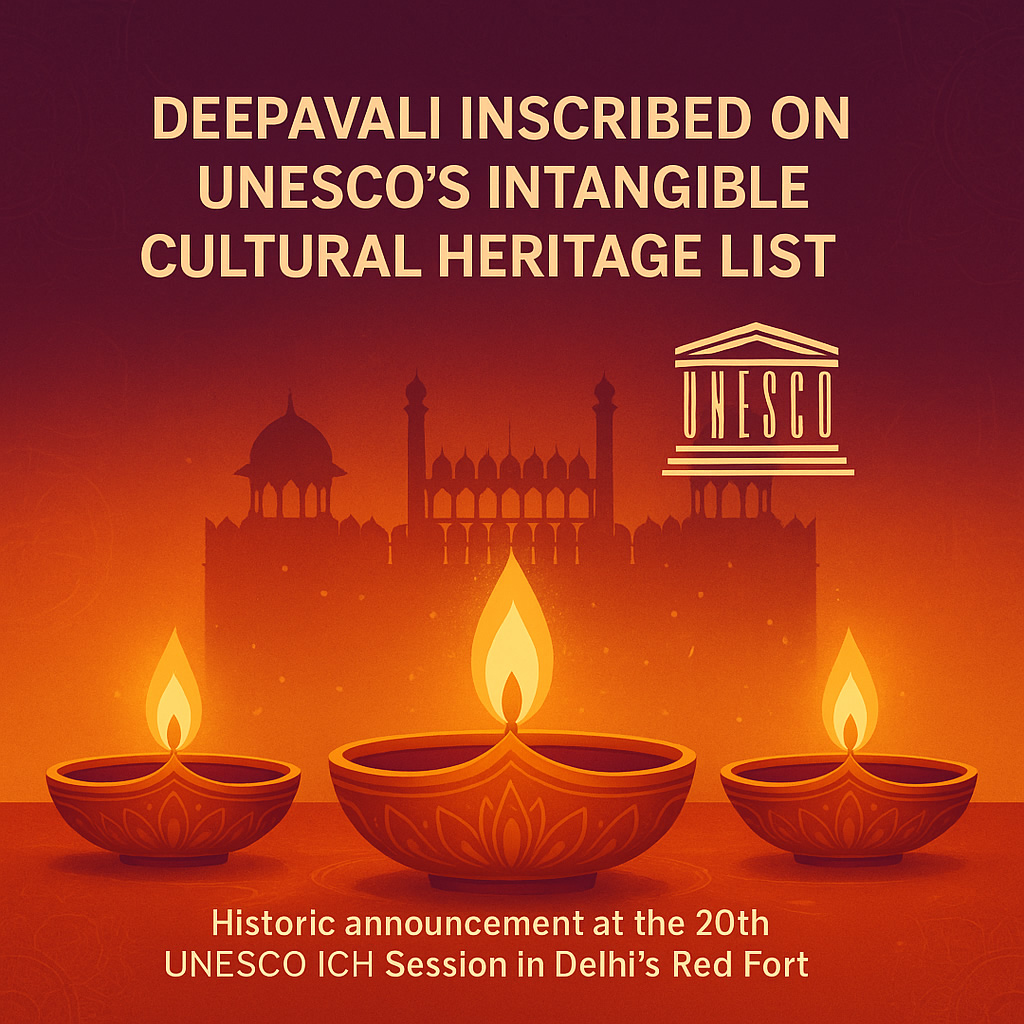
Deepavali Shines on the World Stage: UNESCO Honours India’s Festival of Lights
By CitiTimes Editorial Desk
New Delhi, India, December 10, 2025
At Delhi’s historic Red Fort, where centuries of India’s story are etched into stone, a new chapter was written. The 20th Session of UNESCO’s Intergovernmental Committee inscribed Deepavali, India’s magnificent Festival of Lights, onto the Representative List of the Intangible Cultural Heritage of Humanity. For the first time, India hosted this prestigious session—and fittingly, its most radiant celebration took center stage.
A Festival Beyond Borders
Deepavali is more than a festival—it is a living heritage. Across India and the world, millions light diyas, exchange sweets, and gather with loved ones to celebrate the triumph of light over darkness, good over evil, and hope over despair. With this recognition, UNESCO has affirmed that Deepavali belongs not just to India, but to humanity.

A Global Moment for India’s Cultural Heritage
The UNESCO ICH Representative List highlights traditions and practices that contribute to humanity’s cultural diversity and foster intercultural dialogue. Deepavali now joins other celebrated Indian ICH elements such as Yoga, Kumbh Mela, Ramlila, Vedic chanting, and several traditional crafts and performing arts.
With this recognition, Deepavali gains:
- International cultural status as a heritage of global value
- Formal acknowledgement of its social, spiritual, and communal significance
- Strengthened support for safeguarding and promoting the tradition for future generations

Deepavali: Symbolism of Light, Renewal, and Shared Values
Deepavali is celebrated across India in varying forms—Lakshmi Puja in the north, Kali Puja in the east, the return of Lord Rama in the Ramayana tradition, the victory of Krishna over Narakasura in the south, and the Gujarati Hindu New Year. With its lamps, rangoli, rituals, feasts, and community gatherings, the festival blends spiritual meaning, aesthetic brilliance, and social cohesion.

India’s Cultural Diplomacy on Display
The ongoing session at Delhi’s Red Fort underscores India’s growing global role in heritage preservation and cultural diplomacy. Hosting the session has provided India with the platform to:
- Showcase its rich intangible heritage.
- Push for wider recognition of South Asian cultural traditions.
- Demonstrate leadership in cultural safeguarding.
Delegates from over 180 countries are participating, engaging in discussions on nominations, safeguarding frameworks, and global collaboration.

Why This Recognition Matters
The inscription of Deepavali has significance beyond symbolism:
1. Cultural Continuity
The UNESCO listing ensures Deepavali’s rituals, oral traditions, craftsmanship, and communal practices are preserved and transmitted responsibly.
2. International Visibility
It elevates Deepavali from a national festival to a global cultural phenomenon, reinforcing India’s soft power.
3. Protection Against Misappropriation
Formal UNESCO recognition strengthens India’s ability to promote respectful, authentic representations of the festival worldwide.
4. Pride for the Indian Diaspora
More than 30 million people of Indian origin celebrate Deepavali worldwide. The listing reaffirms their cultural identity on the global stage.

A Story of Continuity
From the flicker of a clay lamp in a village courtyard to dazzling fireworks in global cities, Deepavali has always been a story of continuity. Now, with UNESCO’s recognition, that story is inscribed in the collective memory of the world.

Closing Note
Deepavali’s journey from homes and temples to the halls of UNESCO is a reminder: traditions are not relics of the past, but living legacies that illuminate our present and future. As diyas glow this year, they will shine a little brighter—carrying the pride of a heritage now celebrated as humanity’s own.

“People in India and around the world are thrilled. For us, Deepavali is very closely linked to our culture and ethos. It is the soul of our civilisation. It personifies illumination and righteousness. The addition of Deepavali to the UNESCO Intangible Heritage List will further enhance the festival’s global popularity. May the ideals of Prabhu Shri Ram keep guiding us for eternity.”
— Prime Minister Narendra Modi
“Delighted to note UNESCO’s inscription of Deepavali on the Intangible Cultural Heritage list. This global recognition is a profound moment of pride for every Indian.
“Deepavali is not just a festival; it is a civilisational phenomenon that unites the nation and resonates across the world. It embodies India’s multiculturalism, pluralism, and social unity, while carrying a timeless message of hope, harmony, and the triumph of light over darkness and Dharma over Adharma.
“My warm congratulations to all fellow countrymen on this recognition, which celebrates India’s rich cultural heritage and its enduring message for humanity.”
— The Vice-President of India, C. P. Radhakrishnan
 CitiTimes