

100 Years of Design Excellence: A Look at the WIPO Hague System
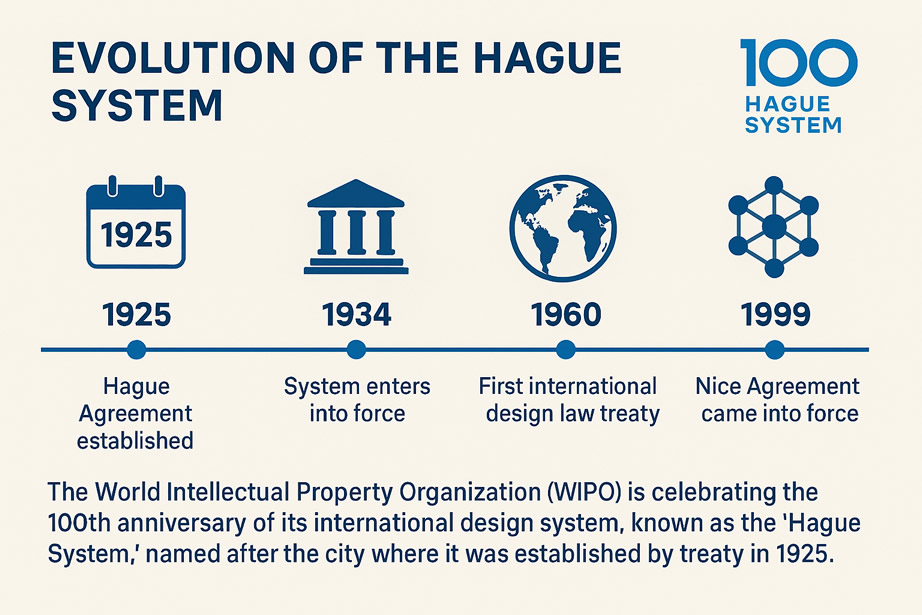
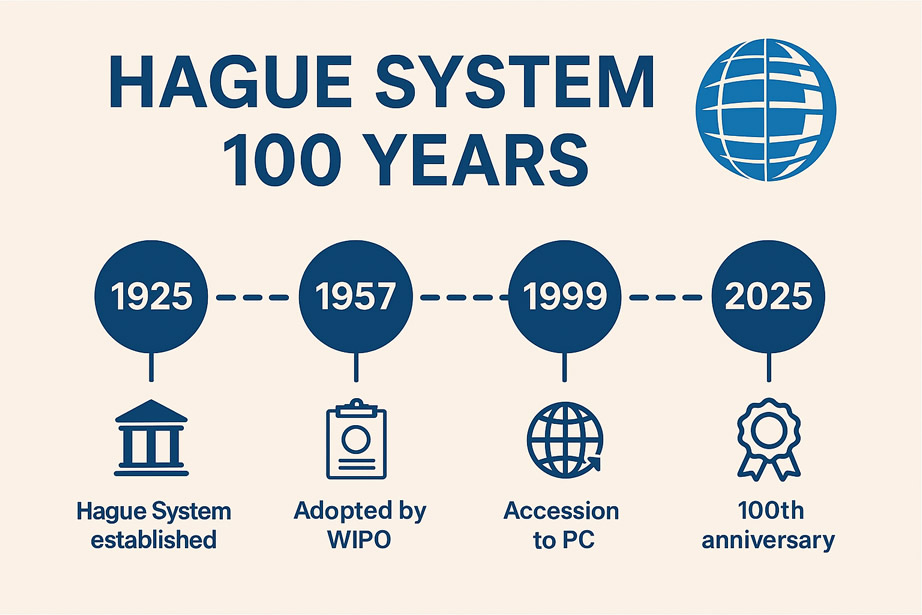
The World Intellectual Property Organization’s (WIPO) Hague System for the International Registration of Industrial Designs is celebrating its 100th anniversary, marking a century of streamlining global design protection. Established by treaty in The Hague in 1925, the system has evolved from a small European framework into a genuinely global mechanism that simplifies life for designers and businesses.
The treaty was signed in November 1925 in The Hague, Netherlands.
Its administrator, the World Intellectual Property Organization (WIPO), is using the occasion to reflect on a century of global design protection, innovation, and international cooperation.
What is the Hague System?
The Hague System is an international mechanism that allows creators to secure and manage design rights simultaneously in multiple countries or regions through a single international application filed with WIPO.
- Design Rights: It protects the appearance of a product, such as its shape, configuration, pattern, or ornamentation. It is generally known as an “industrial design.”
- Centralized Filing: A single application, in one language (English, French, or Spanish) and one set of fees (paid in Swiss Francs), can be used to designate protection in numerous member countries.
Its global reach has expanded significantly from its initial 11 signatories in 1925 to 82 members covering 99 countries/jurisdictions today, including the European Union and the African Intellectual Property Organization. This growth underscores the system’s global impact and the interconnectedness of the design community.
Key Benefits for Designers and Businesses
The system’s core value lies in its simplicity, efficiency, and economy, allowing designers to focus more on creativity and less on administrative complexity.
- Simplicity and Efficiency: One application replaces a whole series of separate national or regional filings, saving significant time and reducing bureaucracy. One application can include up to 100 different designs (provided they belong to the same Locarno Classification class).
- Cost-Effectiveness: Filing one application and paying a single set of international fees (basic fee, publication fee, and designation fees) is generally more economical than filing and managing multiple separate applications.
- Centralized Management: All administrative tasks, such as changes in ownership, name/address updates, and renewals, are managed centrally through WIPO. Renewals can be completed with a single request and payment of the fee.
- Flexibility: Applicants can choose to delay the publication of their design for up to 30 months (subject to domestic law), which can be a critical strategy for businesses before a product launch.
- Duration of Protection: The initial period of protection is five years, and it can be renewed for at least two additional five-year periods, guaranteeing at least 15 years of protection in most member states (and up to 25 years in some, like the EU).
A Century of Design & Innovation
The 100th anniversary serves as a testament to the Hague System’s adaptability and enduring relevance in the ever-evolving world of commerce and technology. Its evolution over the past century reassures us of its continued importance.
- Evolution of Designs: The system has protected a vast range of creations, from 1920s fabrics and stationery to modern-day graphical user interfaces (GUIs), mobile phones, and green-tech equipment.
- Iconic Registrations: Many well-known products have been protected through the Hague System, including the Sony PlayStation, the KITKAT bar, and the World Cup Trophy.
In 2024, a record 27,161 designs were filed through the Hague System, a testament to its continued relevance and value to the global design community. This growth underscores the system’s adaptability and enduring importance in the world of commerce and technology.

Why It Matters
For India / Indian creators & businesses
As a globally recognized economy and manufacturing hub, India’s design-intensive industries, such as textiles, garments, consumer goods, and electronics, can significantly benefit from the Hague System. It offers a streamlined process for protecting designs beyond India, reducing duplication of filings, saving time and cost, and facilitating entry into export markets.
- Using the Hague route can reduce duplication of filings in multiple countries, save cost/time, and make it easier to enter export markets.
- It also signals that India’s designers and firms can operate on a level playing field internationally by leveraging a global system-wide mechanism.
For policy / IP ecosystem
- The Hague System promotes harmonisation of formalities and administrative procedures — this helps reduce fragmentation in design protection globally.
- It encourages countries to align with international practices and thus increases predictability for rights-holders and users.
- The Hague System strengthens the global IP ecosystem by making design protection more accessible. This, in turn, supports innovation, creativity, trade, and investment. It’s a testament to the system’s commitment to fostering and protecting innovation, inspiring creators and businesses alike.
As WIPO Director General Daren Tang notes, the system supports the enduring human instinct to “blend function with beauty.” The Hague System continues to evolve, ensuring that the vital yet often lesser-known right of design protection keeps pace with technological advancements.
Source: The World Intellectual Property Organization’s (WIPO)
— The editor of CitiTimes possesses a general certificate from the World Intellectual Property Organization (WIPO) Academy.
 CitiTimes