
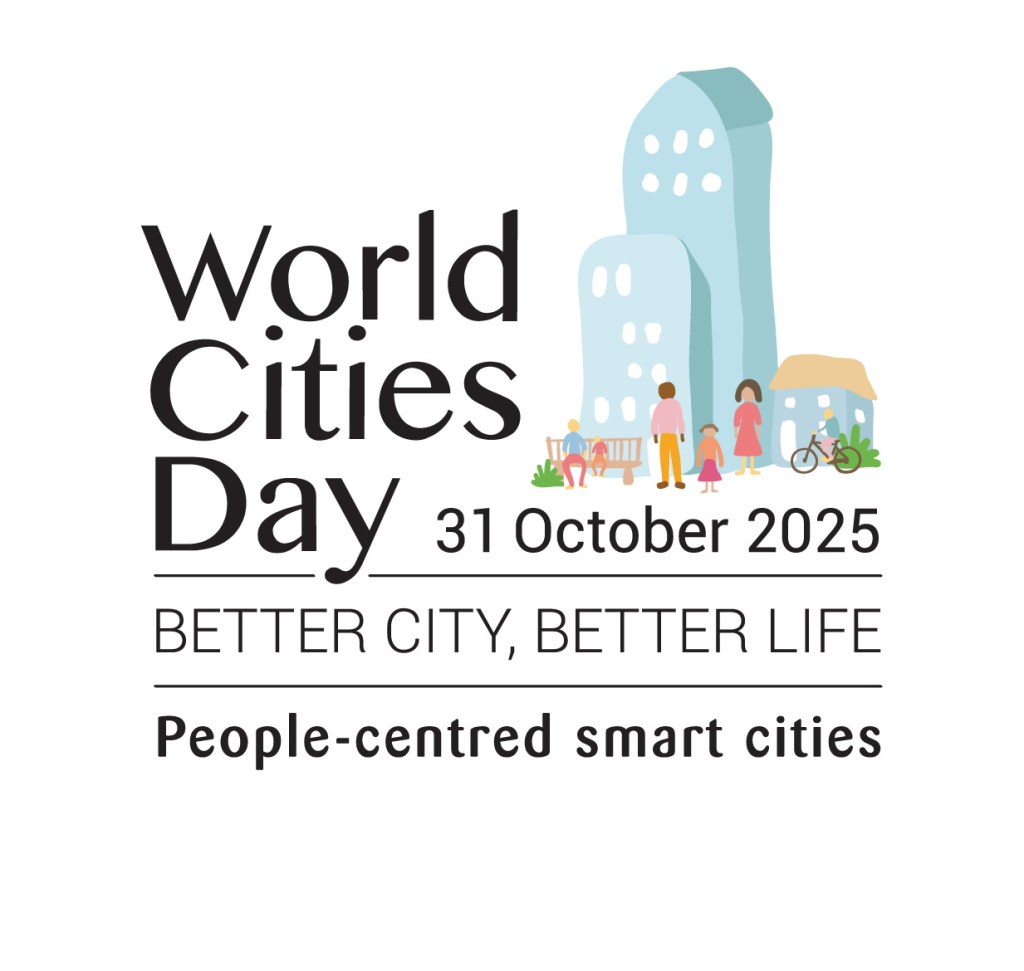
World Cities Day 2025: Building People-Centred Smart Cities

Every year on October 31, people around the world celebrate World Cities Day. This observance was established by the United Nations General Assembly in 2013 (Resolution A/RES/68/239). World Cities Day marks the conclusion of Urban October, a month dedicated to raising awareness about sustainable urban development and promoting dialogue on the future of cities.
In 2025, the theme is “People-Centred Smart Cities.” This theme highlights an important concept: although technology has the potential to transform urban life, the primary goal of innovation should be to enhance the lives of people. It’s not just about making cities more digital; it’s about making them more human.
Why Cities Matter
Cities are the heartbeat of our modern world. Currently, over 55 percent of the global population resides in urban areas, and this figure is projected to increase to nearly 70 percent by 2050. While rapid urbanization presents opportunities for economic growth, creativity, and cultural exchange, it also brings significant challenges.
Many cities are facing challenges such as inadequate housing, pollution, traffic congestion, rising inequality, and the effects of climate change. The purpose of World Cities Day is to encourage collaboration among governments, communities, and citizens to create urban spaces that are inclusive, safe, resilient, and sustainable, aligning with Sustainable Development Goal 11 (SDG 11).

2025 Theme: People-Centred Smart Cities
The idea of a “smart city” typically conjures images of sensors, data networks, and AI-driven systems. However, the 2025 theme offers a fresh perspective. “People-centered smart cities” focus on leveraging innovation with citizens at the core—ensuring that technology serves the needs of people, rather than the other way around.
A brilliant city:
- Improves access to public services through digital inclusion.
- Uses data to plan sustainable transport and reduce carbon emissions.
- Ensures equitable access to affordable housing, healthcare, and green spaces.
- Builds systems that are transparent, participatory, and responsive to citizens’ needs.
In summary, a people-centered approach harmonizes smart infrastructure with human values such as equity, empathy, and community engagement.
The Global Urban Picture
Cities around the world are implementing innovative and sustainable models. For example, Copenhagen is using renewable energy for its public transit, while Seoul is focusing on citizen-driven urban planning. In India, the Smart Cities Mission is driving urban innovation in over 100 cities, with a focus on projects related to digital governance, mobility, waste management, and water conservation.
However, technology alone cannot resolve urban challenges. To make cities truly livable, we must also address social and environmental issues. This includes reducing inequality, strengthening public health, improving air quality, and ensuring that urban growth does not come at the expense of nature.
How We Can Contribute
Everyone has a role in shaping the cities of the future:
- Local governments should invest in data-driven and inclusive urban planning.
- Businesses and innovators can develop affordable and sustainable technology solutions.
- Universities and researchers can examine how digital systems impact human well-being.
- Citizens can engage in community projects, promote public transport, and hold decision-makers accountable.
Small local actions—such as planting trees, reducing waste, and using shared transportation—can collectively lead to significant change when adopted by many.
A Vision for Tomorrow’s Cities
Imagine a city where clean energy powers every home, cycling and walking paths connect every neighborhood, digital services are accessible to all citizens, and public spaces bring people together rather than dividing them.
This is the essence of World Cities Day 2025—a reminder that smart cities are not just about data and devices, but about people, participation, and purpose.
Source: United Nations
 CitiTimes