
The International Monetary Fund (IMF) has released its Global Financial Stability Report
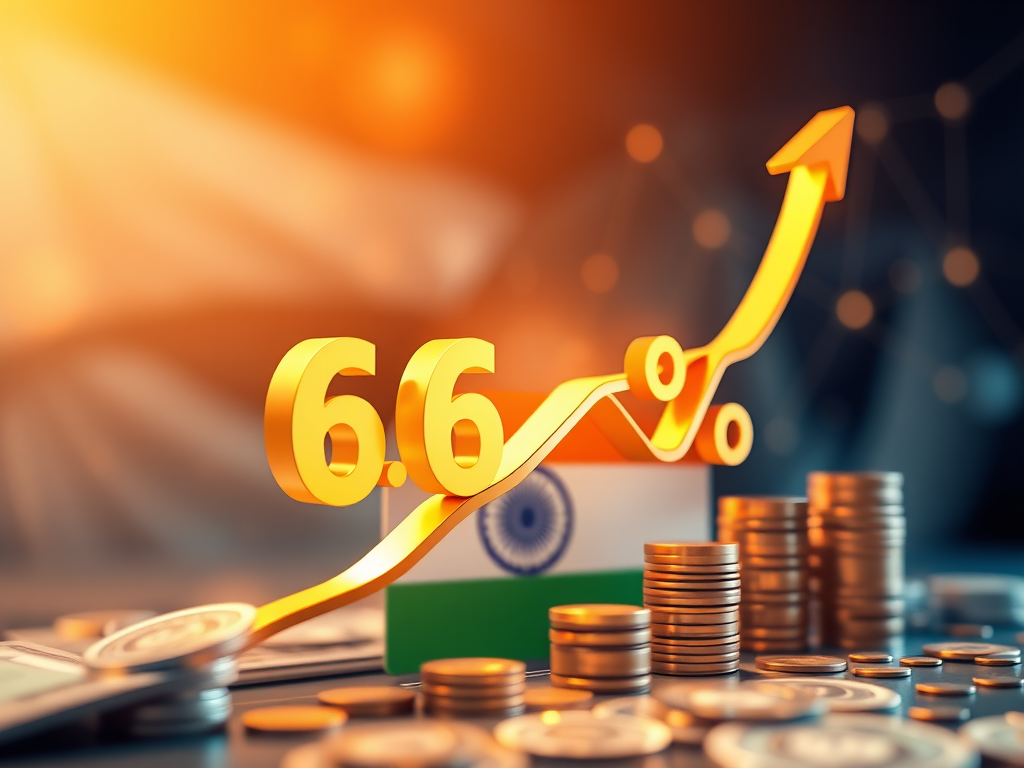
The IMF has raised its forecast for India’s GDP growth to 6.6% for the fiscal year 2025-2026.
Washington, DC, October 14, 2025 — The International Monetary Fund (IMF) has raised India’s GDP growth forecast for the current fiscal year to 6.6 percent, up from its previous estimate of 6.4 percent. This adjustment is attributed to strong economic growth, which has helped offset the impact of increased U.S. tariffs on Indian exports.
In its latest World Economic Outlook (WEO), the IMF also revised its growth forecast for 2026-27 downward by 20 basis points to 6.2 percent.
According to the report, “Compared with the July WEO Update, this reflects an upward revision for 2025, as the strong performance in the first quarter more than compensates for the increase in the effective tariff rate on imports from India since July, while there is a downward revision for 2026.”

Outline of the Report
Executive Summary
- Financial stability risks remain elevated globally.
- Key concerns include stretched asset valuations, pressures in sovereign bond markets, and vulnerabilities in the foreign exchange market.
- Nonbank financial institutions (NBFIs) are playing an increasingly influential role, amplifying systemic risks.
Financial Stability Landscape
- Asset Valuations: Many asset classes are priced above historical norms, raising concerns about potential corrections.
- Sovereign Bond Markets: Core markets are under pressure due to rising debt levels and interest rate uncertainty.
- NBFIs: Their growing role in private credit, real estate, and crypto markets introduces new channels of risk transmission.
Risk and Resilience in the FX Market
- Market Evolution: The FX market is now the largest and most liquid globally, driven by derivatives and NBFI participation.
- Structural Vulnerabilities: Increased complexity and interconnections make the market more susceptible to stress.
- Macrofinancial Shocks: These can widen bid-ask spreads, raise funding costs, and heighten exchange rate volatility.
Nonbank Financial Institutions and Systemic Risk
- Liquidity Provision: NBFIs are key liquidity providers but may withdraw during stress.
- Market Making: Their dominance in certain markets could exacerbate volatility.
- Regulatory Gaps: Calls for enhanced oversight and data transparency to monitor systemic risks.
Source: IMF
 CitiTimes