
Kristalina Georgieva, the Managing Director of the IMF, delivered the opening speech for the 2025 IMF-World Bank Annual Meetings on October 8, 2025.
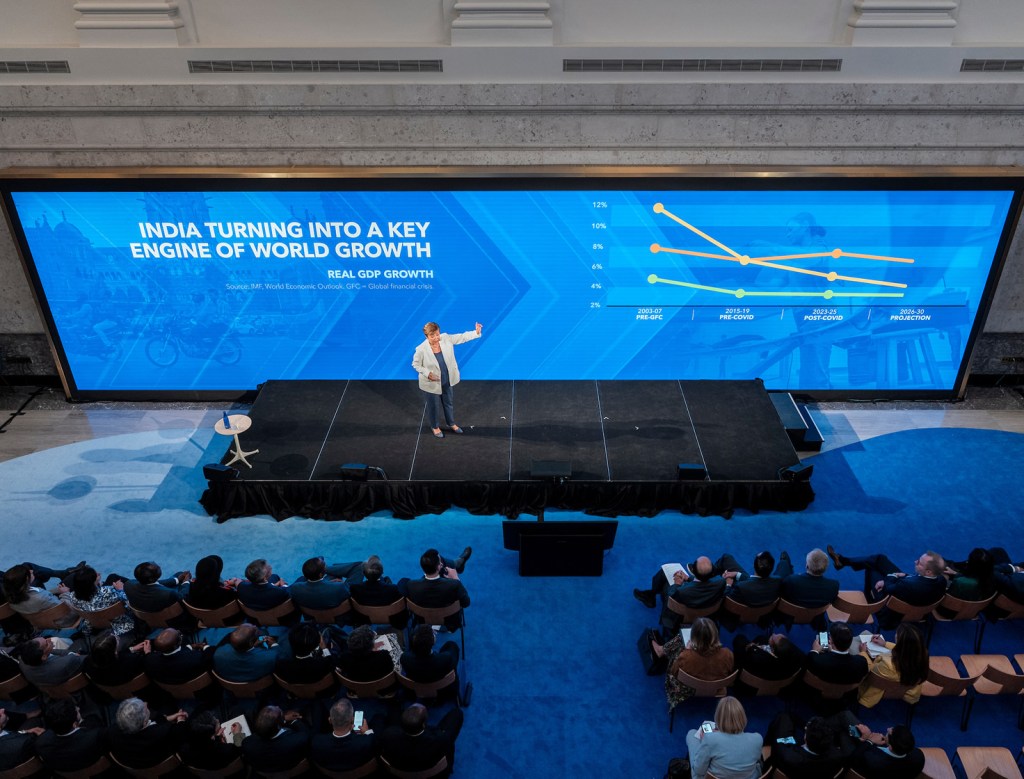
Kristalina Georgieva delivered her opening speech at the 2025 IMF-World Bank Annual Meetings, focusing on global economic resilience, debt sustainability, and the urgent need for multilateral cooperation to tackle increasing challenges. The address took place in Washington, D.C. on October 8, 2025, and here are the key highlights:
Global Economic Outlook
- Georgieva acknowledged a fragile but recovering global economy, citing uneven growth across regions and persistent inflationary pressures.
- She emphasized the importance of restoring price stability while avoiding a hard landing, particularly for vulnerable economies.
Debt and Fiscal Challenges
- A central theme of her address was the rising debt burden in low- and middle-income countries, exacerbated by climate shocks, geopolitical tensions, and tightening financial conditions.
- She called for enhanced debt restructuring frameworks and urged creditor nations to act swiftly and transparently.
Multilateralism and Reform
- Georgieva advocated for renewed multilateral cooperation, warning against fragmentation in global trade and finance.
- She proposed reforms to strengthen the IMF’s lending toolkit, including more flexible instruments for climate resilience and digital transformation.
Climate and Development Finance
- The speech highlighted climate finance as a crucial component of development strategy, with Georgieva advocating for increased support through blended finance and public-private partnerships.
- She emphasized the IMF’s role in helping countries build climate-resilient fiscal policies and integrate sustainability into macroeconomic planning.
Technology and Inclusion
- Georgieva pointed out the transformative potential of digital finance, urging countries to invest in digital infrastructure while safeguarding against cyber risks and exclusion.
- She stressed the need to close gender and youth opportunity gaps, linking inclusive growth to long-term stability.
India’s Role in Global Growth
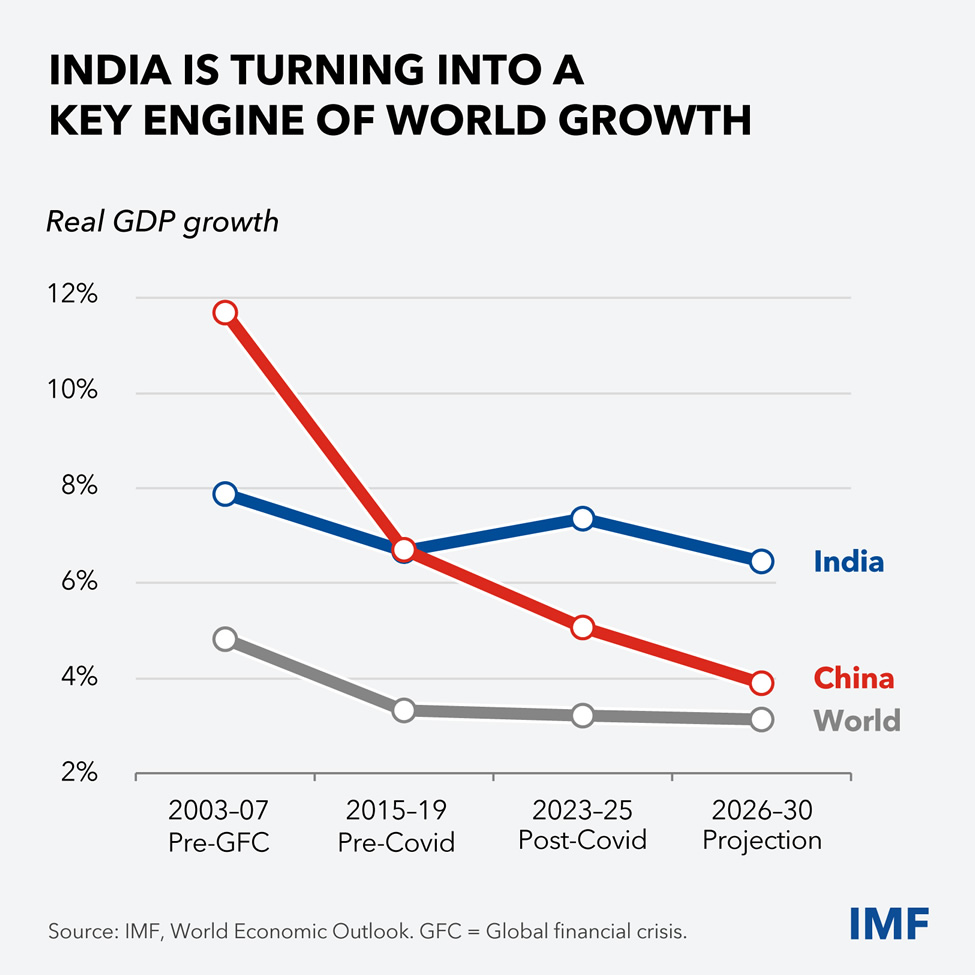
- Georgieva praised India as a “key growth engine” of the global economy, highlighting its resilience and rising prominence amid global uncertainty.
- She noted that India is emerging as a vital growth driver, especially as China’s economic growth slows down.
Economic Resilience and Performance
- India’s real GDP grew by 7.8% in the first quarter of FY 2025–26, surpassing the Reserve Bank of India’s earlier estimate of 6.5%.
- This growth was driven by strong domestic consumption, a revival in investment, and a recent reduction in GST rates, reinforcing India’s economic momentum.
Policy Fundamentals and Institutional Strength
- Georgieva acknowledged that emerging economies like India have significantly improved their policy frameworks, including:
- More credible monetary policy
- Deeper local currency bond markets
- Swift and coordinated fiscal action during the pandemic
Trade and Tariff Challenges
- She noted the impact of U.S. tariffs on Indian imports, including a 50% levy, half of which targets discounted Russian oil purchases.
- Despite these pressures, Georgieva remarked that the global economy has thus far avoided a tit-for-tat trade war, and India continues to demonstrate resilience.
Georgieva positioned India as a stabilizing force and a leader in growth within a turbulent global landscape. Her recognition underscores India’s strategic importance in shaping future economic policy and development agendas.
Her remarks have set the tone for a week of high-stakes discussions on global finance, development, and governance.
Source: IMF
— The CitiTimes Editor holds distinguished Academic Certificates awarded by the International Monetary Fund (IMF).
 CitiTimes