
“Public Self Disclosure” by Universities in India
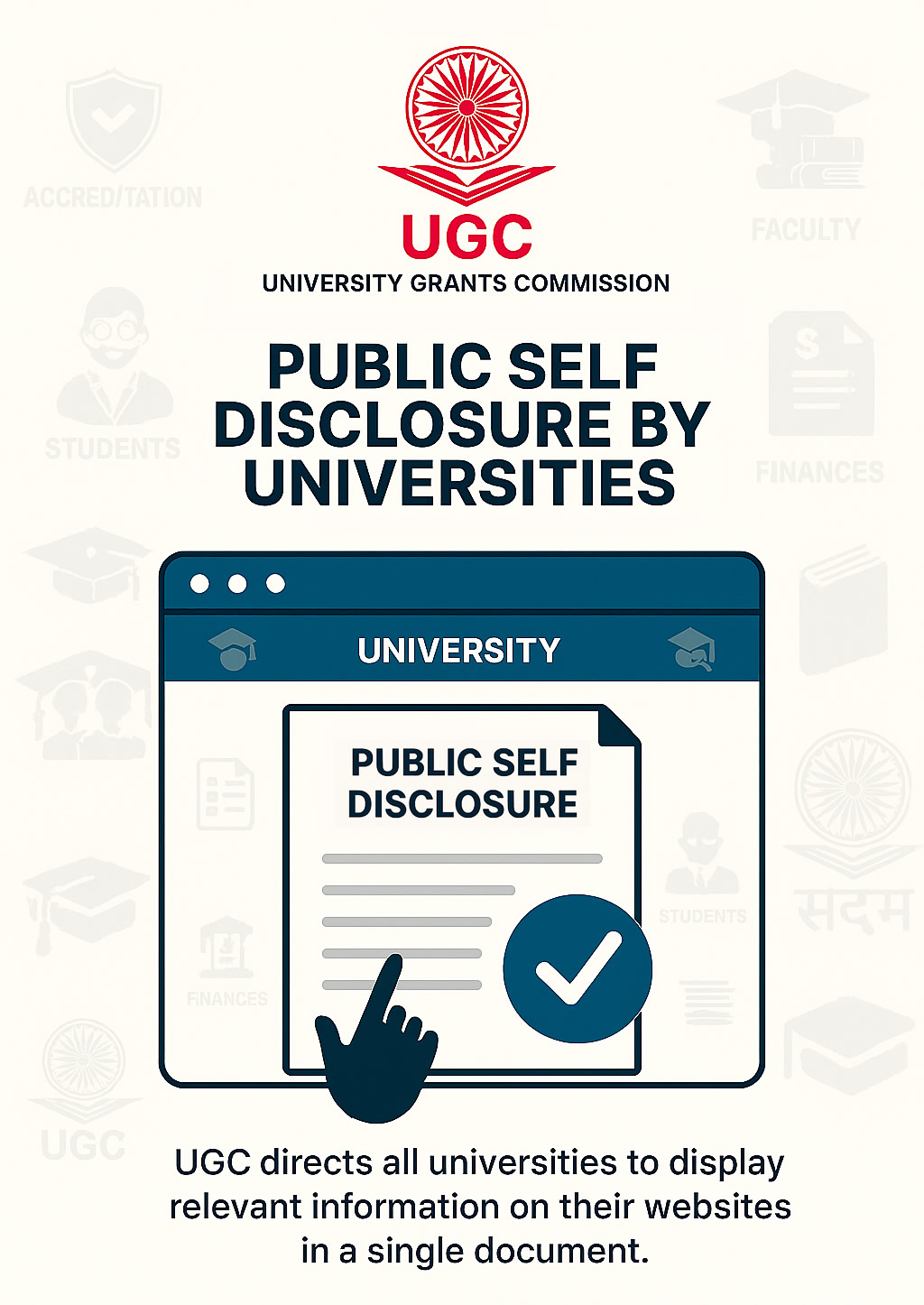
New Delhi, India, October 7, 2025 — The University Grants Commission (UGC) in India has released a PUBLIC NOTICE informing the public that it has instructed all universities in the country to display all relevant information as a single document on their websites. This document is to be titled “Public Self Disclosure.”
The UGC’s 2024 guidelines require all higher education institutions (HEIs) in India to maintain a publicly accessible website with transparent and searchable information for stakeholders.
These guidelines align with the National Education Policy (NEP) 2020, which emphasizes transparency, accountability, and stakeholder engagement. Public self-disclosure is considered a foundational principle for building trust and ensuring institutional accountability.
Website Requirements
- Every Higher Education Institution (HEI) must maintain a functional website that is:
- Publicly accessible without the need for login or registration.
- Equipped with a search feature to facilitate easy navigation.
- The website should act as a central hub for promoting institutional transparency.
Mandatory Disclosures
Higher Educational Institutions (HEIs) are required to publish and regularly update the following categories of information:
- Institutional Profile: This includes the vision, mission, governance structure, and UGC Recognition / Approval (2(f), 12B, etc., as applicable).
- Academic Information: This covers the programs offered, curriculum details, academic calendar, and profiles of faculty members.
- Admission Details: Information about eligibility criteria, the admission process, seat matrix, and reservation policies should be provided.
- Financial Transparency: Details regarding the fee structure, scholarships, financial aid, and audited financial statements must be disclosed.
- Accreditation and Rankings: The status of NAAC/NBA accreditation, NIRF rankings, and any other recognitions should be included.
- Student Services: Information on hostel facilities, grievance redressal mechanisms, placement data, and support systems for students is essential.
- Research and Innovation: Ongoing research projects, publications, patents, and collaborations should be documented.
- Compliance and Governance: HEIs must include details about anti-ragging measures, sexual harassment policies, and any other statutory disclosures.
The guidelines aim to serve various stakeholders, including:
- Students and parents looking for trustworthy institutional data.
- Regulatory bodies and accreditation agencies responsible for monitoring and evaluation.
- Alumni, researchers, and the public who are interested in institutional performance and engagement.
Implementation and Monitoring
- Institutions are urged to take proactive steps to comply with these guidelines.
- The UGC will monitor adherence and may integrate these disclosures into future accreditation and funding frameworks.
– Click here to access the UGC Guidelines for Public Self-Disclosure by Higher Education Institutions.
Source: UGC
 CitiTimes