

The Nobel Prize in Physics 2025
October 7, 2025
The Royal Swedish Academy of Sciences has announced that the 2025 Nobel Prize in Physics will be awarded to:
- John Clarke, University of California, Berkeley, USA
- Michel H. Devoret, Yale University, New Haven, CT, and University of California, Santa Barbara, USA
- John M. Martinis, University of California, Santa Barbara, USA
This award recognizes their discovery of macroscopic quantum mechanical tunneling and energy quantization in electrical circuits.
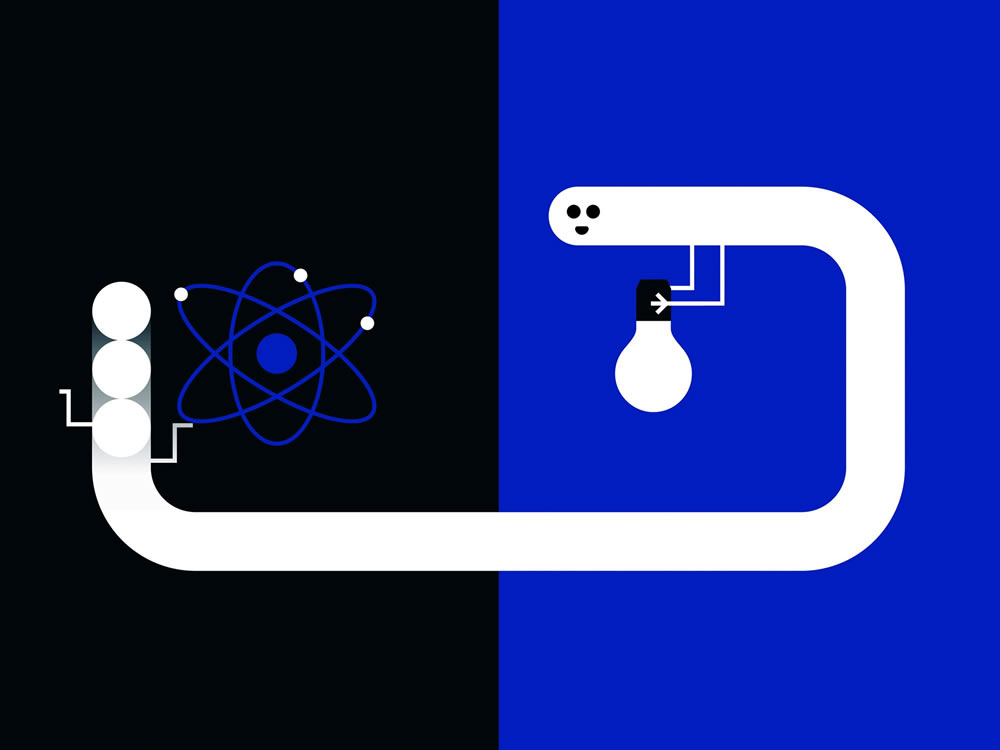
Their experiments on a chip revealed the workings of quantum physics. A key question in physics is the largest size of a system that can display quantum mechanical effects. This year’s Nobel Prize laureates showed, through experiments with an electrical circuit, that quantum tunneling and quantized energy levels can be observed in a system large enough to be held in a hand.
Quantum mechanics allows particles to pass through barriers via tunneling, but such effects generally become negligible with many particles involved. The laureates demonstrated that quantum properties can be observed on a macroscopic scale.
In 1984 and 1985, John Clarke, Michel H. Devoret, and John M. Martinis conducted experiments using a superconducting electronic circuit, separated by a thin insulating layer known as a Josephson junction. By precisely measuring the circuit’s properties, they explored the phenomena occurring when current was applied. The charged particles in the superconductor acted as a single particle filling the entire circuit.
Initially, this system flows current without voltage, trapped behind an effective barrier. In the experiment, it escapes this zero-voltage state through tunneling, which is detected as a change in voltage. The system also behaves as predicted by quantum mechanics, being quantized and allowing only specific energy exchanges.
“It is wonderful to celebrate the surprises of century-old quantum mechanics,” says Olle Eriksson, Chair of the Nobel Committee for Physics. “It is also enormously useful, as quantum mechanics underpins all digital technology.”
This year’s Nobel Prize in Physics paves the way for the next generation of quantum technologies, including quantum cryptography, quantum computers, and quantum sensors.
Source: The Royal Swedish Academy of Sciences
 CitiTimes