

- UNESCO brings together global leaders at Digital Learning Week 2025 to design inclusive, human-centered futures for AI in education.
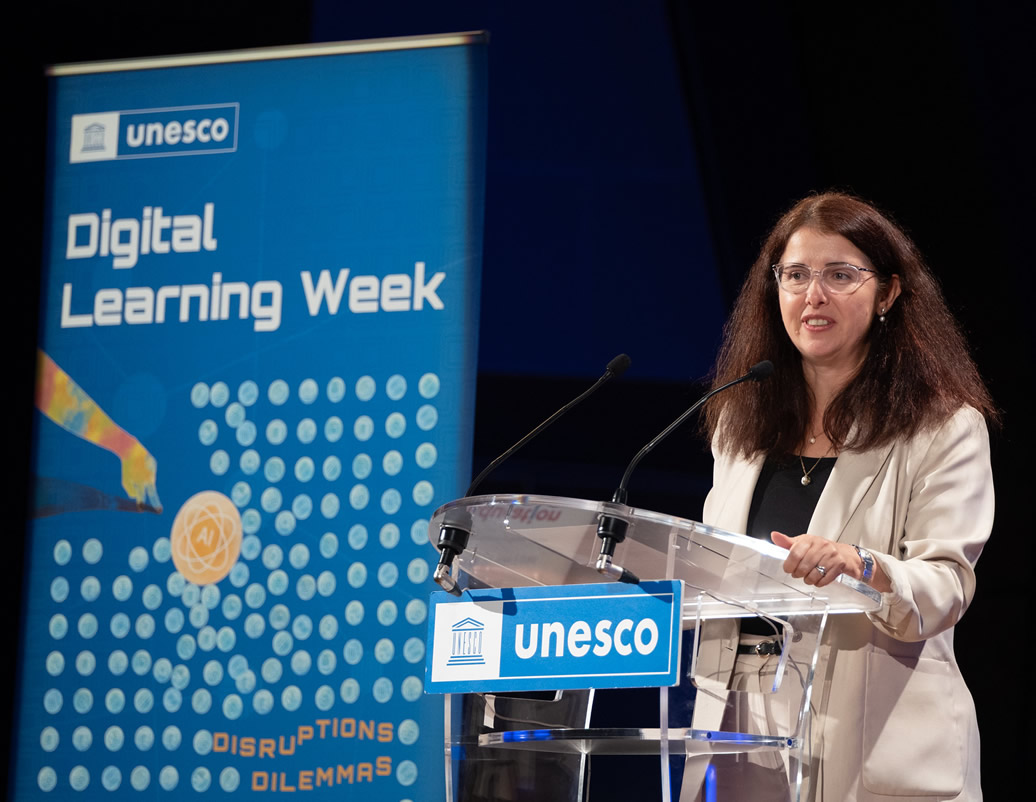
Paris, France, September 15, 2025 — UNESCO’s Digital Learning Week 2025, which took place last week in Paris, examined the impact of artificial intelligence on education and its implications for learners, educators, and education systems around the globe. It raises important questions: Do we still need classrooms, teachers, administrators, and textbooks?
The event challenged the standard framing of debates surrounding AI in education, which often presents extreme viewpoints—whether AI will enhance students’ skills or diminish them, empower teachers or replace them, and whether it will save education or threaten its existence. In reality, the situation is much more complex and requires thoughtful policy decisions. The real challenge lies in collectively navigating these complexities.
“AI is creating disruptions in education. It raises human and policy dilemmas and forces us to reflect on the directions we should take. The future of education will be shaped by the policy choices that we make about education investment, about pedagogy, about governance, and about the ethical principles we uphold. For this, strong, decisive leadership is critical.”
— Stefania Giannini, Assistant Director-General for Education at UNESCO.
- Directions for AI and the future of education
On the first day of Digital Learning Week 2025, UNESCO convened a closed-door ministerial session that provided a strategic platform for in-depth discussions on national strategies and the leadership required to address common challenges. These issues included curriculum reform, teacher training, and the importance of prioritizing the safety of learners.
The dialogue concluded with a shared vision and a strong commitment: the integration of AI in education must be human-centered, equitable, safe, and ethical.
Ministers identified five urgent priorities, from which a set of key directions emerged that set an impactful tone for the leading conference:
- Addressing the growing “AI divide”
- Ensuring safety and ethics to protect all learners
- Safeguarding the irreplaceable role of teachers
- Promoting AI that reflects local contexts, languages, and cultures
- Advancing global solidarity and establishing shared standards
- A lively debate featured over 300 speakers during the event.

Throughout Digital Learning Week, participants attended over 40 sessions featuring more than 300 international speakers, who discussed how AI is transforming curriculum, pedagogy, and assessment practices. Highlights included a public lecture by Emily Bender, a Professor of Linguistics, as well as keynote addresses from Abeba Birhane, founder of the AI Accountability Lab, and computer scientist Nina da Hora.
A recent UNESCO survey on AI in higher education has been released. This survey, conducted among the global network of UNESCO Chairs, revealed that while 90% of respondents are already using AI tools in their professional work, only half feel confident in their understanding of the technological foundations and pedagogical applications of AI. Furthermore, only about 34% reported positive experiences with AI-assisted assessments, indicating a need for more guidance and professional development in this area.

Since 2024, UNESCO has supported 58 countries in designing and improving digital and AI competency frameworks, curricula, and quality-assured training for educators and policymakers. The UNESCO Recommendation on the Ethics of Artificial Intelligence, along with AI competency frameworks for teachers and students, has established a roadmap for a future in education that is ethical, equitable, human-centered, and based on human rights.
Additionally, UNESCO has published the first-ever guidance on the use of generative AI in education and research. This guidance aims to help individuals navigate AI in a critical, creative, and ethical manner.
In her closing remarks, Ms. Giannini affirmed that “together we have committed to shaping a global commons for dialogue and action,” creating a space where we can collectively ensure that AI serves as “a tool for equity, dignity, and the flourishing of all people and our planet.”
Source: UNESCO
— The editor is a Higher Education Consultant accredited by UNESCO-IIEP, and holds professional certifications in Artificial Intelligence from both IBM and Microsoft.
 CitiTimes