
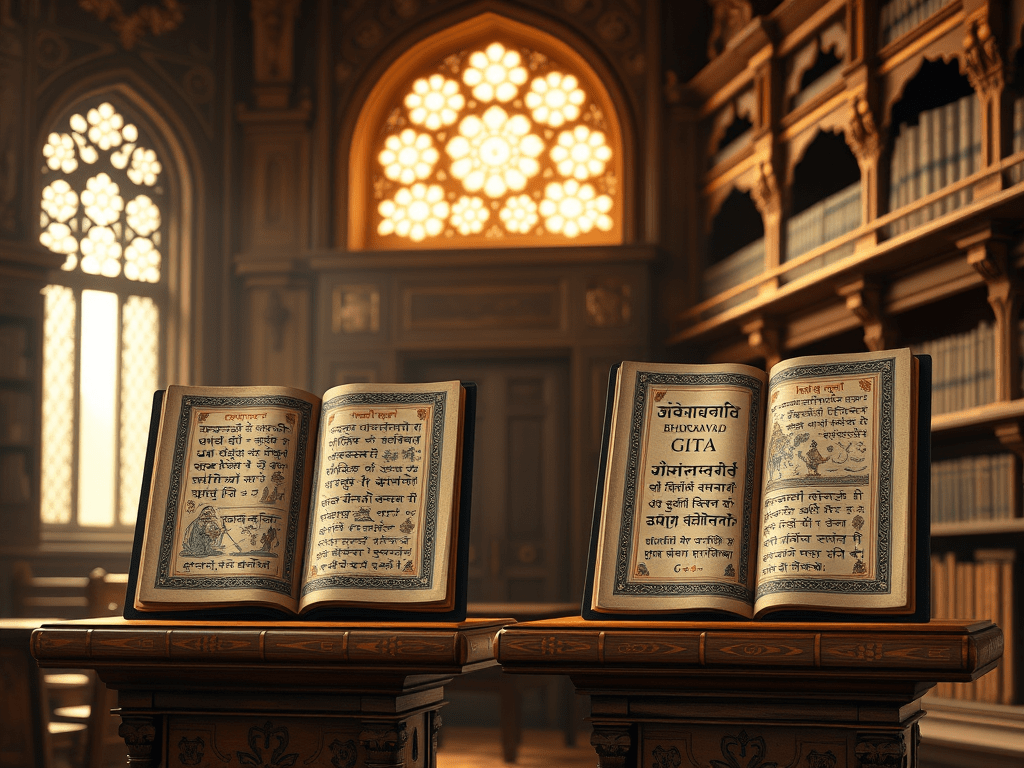
The Bhagavad Gita and Natyashastra manuscripts have been inscribed on UNESCO’s Memory of the World Register.
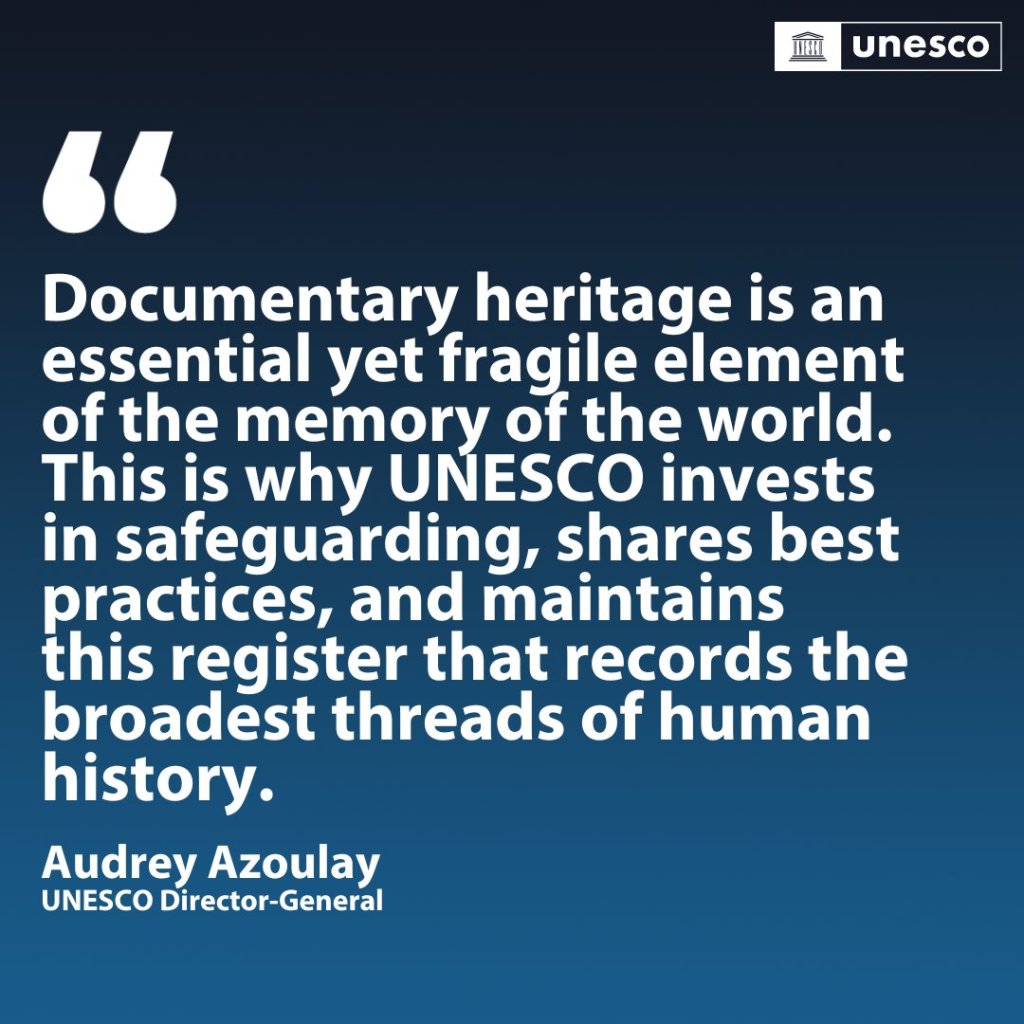
NEW DELHI, India, April 18, 2025 — UNESCO’s Memory of the World Register has added 74 new documentary heritage collections, including Bhagavad Gita and Bharat Muni’s Natyashastra manuscripts.
According to UNESCO, entries from 72 countries and four international organizations about the scientific revolution, women’s contributions to history, and significant milestones of multilateralism are included in the register.
Prime Minister Narendra Modi praised the inclusion of the Gita and Natyashastra in UNESCO’s Memory of the World Register as a global recognition of our timeless wisdom and rich culture.
“A proud moment for every Indian across the world!
The inclusion of the Gita and Natyashastra in UNESCO’s Memory of the World Register is a global recognition of our timeless wisdom and rich culture.
The Gita and Natyashastra have nurtured civilization and consciousness for centuries. Their insights continue to inspire the world.”
— Prime Minister Narendra Modi
- Manuscript of the Nāṭyaśāstra by Bharatamuni: A Seminal Text in Indian Performing Arts
The Nāṭyaśāstra, written by Bharatamuni and preserved at the Bhandarkar Oriental Research Institute, dates back to around the 2nd century B.C. This text summarizes the Nāṭyaveda, an oral performing arts tradition containing 36,000 verses known as the Gāndharvaveda.
The Nāṭyaśāstra outlines essential concepts such as nāṭya (drama), abhinaya (performance), rasa (aesthetic experience), bhāva (emotion), and saṅgīta (music), which define Indian theatre and arts. Bharatamuni emphasizes that “no meaning can blossom forth without rasa,” a significant contribution to world literature.
- The manuscript collection of the Bhagavadgītā is an ancient Saṁgraha-grantha of Indian thought with worldwide readership and influence.
The Bhagavad Gita is a 700-verse scripture within the Bhīṣma Parva (chapters 23-40) of the Mahābhārata. It features a dialogue between Kṛṣṇa and Arjuna on the battlefield, aimed at resolving Arjuna’s moral dilemmas and feelings of dejection (viṣāda).
As a central text in India’s intellectual tradition, the Bhagavad Gita integrates various philosophical movements, including Vedic thought, Buddhism, Jainism, and Cārvāka. Its profound insights have made it a subject of study for centuries, with translations into many languages worldwide.
- Collections are added to the register by a decision of UNESCO’s Executive Board, following the evaluation of nominations by an independent international advisory committee.
Among the newly inscribed collections, fourteen pertain to scientific documentary heritage. Itḥāf Al-Mahbūb (submitted by Egypt) documents the Arab world’s contributions to astronomy, planetary movement, celestial bodies, and astrological analysis during the first millennium of our era. The archives of Charles Darwin (United Kingdom), Friedrich Nietzsche (Germany), Wilhelm Conrad Roentgen (Germany)—which contain the very first recorded X-ray photographs—and Carlos Chagas (Brazil), a pioneer in disease research, have also been included.
Several collections document key moments in international cooperation, including the Geneva Conventions (1864–1949) and their protocols (1977–2005) (Switzerland), the Universal Declaration of Human Rights (United Nations), and the 1991 Windhoek Declaration (Namibia), a global reference for press freedom.
Founded in 1992, the Memory of the World Programme seeks to promote the preservation of and universal access to humanity’s documentary heritage. Often extremely fragile, this heritage faces risks of deterioration and disaster.
In addition to the International Register, UNESCO has supported the creation of four regional registers and National “Memory of the World” Committees in more than 100 countries.
Additionally, UNESCO helps countries create safeguarding policies and offers training and funding to memory institutions for digitizing their collections. It collaborates with educational bodies to incorporate these vital elements of our history into school curricula.
Source: UNESCO
 CitiTimes