

- India has implemented an AI Competency Framework to improve its public service sector, aligning it with the UNESCO Framework on Artificial Intelligence to meet global standards.
- India, home to over 3.1 million civil servants, is advancing AI-driven governance with a framework to boost AI skills in the public sector. Building on UNESCO’s guidelines, this initiative positions India as a leader in integrating AI into public administration while prioritizing ethical safeguards and human rights in its digital transformation.


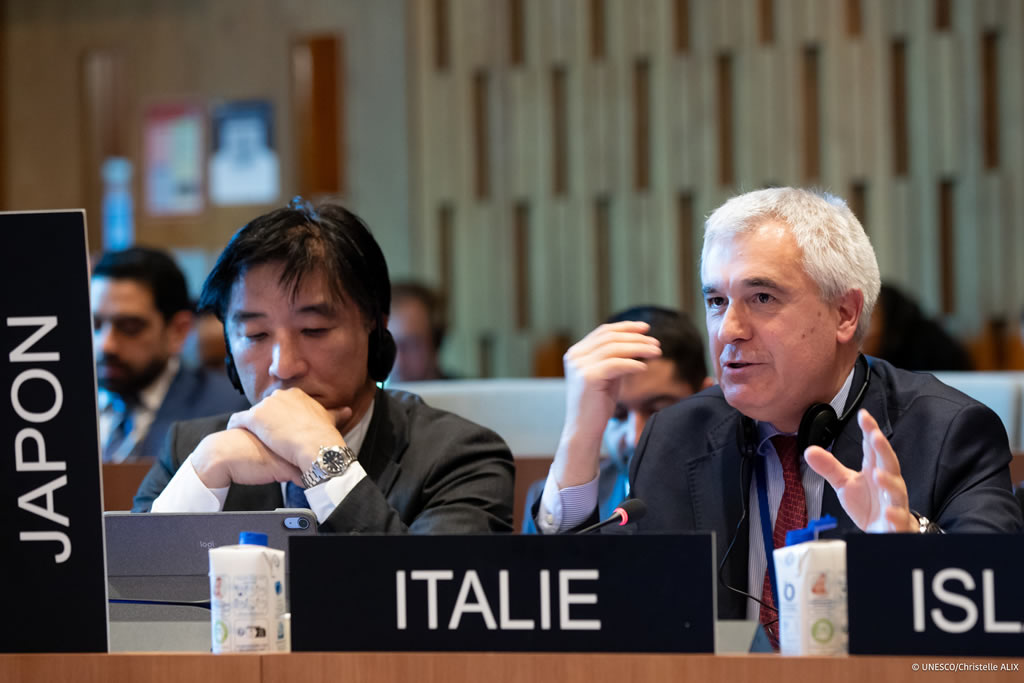
Paris, France, April 11, 2025 — As the world’s most populous country, India, with its 1.4 billion citizens, has a unique opportunity to harness the transformative potential of artificial intelligence (AI) to improve public service delivery. Recognizing this opportunity, the government has introduced the Competency Framework for AI.
- UNESCO’s Vision for AI in the Public Sector
Dr. Tawfik Jelassi, UNESCO’s Assistant Director-General for Communication and Information, praised the initiative, emphasizing its alignment with UNESCO’s global vision for AI in governance.
“With the launch of its AI competency framework, India is charting a new course for public sector transformation. By aligning with UNESCO’s global vision for AI in the public sector, this initiative ensures that technology serves people, strengthens institutions, and upholds fundamental rights. It is leadership in action for the digital age.”
— Tawfik Jelassi, Assistant Director-General for Communication and Information, UNESCO
Mr. Ashwini Vaishnaw, Minister of Ministry of Electronics and Information Technology, highlighted the framework’s transformative potential.
“This framework will empower public sector officials with the skills and knowledge to navigate the AI landscape effectively. I sincerely hope readers will find it a valuable resource for building AI competencies that will contribute to India’s growth and help shape the global AI discourse.”
— Mr. Ashwini Vaishnaw, Minister of Ministry of Electronics and Information Technology, India
By adapting UNESCO’s framework to suit its local context, India is not only strengthening its domestic AI capabilities but also contributing to global discussions on ethical AI adoption.
- Building Competencies Across the AI Lifecycle
The framework outlines the competencies necessary for different roles to effectively integrate AI into public service delivery at various governance levels and throughout different phases of the AI lifecycle. The key responsibilities include:
– Senior Leadership
– Mid-Level Officers
– Junior Officers
- Strengthening India’s AI Ecosystem
India has been actively expanding its AI ecosystem by improving access to computing power, datasets, startup financing, and safety tools—critical enablers for deploying AI-driven public services such as automated citizen support systems. The Competency Framework adds another pillar by addressing workforce development needs. By identifying essential skills for civil servants at every level, it empowers strategic decision-making on hiring and training.
This initiative aligns with UNESCO’s research on digital transformation prerequisites, ensuring that upskilling efforts translate into meaningful improvements in public service delivery.
- UNESCO’s Programme on AI and Digital Transformation
Launched in 2021, UNESCO’s AI for the Public Sector program aims to assist governments in building institutional capacity for digital transformation based on human rights. The program supports civil servants in creating AI-powered public services that are transparent, efficient, and inclusive.
In 2022, UNESCO launched its Digital Competency Framework in the report “Artificial Intelligence and Digital Transformation: Competencies for Civil Servants.” This framework has influenced digital transformation strategies in Nigeria and Rwanda, with support from public institutions in the EU and India, reaching over 31 countries. Upcoming initiatives include a Global MOOC on Digital Transformation and AI, a Repository of AI Tools for the Public Sector, and training sessions for civil servants.
Through initiatives like these, UNESCO continues to spearhead efforts toward human rights-based innovation that enables governments to make meaningful changes for their citizens—bringing us one step closer to a digitally inclusive future.
Source: UNESCO
— The editor is an independent evaluator of government education plans, holding certification from UNESCO-IIEP (UNESCO International Institute for Educational Planning, Paris).
 CitiTimes