
- Language serves as a gateway to understanding humanity itself. – Mr. Tim Curtis, Director, Representative UNESCO New Delhi.

New Delhi, India, February 22, 2025 — Indira Gandhi National Centre for the Arts (IGNCA) celebrated International Mother Language Day with a two-day event on February 21 and 22, 2025. Focused on the theme ‘Make Languages Count for Sustainable Development,’ the occasion brought together distinguished scholars, linguists, and cultural experts to discuss the role of languages in promoting sustainable growth.
The inaugural session on February 21 included the launch of ‘Indian Calligraphy: Unveiling Ancient Wisdom through Rajeev Kumar’s Art’ and the inauguration of the exhibition BHASHARRITI, curated by Ms. Aashna and Ms. Ritu Mathur.
The event featured Mr. Tim Curtis, Director of the UNESCO Regional Office for South Asia in New Delhi, as the Chief Guest, along with Ms. Lily Pandeya, Joint Secretary of the Ministry of Culture, Government of India, as the Special Guest. Dr. Sachchidanand Joshi, Member Secretary of IGNCA, chaired the session. Prof. Ramesh Chandra Gaur, Director & Head of Kala Nidhi and Dean of Administration at IGNCA, delivered the welcome address. This event was a dynamic platform for insightful discussions, reinforcing a collective commitment to preserving and promoting linguistic heritage.
Mr. Tim Curtis, in his address, emphasized that celebrating International Mother Language Day is both deeply personal and universally significant, as it honors the languages that shape our thoughts and expressions. More than simple communication tools, languages define our identities and connect us to our histories and communities. Highlighting the rich linguistic landscape of South Asia, he pointed out that research indicates over 7,000 languages are endangered, with indigenous languages being the most vulnerable. These languages encapsulate unique knowledge systems and millennia of wisdom, making their loss a significant threat to cultural heritage.
He highlighted the United Nations’ declaration of 2022–2032 as the Decade of Indigenous Languages, which aims to document, revitalize, and celebrate linguistic treasures. He acknowledged the ongoing contributions of IGNCA in this area and expressed gratitude for organizing Mother Language Day. Emphasizing the significance of multilingual education, he referenced India’s National Education Policy as a model for embracing linguistic diversity, which enhances both learning outcomes and national unity. He affirmed that UNESCO is intensifying efforts to preserve Indigenous languages, promoting community-led initiatives connecting linguistic communities, and fostering equity.
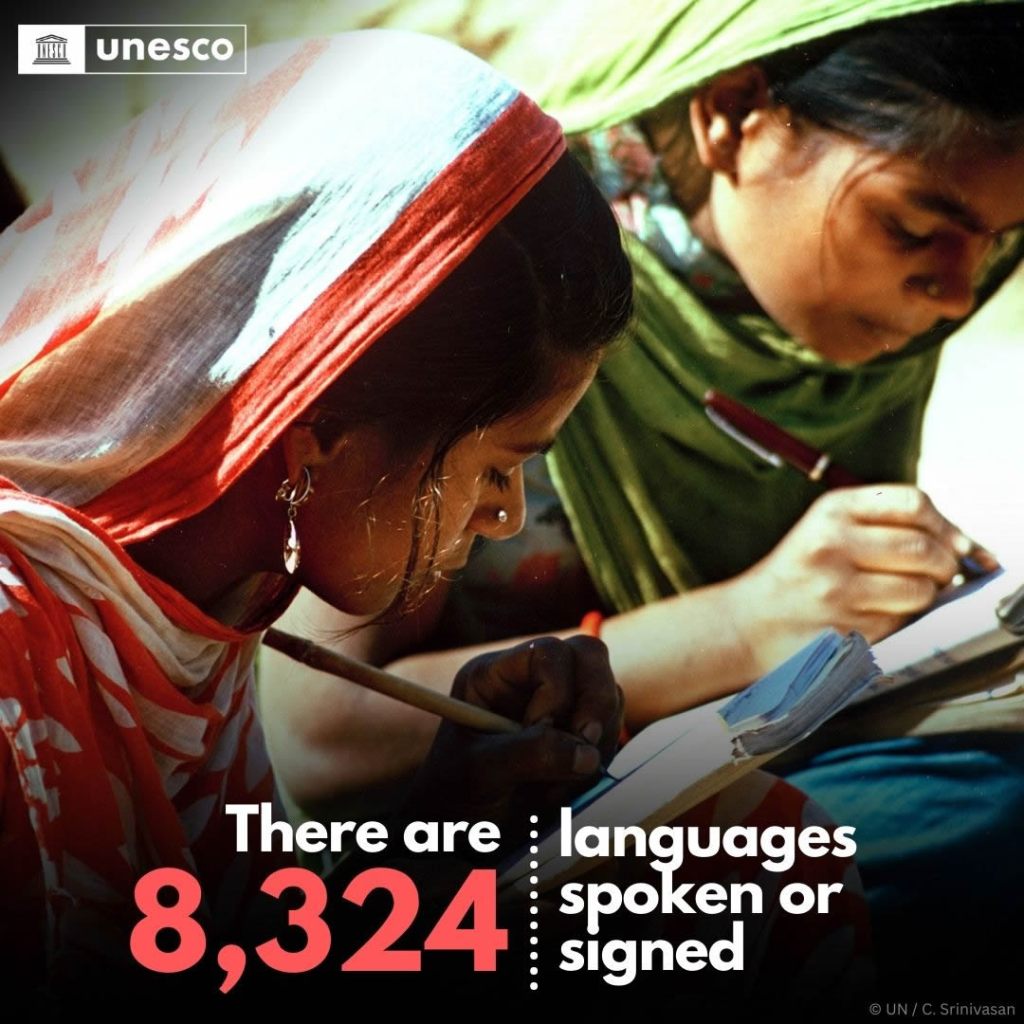
Mr. Tim Curtis concluded by stating that language is not only a tool for communication but also a passport to understanding humanity itself. When we speak in our mother tongue, we do not merely exchange words; we share ways of perceiving and interpreting the world. Honoring each other’s mother tongue facilitates an understanding that transcends borders and cultures.
Dr. Sachchidanand Joshi remarked that it is always a pleasure to acknowledge that India is a nation with one of the highest numbers of languages and dialects. With over 1,700 languages once spoken nationwide, this linguistic wealth has long been a matter of pride. However, the other side of the coin is the rapid decline of languages, with many disappearing at an alarming rate, which warrants serious concern.
The first day featured three-panel discussions. The first session, titled ‘Make Languages Count for Sustainable Development,’ was moderated by Prof. Ramesh Chandra Gaur. The panel included Prof. Shobhana Chelliah from Indiana University, USA, Prof. Sadaf Munshi from the University of North Texas, USA, and Dr. Huma Masood, Senior Gender Specialist at UNESCO’s New Delhi Office. The second session discussed the book “Indian Calligraphy: Unveiling Ancient Wisdom through Rajeev Kumar’s Art.” The panel comprised Ms. Jaya Jaitly, Founder of Dastkari Haat Samiti, New Delhi, Prof. Ramesh Chandra Gaur, and cultural entrepreneur and exhibition curator Ms. Ritu Mathur.
The third session examined the theme ‘National Education Policy and Indian Languages.’ Moderated by Mr. Sudhakar Pathak, President of the Hindustani Bhasha Academy, this session included insights from Prof. Bandana Jha of Jawaharlal Nehru University’s Department of Indian Languages; Dr. Pawan Vijay of Guru Gobind Singh Indraprastha University; Dr. Alok Ranjan Pandey of Ramanujan College, University of Delhi; and Dr. Vijay Kumar Mishra of Hansraj College. The event attracted a significant gathering of language enthusiasts, academicians, and researchers, reaffirming a commitment to linguistic preservation and discourse.
Source: Ministry of Culture, Government of India
 CitiTimes