
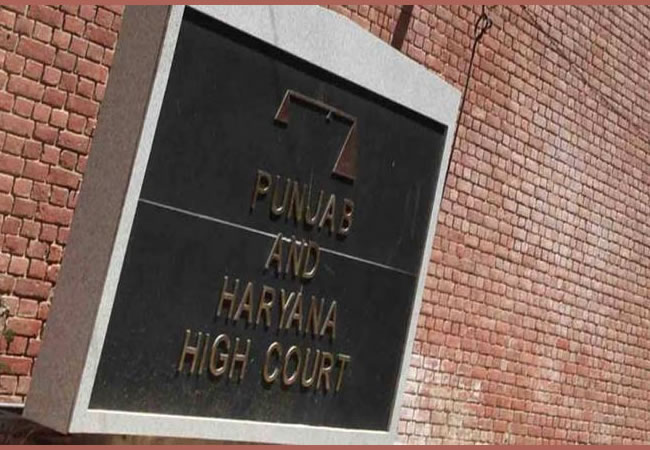
Chandigarh, India, October 07, 2024 — The Punjab & Haryana High Court has reprimanded Panjab University Chandigarh for unjustly decreasing a student’s marks and declaring him “Failed” due to the university staff’s “Whims & Fancies.”
The Court emphasized the importance of adhering to legal provisions and urged the University to adopt fair and lawful procedures in evaluating students’ academic performances.
A student contested the University’s result for the ‘Land Law and Rent Laws’ examination. Despite surpassing the passing percentage, the University unjustly labeled the petitioner a ‘fail’ by implementing an unauthorized process that reduced the petitioner’s marks.
The Court, recognizing the urgency of the matter, nullified the University’s declared result and mandated the immediate granting of the degree to the student. The Court has directed the Vice Chancellor of the respondent university to promptly address this issue and implement corrective measures within a strict two-month timeline, ensuring swift justice for the petitioner and setting a precedent for future cases.
The Court noted that the petitioner’s career has been significantly affected by the respondent university’s wrongful actions. As a result, the petitioner is entitled to exemplary costs in the form of compensation, amounting to Rs. 1,00,000 (one lakh rupees only). The Court directed that the respondent university pay this amount to the petitioner within two months from the date of this ruling.
The University’s Registrar and Controller of Examinations were in attendance at the Court. The Court inquired about the legal basis for their decision to modify the petitioner’s marks by altering the grading criteria from 80:20 to 60:40. Additionally, they were asked whether there were any directives from university officials or any legal provisions permitting such actions. The officers mentioned above and the University’s legal representative could not answer the inquiry. Their only response to the Court was that they were following a historical practice that had been ongoing for several years.
Responding to this invalid historical practice, the Court observed that any errors or illegal actions historically committed by the respondent University cannot be applied to the present case simply because they are this University’s tradition. The Court said that using artificial analogies should not compromise a candidate’s or a student’s rights at the University. If the University intended to deduct marks from the petitioner, it should have executed such actions through lawful authority rather than analogies and “Whims & Fancies.” The Court emphasized that university students should not be subject to the whims of the administrative staff, who are not authorized to create their own laws. The Indian Legal System is governed by the rule of law, with the Constitution of India reigning supreme. The Court acknowledged the harmful consequences of unlawfully reducing the marks, which have put the petitioner’s career at significant risk. The Court said it strongly opposes such detrimental practices and seeks to prevent their recurrence.
The Court’s scrutiny focused on the actions of the University’s administrative and clerical staff, who conducted the exercise in clear violation of established guidelines and regulations and showed complete disregard for legal authority. The Court unequivocally denounced the University’s actions as unlawful and condemned them as utterly reprehensible, citing their detrimental impact on the student’s academic journey.
The Court observed that, in the absence of any power or authority of law, the administrative and clerical staff conducted the exercise on their own without any guidelines or rules and regulations. Such an action by the respondent university that affected a student’s career is illegal, perverse, and deprecated by this Court.
The information above indicates that many former University students who currently express unwavering support for the institution may be unaware of having been subjected to the University’s historically illicit practices, which were clandestinely executed without their knowledge.
Source: Punjab & Haryana High Court
(The petitioner had filed a petition under Articles 226/227 of the Constitution of India, seeking the issuance of a writ in the nature of certiorari/mandamus to quash the result dated 20.10.2023. This result declared the petitioner ‘fail’ by the respondent University in B.A. LL.B. 6th Semester Paper-6 (c) Land Law and Rent Laws held in May 2023.)
— The editor of CitiTimes holds a certificate in Structuring Business Deals from Cornell University Law School and a certificate in Contract Law from Harvard University Law School.
 CitiTimes